


1. The Business Need: Solving the “Compatibility Crisis”
In 2026, a “close enough” fit is a “failed” sale. Return shipping for heavy iron parts like brake rotors or alloy wheels can destroy your margins.
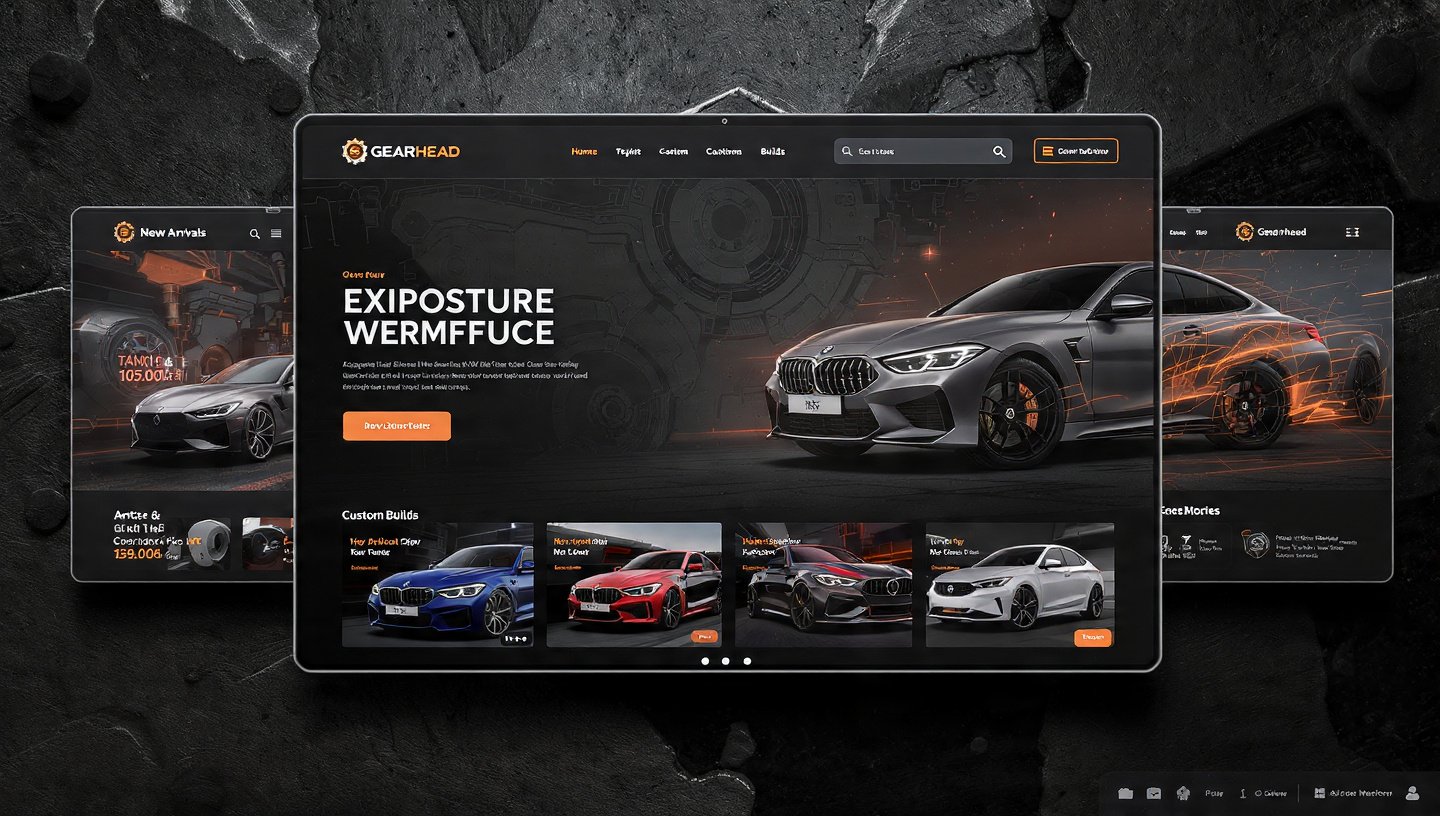
A well-designed automotive site solves this by shifting the responsibility of “accuracy” from the customer to the AI-Data Engine. By integrating a VIN (Vehicle Identification Number) Lookup, you filter your entire million-item catalog to show only what fits that specific car. This “100% Fitment Guarantee” is the single greatest trust-builder in the 2026 automotive market, reducing returns by up to 30% and increasing average order value as customers feel confident buying complex performance kits.
2. The “Workshop-Ready” Interface: From Parts to Performance
Auto parts are technical. Your UI should reflect that precision.
- Interactive 3D Exploded Views: Instead of a flat list, we use 3D Spare Parts Catalogs. Users can rotate a 3D engine or suspension assembly, click on a specific bolt or gasket, and add it to the cart directly from the visual map.
- “Level of Difficulty” Badging: Every part includes a “DIY Rating”—from Green (Easy/15 mins) to Red (Professional Install Required). This transparency helps customers decide whether to buy a tool kit or book a service.
- Service-Center Integration: For “Red” rated parts, the checkout includes a “Schedule Installation” toggle, linking the buyer to verified local garages in Kolkata (e.g., in Topsia or Picnic Garden) to handle the fitment.
3. The 2026 “Gearhead-Tech” Feature Set
- The “Garage” Virtual Locker: A user-profile feature where customers save their vehicles (e.g., “My 2022 Thar” and “Wife’s 2024 Nexon”). The entire website then customizes its recommendations based on their specific fleet.
- AI-Powered “Wear-Predictor”: Based on their last purchase (e.g., brake pads 18 months ago), the site sends a “Maintenance Alert” suggesting it’s time for a check-up, linking to a discounted “Safety Bundle.”
- AR Accessory Visualizer: For aesthetic upgrades like alloy wheels, spoilers, or seat covers, users can point their phone at their car in the driveway to “see” the new look in real-time before buying.
4. 4 Hooks for the 2026 “Performance” Market
- “Monsoon-Ready” Bundles: A seasonal UI flip for Kolkata’s rainy season, highlighting specialized wipers, hydrophobic glass coatings, and underbody anti-rust treatments.
- The “Artisan-Mechanic” Video Hub: Short, 60-second “How-To” videos embedded on product pages showing the actual installation on an Indian car model, proving the part works in local conditions.
- Authenticity “QR-Check”: For high-value performance brands (like Brembo or Bilstein), show a “Scan to Verify” badge that explains how the customer can check for counterfeit-protection once the part arrives.
- Community “Build-Logs”: A section where users upload photos of their modified cars using your parts—essential for the thriving Kolkata car-culture scene.
5. Comparison: Generic Parts Site vs. Your 2026 Precision Garage
| Feature | The “Catalog” Store | Your 2026 Precision Garage |
| Search | Keyword-based | VIN-Specific Filtering |
| Visuals | Static Photos | 3D Exploded Visual Catalogs |
| Fulfillment | Shipping Only | Parts + Local Installation Booking |
| Loyalty | Transactional | The “Virtual Garage” Maintenance Locker |
Conclusion: Driving the Future of Motion
The automotive world in 2026 is data-driven and service-oriented. In Kolkata, where car owners take immense pride in their “wheels,” your brand must act as a trusted consultant, not just a retailer. By choosing Basic E-commerce Designing with a focus on VIN-accuracy and 3D visualization, you aren’t just selling “spare parts”—you are keeping the city in motion.
Ready to accelerate your brand?
Let’s do an “Automotive Fitment Audit.” I’ll show you how to integrate VIN-lookup and 3D catalogs that turn your site into the ultimate destination for every gearhead in Bengal.