







1. The “Monolithic” Ceiling
Most websites in Kolkata are “Monolithic”—think of WordPress, where the part where you write your content (the backend) and the part the customer sees (the frontend) are permanently joined together. While this works for a local bakery in Behala, it creates a “ceiling” for a multi-crore real estate firm in Alipore or a manufacturing giant in Haldia.
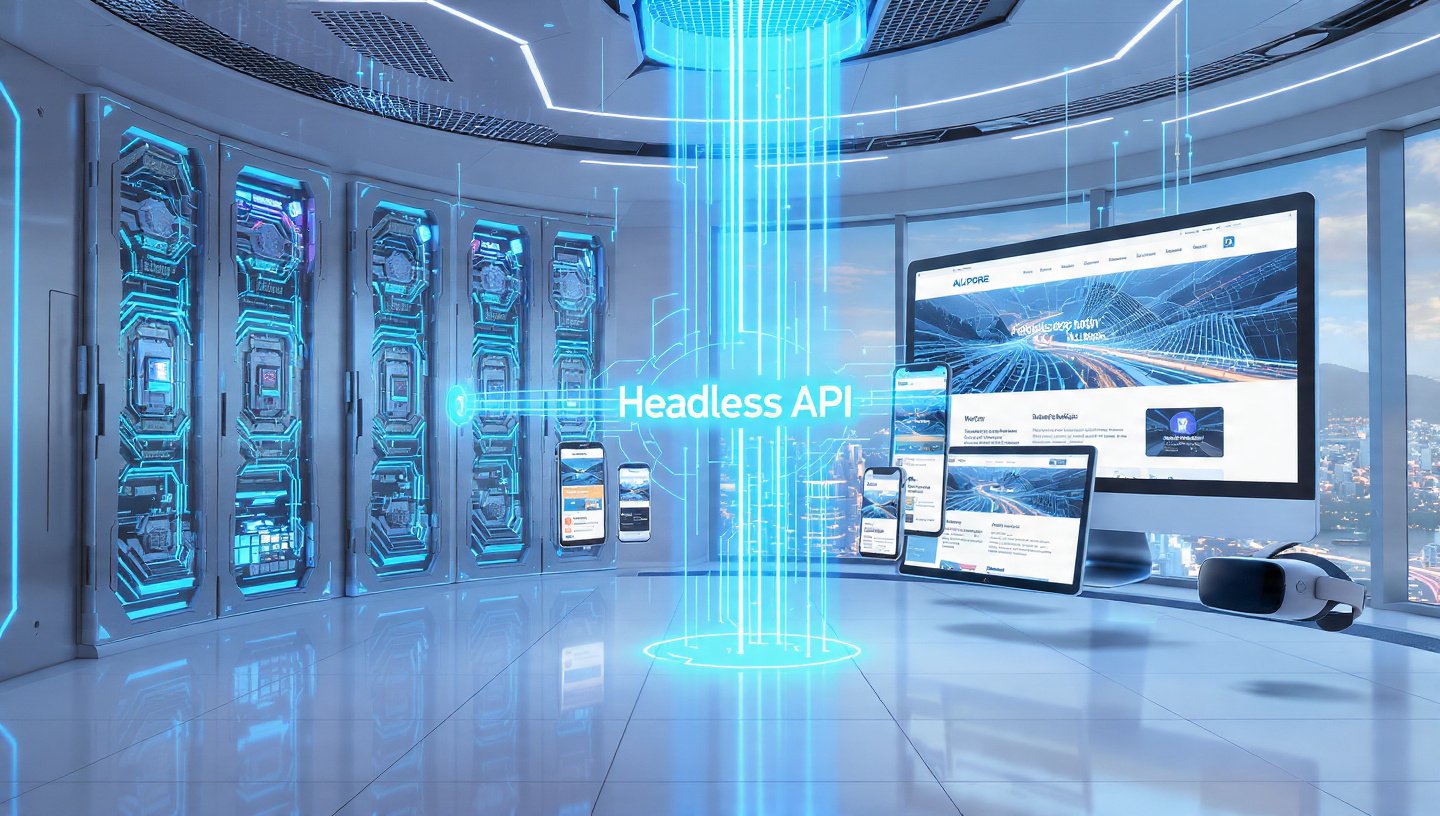
In 2026, the “Head” (the frontend) and the “Body” (the backend) have been separated. This is Headless CMS. It allows your content to live in one place and be “pushed” to any device—your website, an app, an AR headset, or even a smart billboard on Park Street—instantly.
2. Why the Shift? (The 2026 Competitive Edge)
- Infinite Speed (Next.js & React): Because the frontend isn’t tied to a heavy database, we use modern frameworks to build “Static” pages that load in under 500 milliseconds. In the 5G era, this speed is a ranking superpower.
- Future-Proofing: Want to change your website’s design in 2028? With a Headless setup, you can redesign the “Head” without ever touching your data or your “Body.”
- Omnichannel Reality: Your marketing team in Sector V updates a product price once, and it reflects on your website, your Android app, and your iOS app simultaneously.
3. The Security “Air Gap”
Traditional websites are like a house where the front door leads directly into the jewelry vault. If a hacker finds a hole in a WordPress plugin, they have your data.
- The Headless Advantage: The frontend and backend communicate via a secure API. The database is essentially “hidden” from the public internet. For a high-security business like a private hospital in Minto Park or a financial firm, this “Air Gap” is the gold standard of 2026 security.
4. Headless vs. Traditional: The Enterprise Decision
| Feature | Traditional (WordPress/Shopify) | Headless (Next.js + Contentful/Strapi) |
| Development Speed | Fast (Drag & Drop) | Slower (Custom Engineering) |
| Loading Speed | Average (Requires heavy caching) | Blazing Fast (Native Speed) |
| Scalability | Limited by server resources | Unlimited (Serverless Architecture) |
| Security | High maintenance (Plugin updates) | Enterprise-Grade (Decoupled) |
| Content Delivery | Website Only | Website, Apps, IoT, VR, Watches |
5. Is Your Business Ready for Headless?
At our Alipore office, we don’t recommend Headless for everyone. You should consider it if:
- You have a massive catalog (10,000+ pages or products).
- You need to deliver content to both a website and a mobile app.
- You require a highly unique UI/UX that templates simply cannot handle.
- Your current site slows down every time you add a new feature.
6. The Tech Stack of Choice in Kolkata
For our custom enterprise builds, we typically use the MERN or JAMstack approach:
- Frontend: Next.js (The fastest React framework).
- Backend (Headless CMS): Strapi, Contentful, or Sanity.io.
- Hosting: Vercel or AWS (Amazon Web Services) for 99.99% uptime during Durga Puja traffic spikes.
7. FAQ: The Custom Enterprise Shift
- Q: Will it be harder for my team to add blog posts?
- A: No! Modern Headless CMS interfaces look just like Google Docs. Your team in Salt Lake will actually find it faster and easier to use than WordPress.
- Q: Can we migrate our existing WordPress data to Headless?
- A: Yes. We build “migration scripts” that pull your legacy content into the new, high-performance architecture without losing SEO rankings.
- Q: Is it more expensive?
- A: The initial build is a higher investment (₹2.5 Lakhs+), but the “Total Cost of Ownership” over 5 years is lower because you spend less on maintenance, security, and server upgrades.
Conclusion: The Last Website You’ll Ever Need to Build
Headless CMS is the end of the “rebuild every 3 years” cycle. It is a modular, scalable, and ultra-secure foundation that grows as your Kolkata empire grows. If you are tired of being limited by your platform, it’s time to cut the “Head” off your CMS and start building for the future.
Thinking of an Enterprise Upgrade?
Visit our Alipore studio for a “Headless Performance Demo.” We’ll show you a side-by-side comparison of a traditional site vs. a Headless site, and the speed difference will speak for itself.