






1. The New Law of the Land: India’s DPDP Act
By 2026, India’s Digital Personal Data Protection (DPDP) Act is in full effect. For a business owner in Kolkata, this means that losing customer data isn’t just a “technical glitch”—it’s a legal liability that can carry heavy fines.
- The Reality: If you store a customer’s phone number and address in Alipore, you are legally responsible for its safety.
- The 2026 Standard: You must have a “Data Protection Officer” (even if it’s just you) and a clear way to delete a user’s data if they ask.
2. The “Machine vs. Machine” War
In 2026, hackers use Polymorphic Malware—code that changes its own shape to avoid detection by old-school antivirus.
- The Defense: You need Behavioral Monitoring. Instead of looking for “known viruses,” your security system looks for “weird behavior” (e.g., Why is someone trying to download my entire customer database from an IP address in Eastern Europe at 3:00 AM?).
3. The 2026 Essential Security Checklist
| Security Layer | Action for 2026 | Why it’s Non-Negotiable |
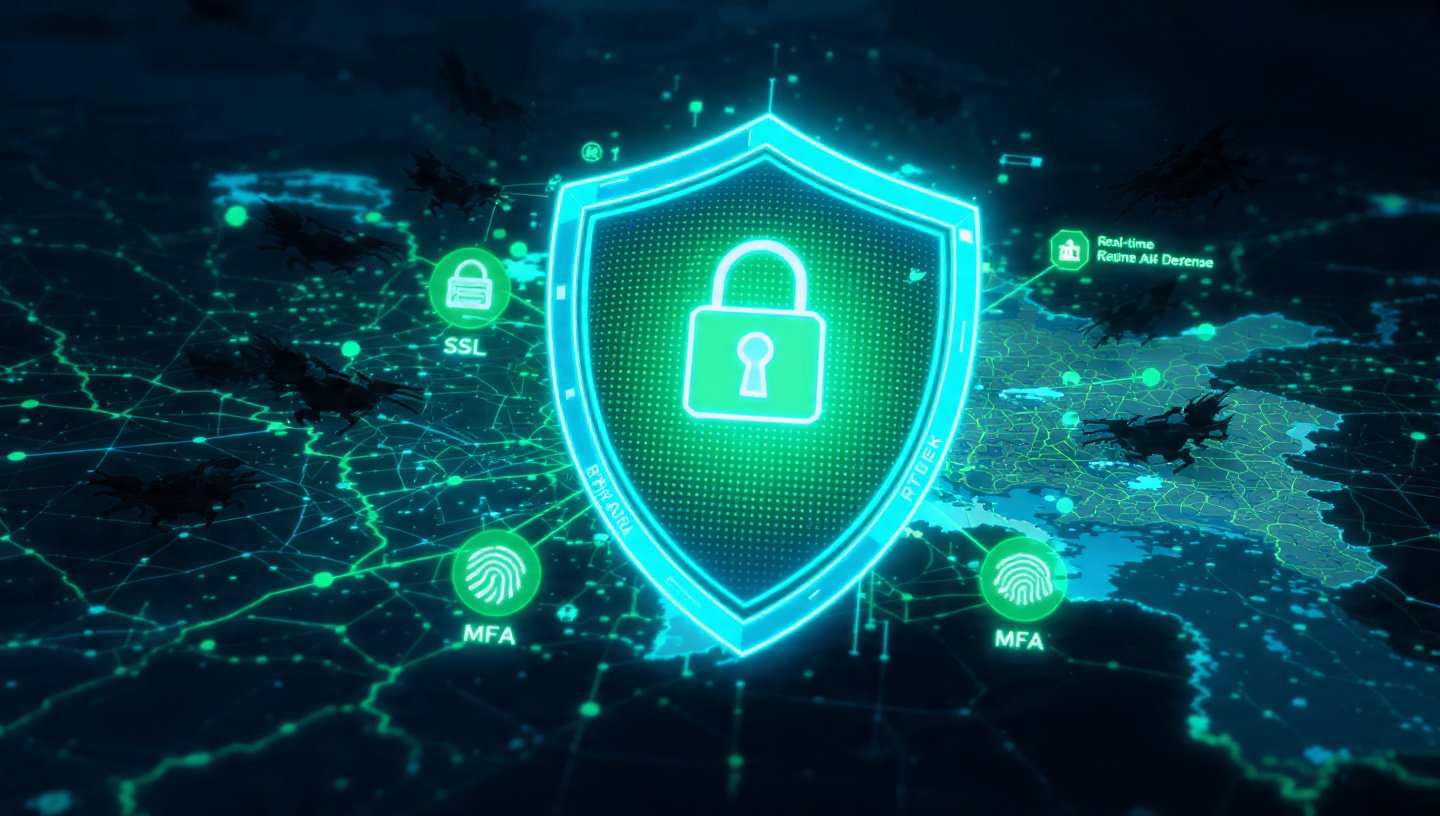
| Authentication | Phishing-Resistant MFA | Standard SMS-based OTPs are easily intercepted in 2026. Use App-based (Google Authenticator) or Hardware keys. |
| Encryption | Enforced TLS 1.3 | Old SSL versions are crackable. Your site must “force” the highest encryption standard for every page. |
| Backups | The 3-2-1-1 Rule | 3 copies, 2 different media, 1 offsite, and 1 Immutable (cannot be deleted by ransomware). |
| The “Human” Layer | Bi-Annual Phishing Tests | 70% of breaches in Kolkata still start with an employee clicking a fake “Pujo Discount” link. |
4. API Security: The Hidden Backdoor
As we discussed in Post #21, your website now talks to Tally and Zoho. These “conversations” happen via APIs.
- The 2026 Threat: Hackers don’t try to guess your password; they try to “trick” your API into giving up data.
- The Fix: Implement Rate Limiting. If someone (or a bot) asks for “Customer Details” 50 times in one second, your website should automatically block them and alert your team in Sector V.
5. “Harvest Now, Decrypt Later”
A new 2026 threat involves hackers stealing encrypted data today, intending to unlock it in a few years when Quantum Computing becomes common.
- The Solution: While “Quantum-Proof” encryption is still emerging, the best defense is Data Minimization. If you don’t need to store a customer’s date of birth or ID number, don’t collect it. You can’t lose what you don’t have.
6. The “Kolkata Context”: WhatsApp & Deepfakes
In 2026, a common scam involves a Deepfake Voice of a business owner calling an employee in Gariahat, asking them to “reset the website password” or “transfer funds to a new vendor.”
- The Protocol: Always have a “Second Channel” verification. If you get a strange request via a voice note, call the person back on a different app to verify.
7. FAQ: Website Safety
- Q: Is Shopify/Wix enough to keep me safe?
- A: They handle the “Pipe,” but you handle the “Tap.” If you use a weak password or give too many staff members “Admin” access, the platform can’t save you.
- Q: How often should I run a security audit?
- A: In 2026, a “Continuous Scan” is better than a yearly audit. Use tools that alert you the moment a plugin has a known vulnerability.
- Q: What do I do if I get hacked?
- A: Don’t panic. Follow your Incident Response Plan: 1. Isolate the site. 2. Restore from an Immutable Backup. 3. Notify the authorities as per the DPDP Act.
Conclusion: Trust is the New Currency
In the 2026 Kolkata economy, a secure website is a competitive advantage. When a customer sees the padlock and the “Safe Checkout” badge, they aren’t just seeing tech; they are seeing a brand that respects them.
At our Alipore studio, we build “Fortress Websites.” We’ll help you implement the latest 2026 security protocols so you can sleep soundly while your business stays open.
Is your site a “Sitting Duck”?
Sign up for a “2026 Vulnerability Scan.” We’ll run an AI-driven “stress test” on your site and give you a red/yellow/green report on exactly where your walls are thin.