











1. The 2026 Spectrum of Development
In 2020, you had to choose: a generic template or a $50,000 custom build. In 2026, development is a spectrum.
- No-Code (The Sprinter): Platforms like Bubble or Webflow allow you to drag, drop, and launch in days. Perfect for MVPs or internal tools for your team in New Town.
- Low-Code (The Marathoner): Tools like FlutterFlow or OutSystems provide the “plumbing” but allow developers to inject custom logic. This is the 2026 “sweet spot” for most mid-sized Kolkata firms.
- Full Custom (The Architect): Hand-coding every line. Reserved for high-frequency trading, complex AI algorithms, or the next global SaaS born in Salt Lake.
2. The “Core vs. Context” Framework
How do you decide? Use this 2026 rule of thumb:
- If it’s “Context” (Utility): Use Low-Code. Things like HR portals, inventory dashboards, or simple booking systems don’t need to be unique; they just need to work. Building these from scratch is a waste of capital.
- If it’s “Core” (Differentiation): Use Custom. If your business is your app—like a unique AI-driven saree matching engine—you need full control. You can’t let a platform’s “guardrails” limit your innovation.
3. Comparison: Cost, Speed, and Scalability
| Metric | No-Code / Low-Code | Full Custom Development |
| Speed to Market | 2–6 Weeks. | 4–9 Months. |
| Upfront Cost | $1,000 – $10,000. | $30,000 – $150,000+. |
| Long-term Cost | Monthly “Platform Rent.” | Lower maintenance, higher initial CAPEX. |
| Scalability | Moderate (Up to 50k users). | Unlimited. |
| Flexibility | Limited by the “Builder.” | Total Freedom. |
4. The “Golden Handcuffs” (Vendor Lock-in)
The biggest risk in 2026 is Vendor Lock-in. If you build your entire business on a closed platform and they triple their prices, you’re stuck.
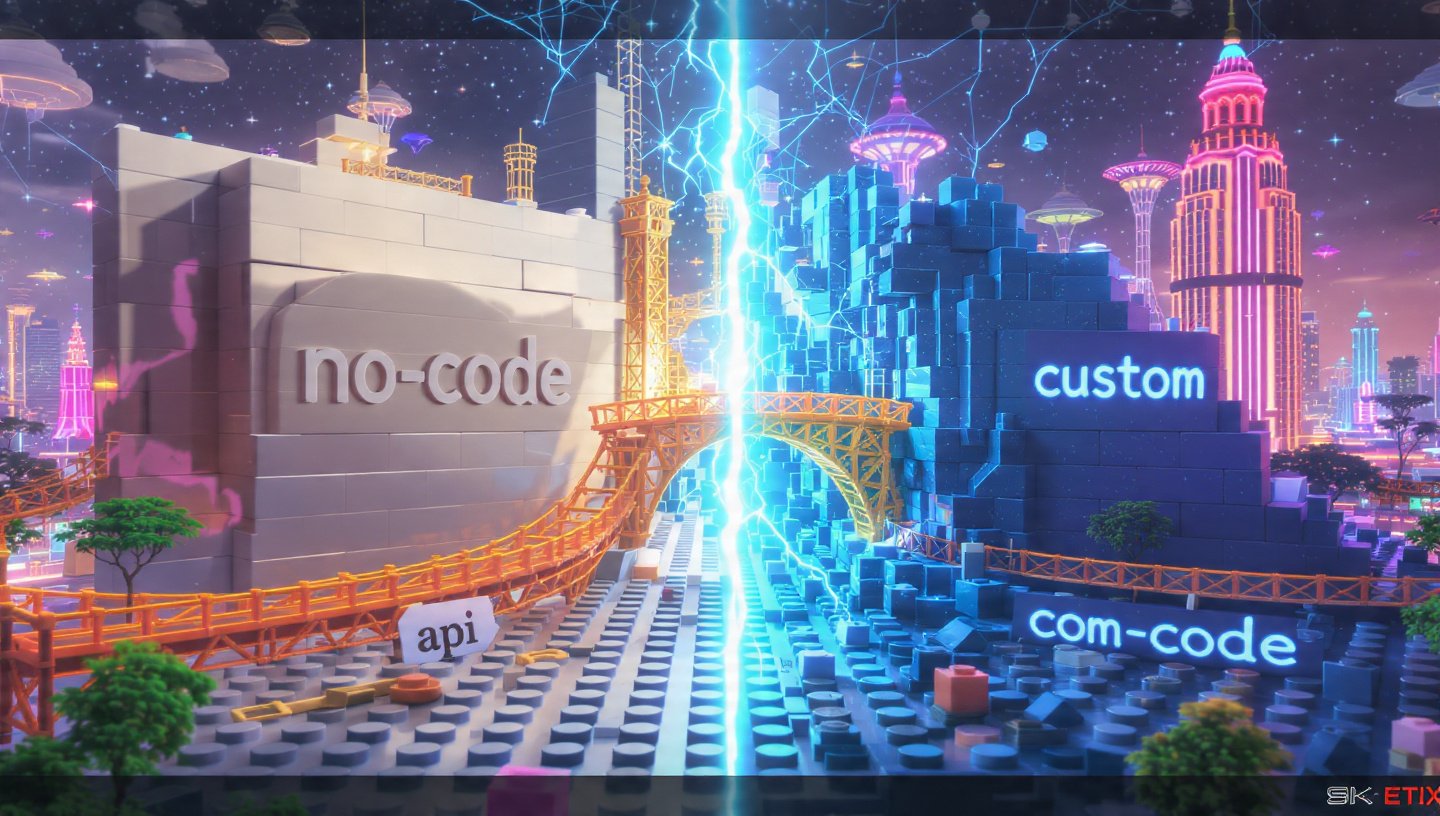
- The Kolkata Strategy: Look for “Open” Low-Code platforms that allow Code Export. If you outgrow the platform, you should be able to take your “Lego set” and turn it into a custom house.
- Hybrid Approach: We often build the “frontend” (the face) in a builder for speed but keep the “backend” (the brains) custom. This gives you the best of both worlds.
5. Rise of the “Citizen Developer”
By 2026, your Marketing Manager in Ballygunge might be building their own landing pages using AI-assisted builders.
- The Role of the Pro: Your developer is no longer a “builder of buttons.” They are the Architect who ensures these mini-apps talk to each other safely and don’t create “Shadow IT” (unsecured apps hidden from the main system).
6. When Custom is Non-Negotiable
Even with the AI-power of 2026 builders, you must go custom if:
- Strict Security: You’re handling sensitive fintech or healthcare data in Kolkata.
- Complex Algorithms: Your site needs to process real-time data or heavy AI computations that a builder can’t handle.
- Unique UX: You want an interface that “breaks the grid” and doesn’t look like any other site on the web.
7. FAQ: Choosing Your Path
- Q: Is No-Code “secure” enough for my business?
- A: Most top-tier 2026 platforms are SOC2 and ISO certified. They are often more secure than a “cheap” custom site built without proper security protocols.
- Q: Will I have to rebuild later if I start with a builder?
- A: Not necessarily. Many startups start with a builder to find “Product-Market Fit” and only rebuild the “heavy” parts as they scale. It’s a smart way to manage cash flow.
- Q: Can AI build a custom site for me?
- A: AI can write 80% of the “boring” code. The final 20%—the logic, the nuance, and the “Kolkata soul”—still requires a human expert.
Conclusion: Efficiency Over Ego
In the past, “real” developers looked down on builders. In 2026, the most successful developers in Kolkata are the ones who use builders to save their clients time and money on the “easy stuff,” so they can focus their talent on the “impossible stuff.”
At our Alipore studio, we don’t pick sides. We pick the right tool for the job. We’ll help you build a strategy that launches fast but scales forever.
Not sure if you need a builder or a custom team?
Request a “Tech Stack Blueprint.” We’ll look at your 3-year goals and tell you exactly where you can save money with low-code and where you must invest in custom development to win.