



1. The Digital Footprint: Kolkata’s New Compliance Frontier
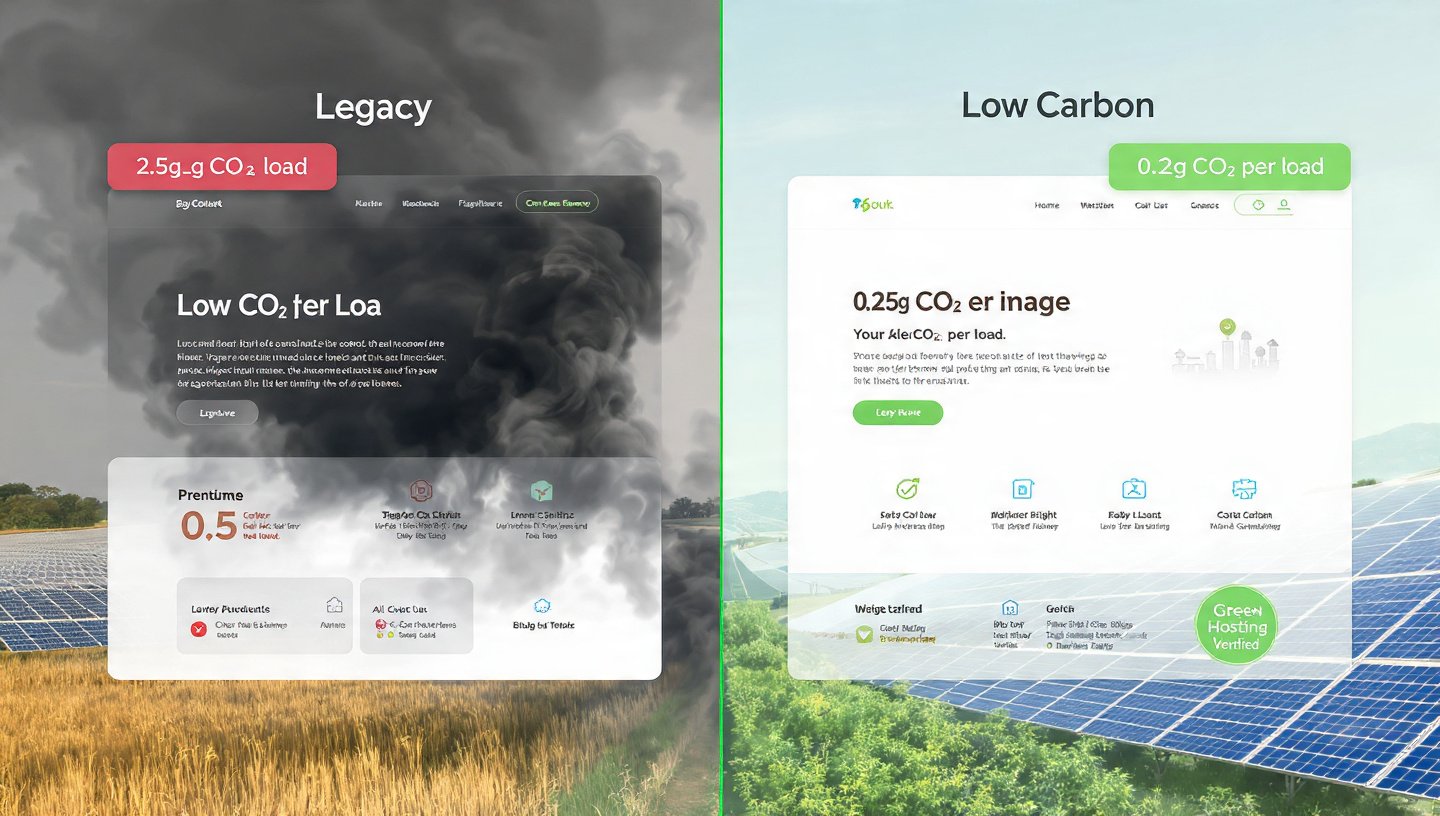
By February 2026, sustainability is no longer just for solar panels and electric buses. Under the latest West Bengal MSME Green Transition Roadmap, businesses are being evaluated on their total carbon footprint—and that includes their Digital Presence. A single webpage load in 2024 emitted an average of $0.5g$ to $2g$ of $CO_2$. For a high-traffic site in Kolkata, this adds up to several tons of carbon annually. In 2026, “Basic” website designing has evolved into Sustainable Web Design (SWD). It’s about building sites that use the least amount of energy possible, making them faster, more accessible, and fully compliant with the new state “Green-Tech” mandates.
2. The Mechanics of Low-Carbon Design
To achieve a low-carbon site, we focus on reducing the data transfer between the server and the user’s device. The formula we use to calculate the impact is:
$$E = [I \times (D \times C)] + (H \times P)$$
- $E$: Total Energy per Page View.
- $I$: Data intensity of the internet (kWh/GB).
- $D$: Data transferred per page load (GB).
- $C$: Carbon intensity of the local grid (g/kWh).
- $H$: Hosting energy source factor (Renewable vs. Fossil).
- $P$: Processing power required for the device.
In 2026, our goal is to keep $D$ (Data) below 1MB per page load without sacrificing the premium aesthetic.
3. Designing for the “Eco-MSME” Incentives
The New Kolkata Development Authority (NKDA) and the Industries Department now offer significant incentives for “Digital Sustainability”:
- The Green FAR (Floor Area Ratio) Bonus: Projects rated Gold or above by the IGBC (Indian Green Building Council) can now claim additional FAR by proving a “Low-Carbon Digital Infrastructure.”
- MSME Capital Subsidies: The WB government offers a 25% subsidy on “Green Digital Transformation” costs for MSMEs that switch to certified green hosting and implement energy-efficient web architectures.
4. The Sustainable UI/UX Toolkit
How do we make a site “Green” in 2026? It’s a mix of invisible engineering and visible design choices:
- OLED-Friendly Color Palettes: Using darker backgrounds (Dark Mode) for mobile-first sites in Kolkata reduces battery consumption on OLED screens by up to 40%.
- System Fonts over Web Fonts: Instead of loading heavy custom fonts from Google servers, we use “System Stacks” (e.g., San Francisco, Roboto) which are already on the user’s phone, saving precious kilobytes.
- Dithered & Vector Imagery: We replace heavy 4K hero images with Dithered Graphics or high-detail SVGs that provide a “Lo-Fi Luxury” feel with 90% less data.
- Lazy Loading 2.0: Not only do we load images as you scroll, but in 2026, we use AI-Edge Caching to predict which page a user from Sector V will click next, pre-loading only the essential text.
5. Comparison: Legacy Build vs. 2026 Sustainable Build
| Feature | Legacy Website (2024) | Sustainable Website (2026) |
| Hosting | Standard Data Centers | Green-Verified (Solar/Wind Powered) |
| Image Format | JPEG / PNG (Heavy) | WebP / AVIF / Dithered (Ultralight) |
| Code Structure | Bloated Frameworks | Vanilla JS / Minified Micro-modules |
| Carbon Impact | ~1.5g $CO_2$ per load | <0.2g $CO_2$ per load |
| State Incentives | None | Eligible for Green MSME Subsidies |
6. Use Case: The “Ballygunge Eco-Boutique”
A high-end sustainable fashion brand in Ballygunge wanted their website to match their “Zero-Waste” ethos:
- The Overhaul: We moved them to a Green-Nodal Hosting service in India and stripped away $3MB$ of unnecessary video backgrounds.
- The Result: Page load time dropped from $4.2s$ to 0.8s. More importantly, their carbon score moved into the top 5% globally.
- The Payoff: They used this “Digital Carbon Audit” to secure a ₹5 Lakh Green-Tech grant from the State Government.
7. FAQ: Sustainable Web Design in Kolkata
- Q: “Does a low-carbon site look ‘boring’?”
- A: Not at all. In 2026, ‘Minimalism’ is the ultimate luxury. A clean, fast, and thoughtful site feels more premium than a cluttered, heavy one.
- Q: “How do I check my current site’s carbon footprint?”
- A: We use tools like WebsiteCarbon or the W3C Sustainability API. Most unoptimized sites in Kolkata currently fail the ‘Green Test’.
- Q: “Is green hosting more expensive?”
- A: In 2026, the price gap has closed. In fact, because sustainable sites use fewer server resources, the long-term hosting costs are often lower.
Conclusion: The Future is Lean
In 2026, your website is more than a sales tool; it’s a statement of your brand’s responsibility to the planet. By adopting low-carbon web design, Kolkata’s businesses aren’t just saving the environment—they are building faster, more efficient, and more profitable digital assets that the government is literally paying them to build.
At our Alipore studio, we believe the cleanest code is the most powerful.
Is your website a carbon liability?
Let’s do a “Digital Carbon & Compliance Audit.” We’ll measure your current emissions and show you exactly how a “Green Redesign” can unlock government incentives and slash your load times.