









1. Beyond Sustainability: The Era of Regeneration
By February 2026, “Sustainability” (doing no harm) is the baseline. The new gold standard for Kolkata’s custom web development is Regenerative Design (actively doing good). Under the Kolkata Climate Action Plan (K-CAP 2025-26), the city has pivoted toward becoming “Climate Positive.”
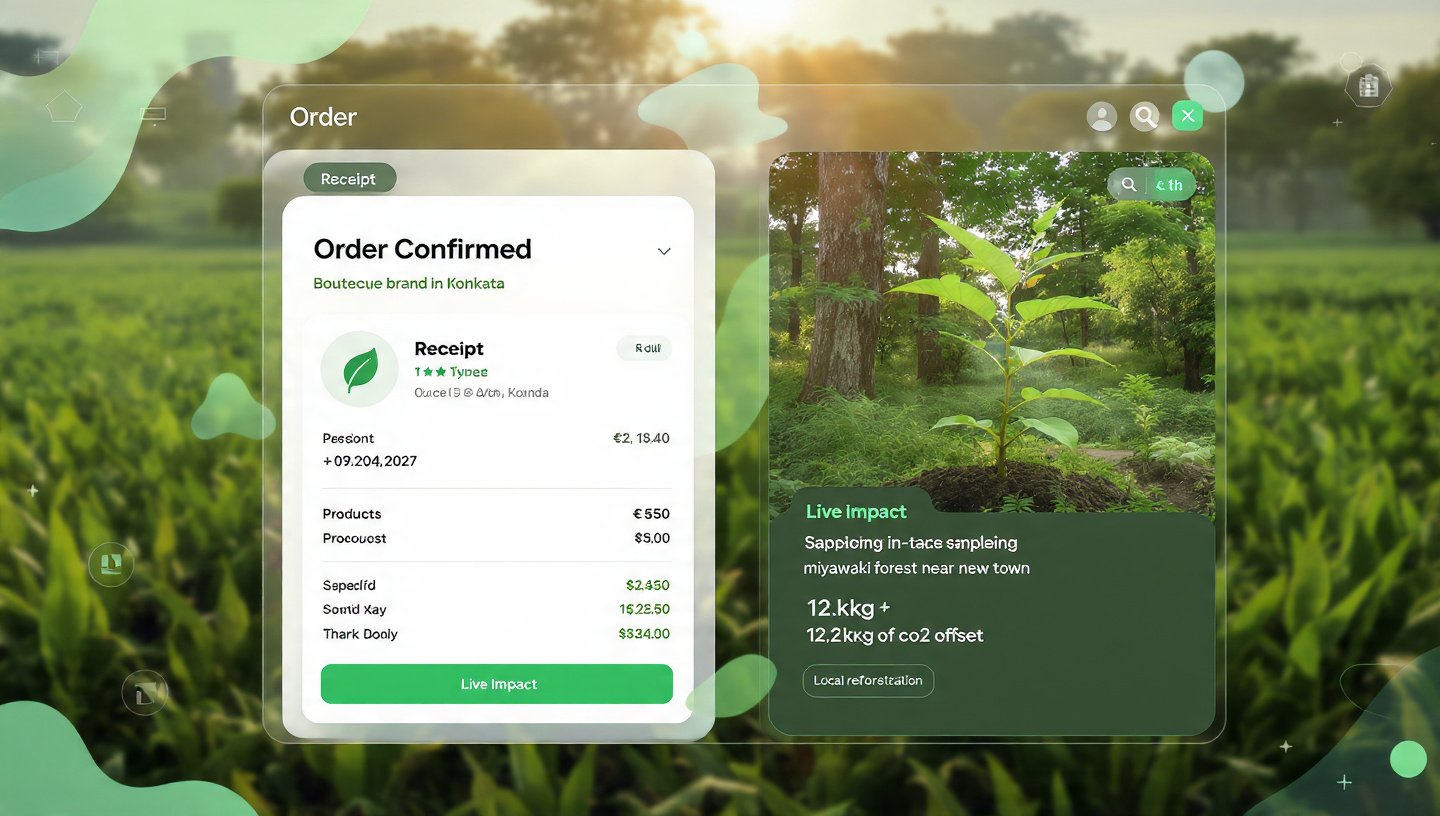
For the final post in our Sustainability Loop, we explore how custom backends are no longer just processing payments—they are processing Positive Impact. Imagine a website that doesn’t just sell a product but also triggers a live, geo-tagged contribution to a Miyawaki Forest in Rajarhat or a mangrove restoration in the Sundarbans.
2. The “Impact-as-a-Service” Backend
In 2026, we build custom “Impact Engines” that sit between your checkout and your environmental partners.
- Transaction-Triggered API: The moment a payment is confirmed, the site calls a 3rd-party API (like GreenLungs or a local NGO portal). A fixed percentage or a specific “Eco-Fee” is instantly transferred.
- Live Geo-Tagging: The custom dashboard doesn’t just say “A tree was planted.” It pulls the GPS coordinates and a live photo of the specific sapling dedicated to that customer.
- Carbon Amortization Logic: We use custom algorithms to show the user how their specific purchase “pays back” its carbon debt over time.
$$C_{offset}(t) = \int_{0}^{t} R(t) dt – C_{initial}$$
Where $C_{offset}$ is the net carbon removed, $R(t)$ is the absorption rate of the specific native species planted (e.g., Banyan or Krishnachura), and $C_{initial}$ is the carbon footprint of the product’s manufacture and shipping.
3. The “Green-Lung” Dashboard: Radical Transparency
The 2026 consumer, especially the Gen Z and Gen Alpha demographic in South Kolkata and Salt Lake, is wary of “Greenwashing.” A custom-built Transparency Dashboard is the antidote:
- Interactive Impact Maps: Using Mapbox or Google Earth Engine, we create a custom overlay on your site where customers can see “The [Brand Name] Forest”—a collective visualization of every tree planted by your community.
- Real-Time Air Quality (AQI) Correlation: For brands focused on Kolkata’s air, the dashboard can show how local reforestation projects are incrementally improving the AQI in surrounding neighborhoods like Bypass or Kasba.
- Blockchain Provenance: Every donation is recorded on a public ledger, ensuring that the ₹551 “Tree Fee” actually reached the soil and wasn’t lost in administrative overhead.
4. Designing the “Organic” UI
A regenerative website shouldn’t look like a cold spreadsheet. It should feel like an extension of nature.
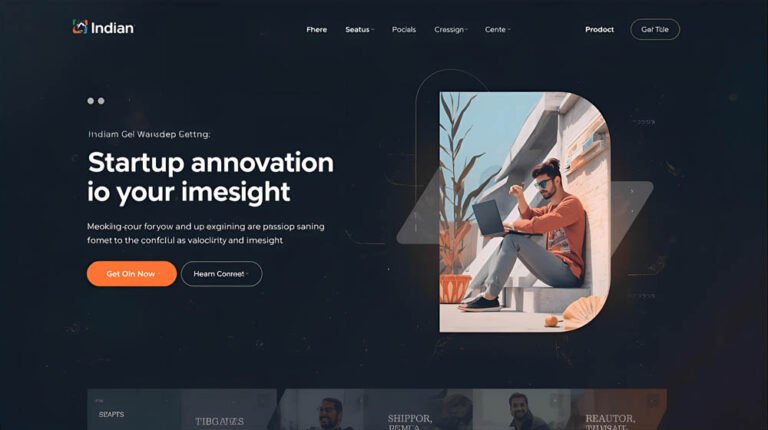
- Anti-Grid & Fluid Layouts: In 2026, we move away from rigid squares. We use SVG-powered masks and organic, asymmetrical shapes that mimic the flow of the Hooghly River or the canopy of a forest.
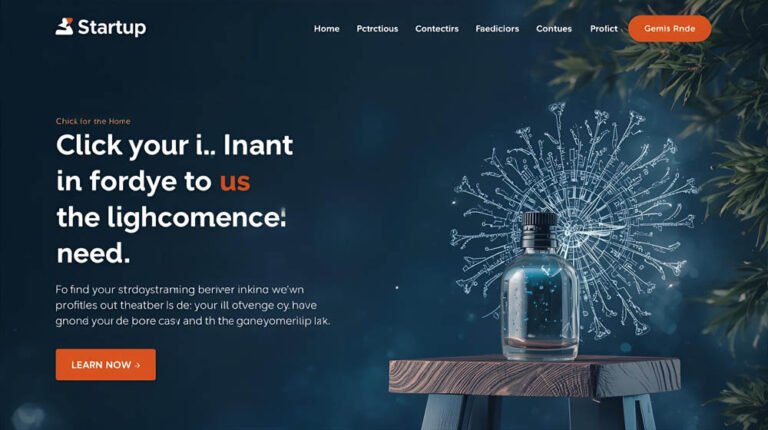
- Bioluminescent Accents: Replacing harsh “Electric Blues” with soft teals and “Bioluminescent” glows that react to the user’s cursor, creating a sense of life within the interface.
- Adaptive Narrative: The micro-copy on the site changes as your collective forest grows. “We’ve just restored 5 acres of the Wetlands!” becomes a dynamic headline that shifts every time a milestone is hit.
5. Comparison: CSR 1.0 (Static) vs. Regenerative Design (2026)
| Feature | CSR 1.0 (Legacy) | Regenerative Design (2026) |
| Donation Timing | Annual / Quarterly lump sum | Real-time (Per transaction) |
| Verification | PDF Annual Report | Geo-tagged / Live Photo Tracking |
| User Participation | Passive (Hidden) | Active (Personalized Dashboard) |
| Visual Style | Corporate / Rigid | Organic / Living / Fluid UI |
| Impact Focus | Global / Vague | Hyper-Local (Kolkata Green-Lungs) |
6. Use Case: The “New Town” Eco-Tech Hub
A tech startup based in Candor TechSpace, New Town wanted to offset the carbon cost of their server usage:
- The Build: We built a custom dashboard that tracked their real-time server load and converted it into “Mangrove Units.”
- The Integration: For every 1,000 API calls, the system automatically funded the planting of one mangrove sapling in the Sundarbans.
- The Result: The brand achieved “Climate Positive” status within 6 months and used the live dashboard to win a major European contract that required strict ESG (Environmental, Social, and Governance) transparency.
7. FAQ: Implementing Regenerative Design
- Q: “Is it expensive to maintain a live tracking API?”
- A: In 2026, most local green partners have standardized their APIs. The cost is usually a small flat fee per transaction, which is often offset by the increased customer loyalty and ‘Green-Tech’ tax rebates in West Bengal.
- Q: “What if a tree dies?”
- A: Most ‘Green-Lung’ partners (like GreenLungs.in) include a 3-year maintenance and replacement guarantee. The website dashboard simply reflects this ‘Active Care’ status.
- Q: “Does this work for service-based businesses in Kolkata?”
- A: Absolutely. Law firms in High Court or consultancies in Sector V use it to link ‘Billable Hours’ to ‘Environmental Hours’—planting a tree for every 10 hours of work.
Conclusion: Coding a Greener Kolkata
In 2026, the internet is no longer a separate world from our physical environment. By building regenerative websites, Kolkata’s businesses are proving that technology can be the greatest ally of ecology. When every click contributes to a cooler, greener, and more breathable city, “Design” becomes a powerful tool for survival.
At our Alipore studio, we don’t just build for today; we code for the next generation of Kolkata.
Is your brand ready to grow?
Let’s do a “Regenerative Architecture Brainstorm.” We’ll identify a local environmental cause that aligns with your brand and show you how to build a custom backend that turns every sale into a living legacy.