




1. The Hidden Cost of a “Heavy” Website
By February 2026, the digital world is facing a reality check. We often think of the internet as “invisible,” but every click, scroll, and video play in Kolkata has a physical footprint. The data centers powering our websites consume massive amounts of electricity. In fact, by 2026, the internet’s carbon footprint has surpassed that of the global aviation industry.
For a small business in Lake Market or Behala, a “heavy” website isn’t just bad for the planet—it’s bad for the bottom line. Heavy sites load slowly on budget phones, drain customer batteries, and consume expensive data packs. Sustainable Web Design is the solution: it’s the art of doing more with less.
2. The “Green” Speed Advantage
At our Alipore studio, we’ve found that the goals of sustainability and high performance are identical. When you reduce a website’s carbon footprint, you inadvertently create a speed demon.
- Lower Data Transfer: By using modern image formats like WebP and AVIF, we reduce file sizes by 50–70% compared to old JPEGs. Less data to move means faster loading on 4G/5G networks in crowded areas like Burrabazar.
- Reduced CPU Strain: Massive JavaScript libraries make phones run hot and drain batteries. Our “Basic” builds use Vanilla CSS and minimal code, ensuring the site feels smooth even on a ₹10,000 smartphone.
- Clean Code = Clean Air: Efficient server-side requests mean the server works less, uses less cooling, and lasts longer.
3. Designing for Longevity (The “Anti-Redesign” Philosophy)
In 2026, “Basic” doesn’t mean “Cheap”—it means Timeless. Sustainable design focuses on longevity.
- System Fonts: Instead of forcing a user to download 500kb of custom fonts, we use beautiful system fonts (like Inter or system-ui) that are already on the device. This makes the text appear instantly.
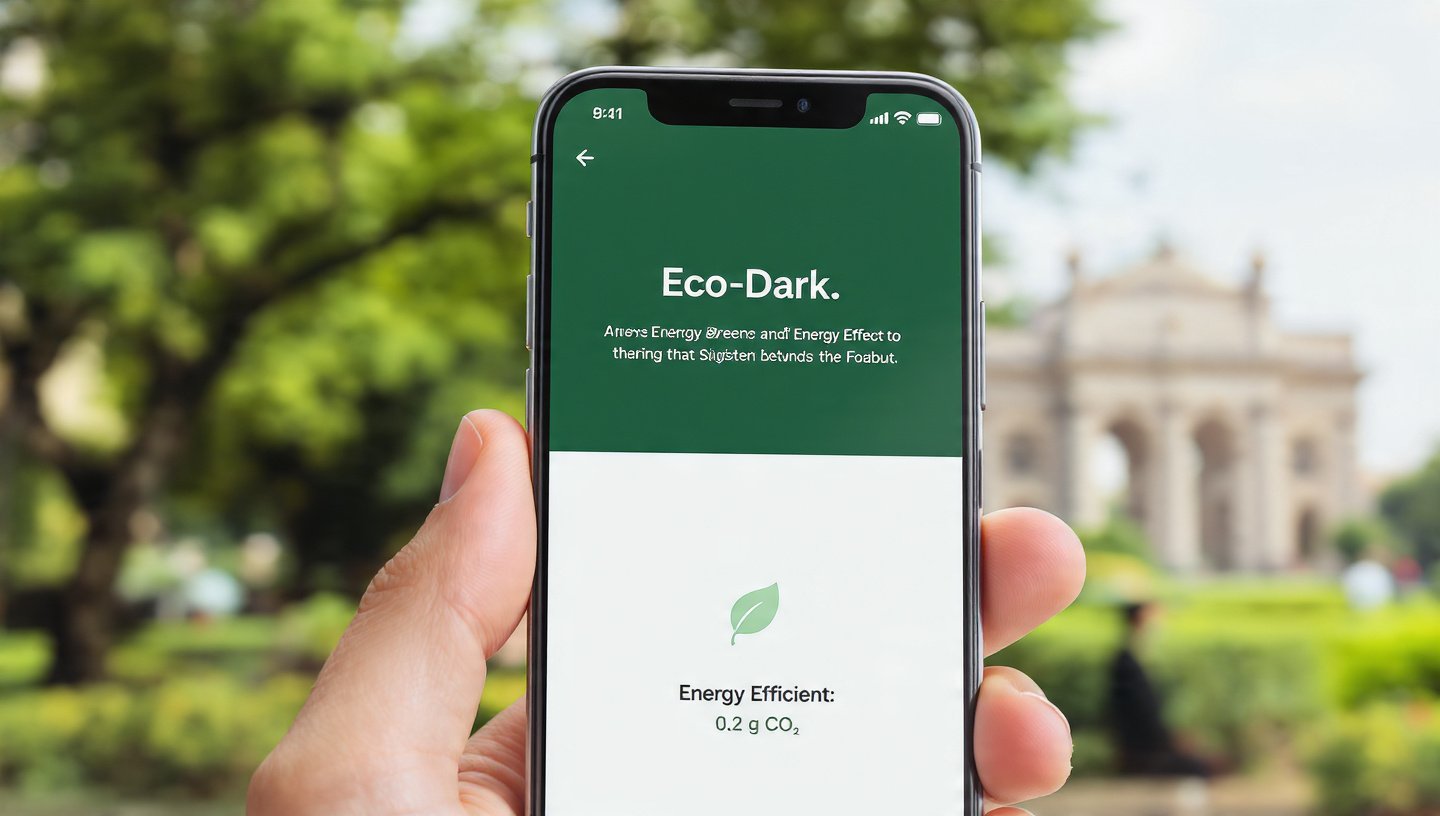
- Dark Mode by Default: For users with OLED screens (common in 2026), dark themes can reduce power consumption by up to 60%. It’s better for the eyes and the battery.
- Minimalist Aesthetics: We avoid “junk” features—like auto-playing videos or heavy social media widgets—that provide little value but high energy costs.
4. Comparison: Traditional Basic Site vs. Sustainable Basic Site
| Feature | Traditional Site (2024) | Sustainable Site (2026) |
| Page Weight | 2MB – 4MB | < 500KB |
| Carbon per Load | ~2.0g CO2 | < 0.3g CO2 |
| Mobile Speed Score | 60/100 | 98-100/100 |
| Font Usage | 3-4 Custom Web Fonts | System Fonts (0kb download) |
| Image Format | JPEG / PNG | WebP / AVIF (Next-Gen) |
| Hosting | Standard Server | 100% Renewable Green Hosting |
5. Technical Pillars for the “Green” Kolkata Shop
How do we achieve this for a local business in West Bengal?
- Local Green Hosting: We move your site to servers powered by renewable energy (wind/solar) located close to Kolkata to reduce data travel distance.
- Static Site Generation (SSG): For a 5-page site, we don’t need a heavy database. We pre-build the pages into pure HTML, which is the most energy-efficient format in existence.
- Vector Graphics (SVG): Instead of heavy photos for logos and icons, we use code-based SVGs that look perfectly crisp on any screen size but weigh almost nothing.
6. Use Case: The “Gariahat” Boutique Stationery Store
A small boutique in Gariahat wanted a digital presence that matched their “Eco-Friendly” brand values:
- The Build: We designed a minimalist 5-page site using a “Monochrome-Plus” palette (saving energy on pixels).
- The Result: The site achieved a 0.18g CO2 rating (Top 1% globally).
- The Payoff: Because the site was so light, it loaded in 0.3 seconds on mobile. The store saw a 40% increase in mobile inquiries from customers who were tired of slow, bloated competitor sites.
7. FAQ: Going Green without Losing Style
- Q: “Will an eco-friendly site look boring?”
- A: Not at all. Some of the world’s most premium brands (like Apple or Tesla) use minimalist, high-performance design principles. It’s about ‘Sophisticated Restraint.’
- Q: “Is green hosting more expensive?”
- A: In 2026, green hosting is cost-competitive with traditional hosting. In many cases, it’s cheaper because the sites are so efficient they require less server ‘horsepower.’
- Q: “How do I prove my site is green?”
- A: We integrate a ‘Digital Carbon Badge’ from the Green Web Foundation. It builds immense trust with the eco-conscious Gen Z and Gen Alpha shoppers of Kolkata.
Conclusion: Efficiency as a Virtue
In 2026, the most successful basic websites in Kolkata aren’t the loudest—they are the most efficient. By choosing a sustainable approach, you aren’t just helping the environment; you are providing your customers with the fastest, most reliable experience possible. It’s a rare “Win-Win-Win” for your business, your users, and the planet.
At our Alipore studio, we believe the future of the web is light, fast, and green.
Want to see your current site’s carbon score?
Let’s do a “Green Performance Audit.” We’ll measure your site’s energy impact and show you exactly how a “Sustainable Redesign” can slash your load times while making your brand a leader in Kolkata’s green revolution.