










1. The Algorithm’s New Moral Compass
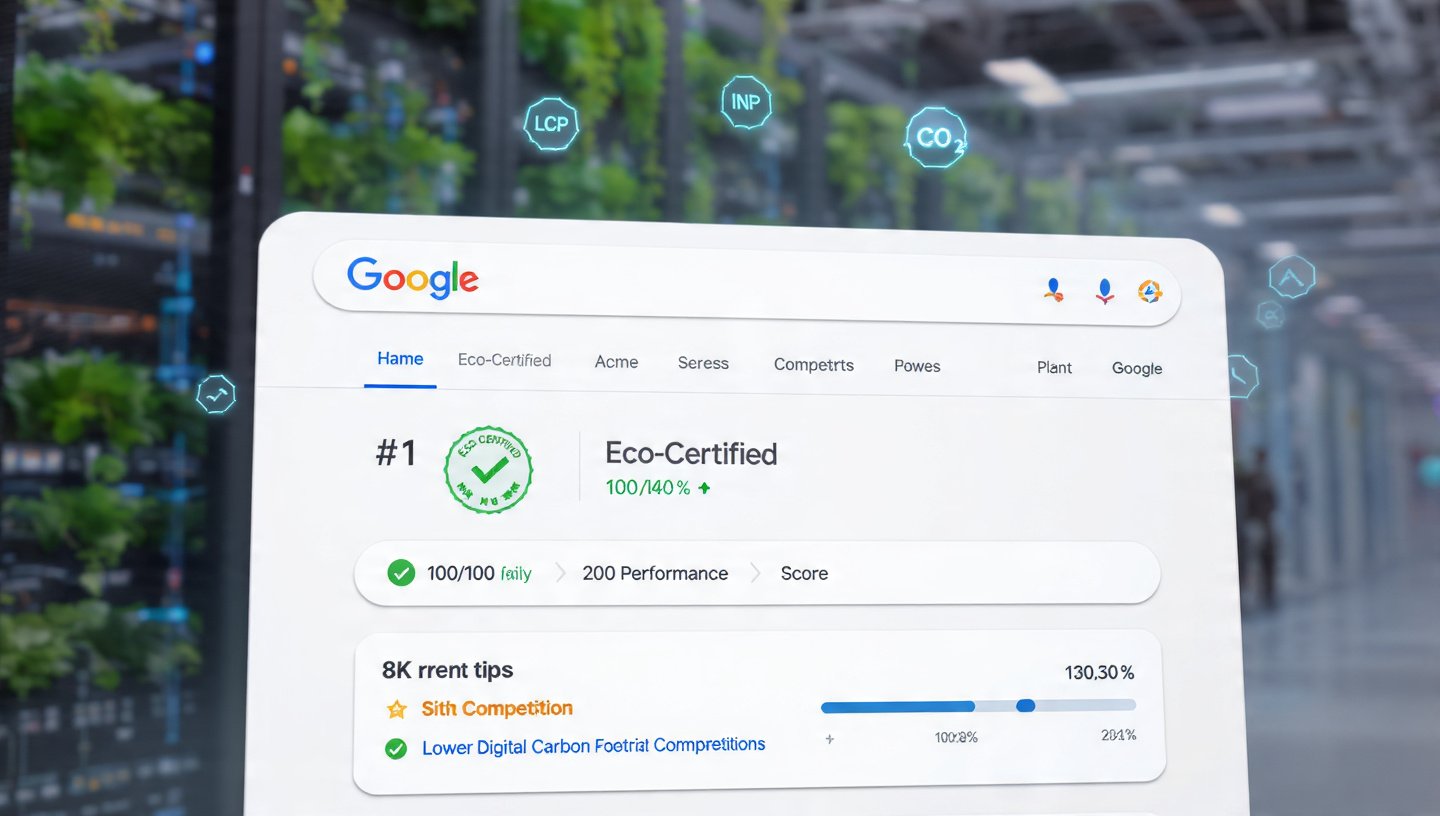
By February 2026, Google’s ranking criteria have undergone a quiet but radical transformation. In the past, “Speed” was a technical necessity. Today, it is a moral and environmental one. As global data center usage reached record highs in 2025, Google integrated Digital Sustainability directly into its Core Ranking Algorithm.
In Kolkata, where the e-commerce market is more crowded than a Saturday at New Market, the tie-breaker for the #1 spot is no longer just “Backlinks”—it’s Efficiency. If two sites have equal authority, the one that consumes less energy to load will always win the higher rank.
2. Beyond LCP: The Era of INP (Interaction to Next Paint)
While the old days focused on how fast a page looked (Largest Contentful Paint), 2026 SEO focuses on how fast it feels during the entire visit.
- The INP Standard: Google now tracks Interaction to Next Paint (INP). It measures the latency of every click, tap, and keyboard entry. If your Park Street luxury watch store has a laggy “Add to Cart” button, your ranking will sink.
- The Energy Link: High INP scores usually mean heavy JavaScript is clogging the user’s processor. Heavy processing = High battery drain = High carbon footprint. Google’s bots now penalize this “Energy Waste.”
3. The “Lightweight” Advantage for Kolkata E-Retailers
For a business in Salt Lake or Alipore, moving to a “Sustainable SEO” model provides a massive competitive edge:
- The “Eco-Badge” in SERPs: Rumors from the latest Google Search Central updates suggest that sites meeting certain “Carbon-Per-Visit” thresholds may soon receive a visual “Green Badge” in search results, dramatically increasing Click-Through Rates (CTR).
- AI-Discovery Preference: Google’s Search Generative Experience (SGE) and “AI Mode” favor lightweight sites because they are easier and cheaper for AI bots to crawl and summarize.
- Crawl Budget Optimization: If your site is 500kb instead of 5MB, Googlebot can index 10x more of your product pages for the same “energy cost,” ensuring your new collections are discovered faster.
4. Measuring Success: The 2026 Performance Audit
| Metric | 2024 “Good” | 2026 “Elite” (Ranking Requirement) |
| Largest Contentful Paint (LCP) | < 2.5s | < 1.2s |
| Interaction to Next Paint (INP) | < 200ms | < 50ms |
| Digital Carbon Footprint | Not Tracked | < 0.2g CO2 per page view |
| JS Bundle Size | 300KB – 1MB | < 50KB (Initial Load) |
| Mobile Accessibility | 90/100 | 100/100 (WCAG 2.2 Compliant) |
5. Technical Implementation: The “Kolkata Edge” Strategy
How do we ensure your e-commerce site hits these “Elite” metrics?
- Serverless Scaling: We use architectures that “sleep” when no one is browsing, meaning zero energy consumption during off-peak hours in Kolkata (like 3 AM IST).
- Asset Offloading: We use Grid-Aware APIs that delay non-essential background tasks (like analytics syncing) until the local Kolkata power grid is running on its highest percentage of renewable energy (Solar-heavy hours).
- Bhashini-Optimized Text: For our Bengali-language stores, we use highly optimized Unicode structures that reduce the data weight of regional scripts compared to older, bulkier encoding methods.
6. Use Case: The “New Town” Organic Grocery Chain
A high-end organic grocery delivery service in New Town was stuck at rank #4 for “Organic Vegetables Kolkata”:
- The Fix: We didn’t change their content. We changed their architecture. We moved them to a Zero-JS Resumable framework and switched to Green Hosting.
- The Result: Their carbon score dropped from 1.4g to 0.15g per visit. Their INP dropped to 22ms.
- The SEO Payoff: Within three weeks of the “Green Update,” they jumped to Rank #1, outperforming national competitors whose sites were bloated with tracking scripts and heavy video ads.
7. FAQ: Sustainable SEO
- Q: “Will removing tracking scripts hurt my marketing?”
- A: In 2026, we use ‘Privacy-First, Server-Side Tracking.’ All the data is processed on the server, so the user’s browser (and your SEO score) never feels the weight of the scripts.
- Q: “Does my hosting location matter for SEO?”
- A: Yes! Hosting your site on a Kolkata-based ‘Green Edge’ node reduces the distance data travels, lowering latency and carbon footprint simultaneously—two things Google loves.
- Q: “Is this only for big brands?”
- A: Small businesses actually have an advantage. It’s much easier to make a 50-product shop ‘Carbon-Neutral’ than a 50,000-product giant.
Conclusion: The Future is Lean
In 2026, the internet is finally going on a diet. For the e-commerce pioneers of Kolkata, this “Performance-First” shift is the ultimate opportunity. By building websites that are as kind to the planet as they are fast for the user, you aren’t just pleasing an algorithm—you are building a brand that stands for quality and responsibility.
At our Alipore studio, we don’t just optimize for bots; we optimize for a better future.
Is your SEO strategy stuck in the “Carbon-Heavy” past?
Let’s do a “2026 SEO Performance Deep-Dive.” We’ll analyze your site’s INP and Carbon Footprint, giving you a technical roadmap to bypass your slower, “heavier” competitors in the Kolkata search rankings.