












1. The Transition from “Search” to “Confirmation”
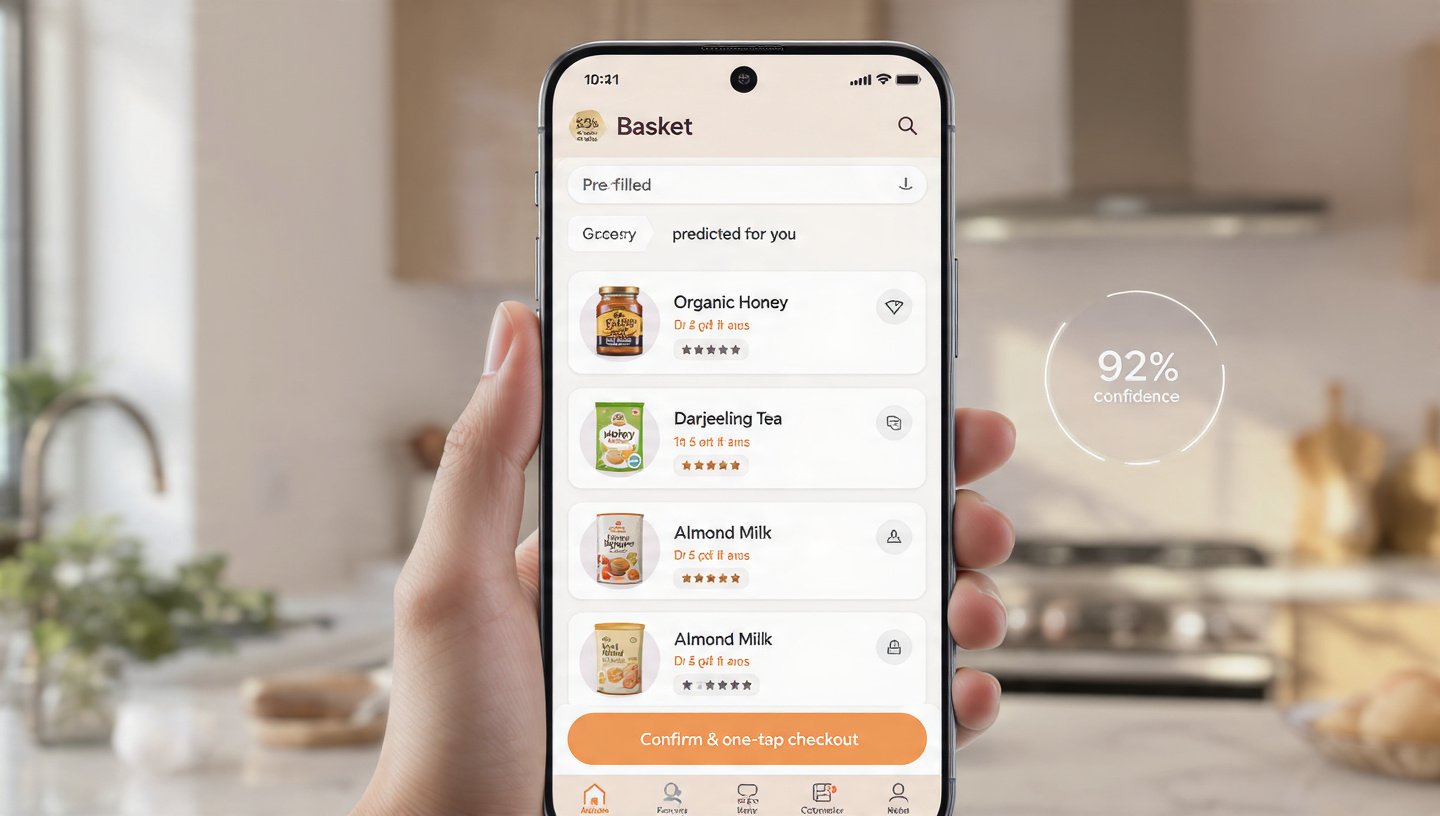
For twenty years, the e-commerce journey has started with a search bar. In February 2026, for many of our clients in Kolkata, it starts with a Confirmation. We are entering the era of Anticipatory Retail, where the website predicts your needs so accurately that “searching” feels like an unnecessary chore.
At our Alipore studio, we are building Predictive Cart Engines. For a regular shopper in Ballygunge, the moment they log into their favorite grocery or wellness app, their cart is already 80% full. The AI has already analyzed their weekly consumption of milk, the date they last bought coffee, and even the local weather (suggesting umbrellas or cooling drinks).
2. How Predictive Cart-Building Works
It’s not magic; it’s a high-concurrency data pipeline:
- Consumption Cycle Modeling: The AI tracks the “burn rate” of products. If you buy a 1kg tub of artisanal honey every 22 days, the AI places it in your basket on day 20.
- Contextual Triggers: The system monitors local Kolkata events. Is Durga Puja approaching? The cart suggests festive sweets and pooja essentials. Is a heatwave hitting South City? It pre-fills electrolyte drinks and sunscreens.
- Complementary Logic: If you’ve just added a new brand of pasta, the AI predicts you’ll need specific sauces or parmesan cheese, completing the “meal unit” before you have to look for them.
3. The “Smart Substitution” Layer
In 2026, “Out of Stock” isn’t a dead end. Predictive carts include Agentic Substitutions:
- Preference-Aware Swaps: If your preferred brand of organic A2 milk is unavailable in the New Town warehouse, the AI doesn’t leave the slot empty. It finds the closest match based on your past “fat-content” preferences and diet (e.g., swapping for an oat milk if you’ve shown vegan tendencies).
- Price-Optimization: If a similar, high-quality product is on a deep discount in Burrabazar, the AI might suggest a “Smart Swap” to save you money, increasing trust and loyalty.
4. Comparison: Traditional Checkout vs. Predictive Basket
| Feature | Legacy E-commerce (2024) | Predictive E-commerce (2026) |
| User Starting Point | Empty Cart + Search Bar | Pre-filled “Suggested” Basket |
| Path to Purchase | 10-15 Clicks | 2-3 Clicks (Review & Pay) |
| Discovery | Manual Browsing | AI-Curated Additions |
| Retention Rate | Medium | High (Friction is removed) |
| Average Order Value | Baseline | +25-35% (Basket completion logic) |
5. Technical Implementation: The Privacy-Preserving Engine
Building this in Kolkata requires balancing power with the strict Digital Personal Data Protection Act (2025):
- On-Device Learning: We use Federated Learning where the AI learns your habits on your phone. Only the “Prediction Result” is sent to the server, not your raw browsing history.
- Probability Thresholds: We only pre-fill items with a >85% confidence score. Anything lower is placed in a “You might also need…” section to avoid cluttering the user’s primary intent.
- Real-Time Sync: The cart updates instantly across devices. If an AI assistant adds an item via voice on the Kolkata Metro, it’s there when the user opens their laptop at home.
6. Use Case: The “Salt Lake” Organic Farm-to-Table
A boutique grocery brand serving Salt Lake Sector V faced high cart abandonment because their catalog was too large for busy tech professionals:
- The Fix: We implemented a “Monday Morning Basket”—a predictive cart that appeared every Monday at 8 AM.
- The Result: A 52% reduction in abandonment. Most customers now simply “Confirm and Pay” during their morning commute, knowing the AI has already handled their weekly essentials.
- The Bonus: By predicting what people would buy, the brand reduced food waste in their warehouse by 47% because they knew exactly what to harvest and stock.
7. FAQ: Trusting the Prediction
- Q: “Will people feel it’s too intrusive?”
- A: No, because it’s ‘User-Controlled.’ We always include a ‘Clear All’ button and a ‘Why this?’ tooltip that explains the AI’s logic (e.g., ‘You usually buy this every 3 weeks’).
- Q: “What if the AI gets it wrong?”
- A: The system is self-correcting. If a user removes an item, the AI adjusts its ‘Confidence Score’ for that category and won’t suggest it again until the consumption pattern changes.
- Q: “Is this only for groceries?”
- A: Not at all. We are implementing this for B2B industrial supplies in Howrah and beauty brands in Park Street for high-frequency replenishment items.
Conclusion: Selling Time, Not Just Products
In 2026, the greatest luxury you can give your customer is Time. By building a website that anticipates needs and eliminates the search-and-click fatigue, you aren’t just an e-commerce store—you are a personal logistics partner. For Kolkata’s fast-moving urban population, the “Predictive Cart” is the ultimate competitive advantage.
At our Alipore studio, we design for the future of intent.
Is your store still waiting for the customer to act?
Let’s do a “Basket Intelligence Strategy Session.” We’ll analyze your repeat-purchase data and show you how a predictive cart can turn your “Search-First” site into a “Confirmation-First” powerhouse that your customers will love.