









1. The Digital Cost of a “Next” Button
By February 2026, the friction of a traditional multi-step checkout isn’t just a conversion killer—it’s an energy drain. Every time a customer in Kolkata clicks “Next” to go from Shipping to Payment, the browser sends a new set of requests, the server spins up to generate a new page, and data centers in the Bantala IT Hub or beyond consume electricity.
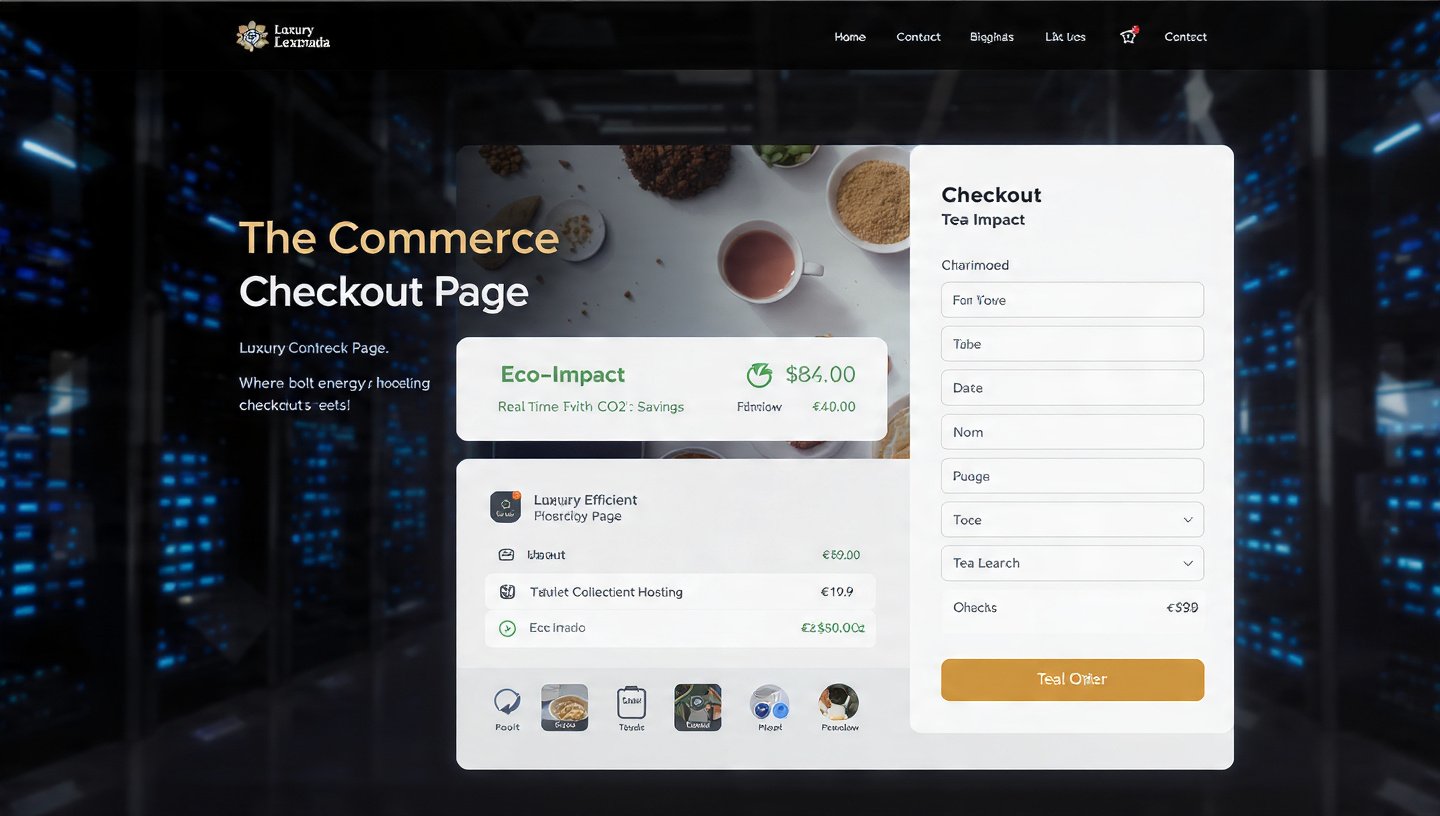
At our Alipore studio, we’ve perfected the Zero-Waste Checkout. By condensing the entire purchase journey into a single, high-performance page, we reduce server-side energy consumption by up to 40% while slashing cart abandonment rates.
2. The Anatomy of a Zero-Waste Checkout
A sustainable checkout isn’t just “short”; it’s architecturally lean. We utilize a Single-Request Architecture:
- AJAX-Powered Updates: Instead of reloading the whole page to calculate taxes or shipping for a Salt Lake delivery, only the specific “Total” fragment of the page updates. This saves 80% of the data transfer per interaction.
- Stateless Validation: We use client-side (browser-based) validation to catch errors before they hit the server. This prevents unnecessary “failed” server cycles, saving both user time and processing power.
- Pre-Fetching & Caching: We pre-cache the payment icons and fonts during the “Add to Cart” phase so the final checkout page loads with zero additional asset requests.
3. Why “One-Page” is the Green Standard
In 2026, the environmental impact of a website is measured by “Data per Transaction.” One-page flows win because they minimize the Total Network Overhead:
- Reduced DOM Size: We keep the code behind the checkout extremely lightweight, ensuring the browser doesn’t have to use high CPU power to “paint” the screen.
- Fewer HTTP Requests: By bundling shipping, billing, and payment into one view, we eliminate the need for 3–5 separate page-load events.
- Low-Energy Font Sets: We use “Variable Fonts” that pack multiple weights into one tiny file, reducing the kilobyte count sent over the airwaves to the user’s phone on the Kolkata Metro.
4. Comparison: The 2024 Multi-Step vs. 2026 Zero-Waste Flow
| Metric | Multi-Step Checkout (Legacy) | Zero-Waste One-Page (2026) |
| Server Round-Trips | 4 – 6 per customer | 1 – 2 per customer |
| Data Transferred | 1.5MB – 3.0MB | < 400KB |
| Energy per Checkout | ~0.8g CO2 | ~0.2g CO2 |
| Avg. Time to Finish | 90 – 120 Seconds | 30 – 45 Seconds |
| Conversion Lift | Baseline | +18-24% on Mobile |
5. Integrating “Green Logistics” Incentives
A Zero-Waste Checkout is also a platform for behavioral change. Our 2026 designs for Kolkata brands include:
- The “Slow & Green” Shipping Toggle: A default-selected option that offers a small discount (or carbon offset) if the user chooses a 3-day “Eco-Delivery” via electric scooter rather than 24-hour express.
- Packaging Selection: A simple checkbox for “Minimalist Packaging” (no plastic, recycled box) that appeals to the sustainability-minded shoppers of Ballygunge.
- Carbon Impact Transparency: A real-time counter that shows the difference in emissions between their selected options, turning the checkout into an educational moment.
6. Use Case: The “Darjeeling Heritage” Tea Export
A premium tea brand exporting from Kolkata to Europe faced high abandonment from eco-conscious international buyers:
- The Overhaul: We replaced their 4-step checkout with a “Sustainable One-Page” interface.
- The Result: Server costs dropped by 15% due to lower resource usage.
- The Impact: Cart abandonment decreased by 32%. European customers specifically praised the “transparency” of the carbon-neutral shipping options built into the flow.
7. FAQ: Switching to One-Page Sustainable Flows
- Q: “Is one-page checkout harder to track in Analytics?”
- A: In 2026, we use ‘Event-Based Tracking’ (like GA5). Instead of page loads, we track ‘Section Interactions.’ You get even better data on exactly where a user hesitates without needing more energy-heavy page reloads.
- Q: “Does it work with all payment gateways like Razorpay or Stripe?”
- A: Yes. Modern ‘Headless’ APIs allow us to embed payment fields directly into our one-page design, maintaining security while keeping the experience seamless.
- Q: “Can I mention the CO2 savings in my marketing?”
- A: Absolutely! In 2026, your ‘Digital Sustainability Score’ is a major PR asset. We provide the data reports you need to back up those claims.
Conclusion: Efficiency is the Ultimate Luxury
The e-commerce landscape of 2026 demands more than just a “Buy” button. It demands a brand that respects the planet as much as the customer’s time. By implementing a Zero-Waste Checkout, your Kolkata-based store isn’t just saving on hosting bills—you are building a brand that stands for the future.
At our Alipore studio, we build the fastest paths to purchase, for a world that needs to slow down its emissions.
Ready to de-clutter your checkout and your carbon footprint?
Let’s do a “Checkout Energy Assessment.” We’ll analyze your current purchase flow and show you how a “Zero-Waste” transition can boost your sales while making your brand a leader in the Green Web movement.