
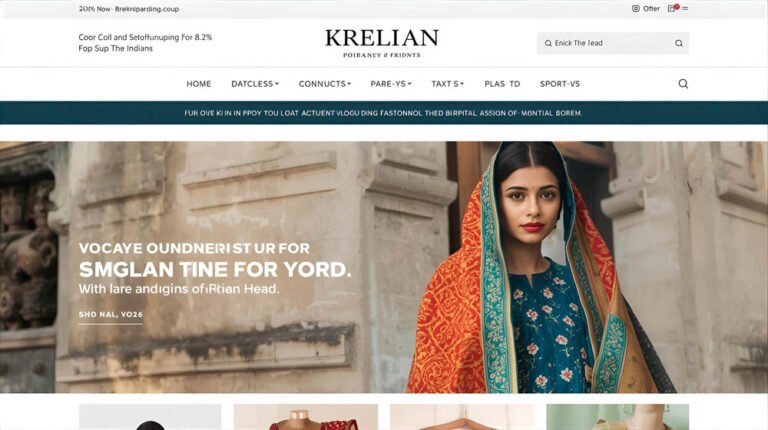
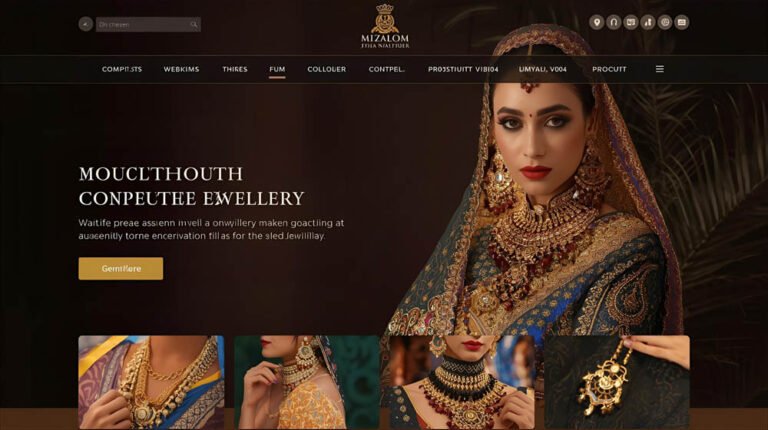
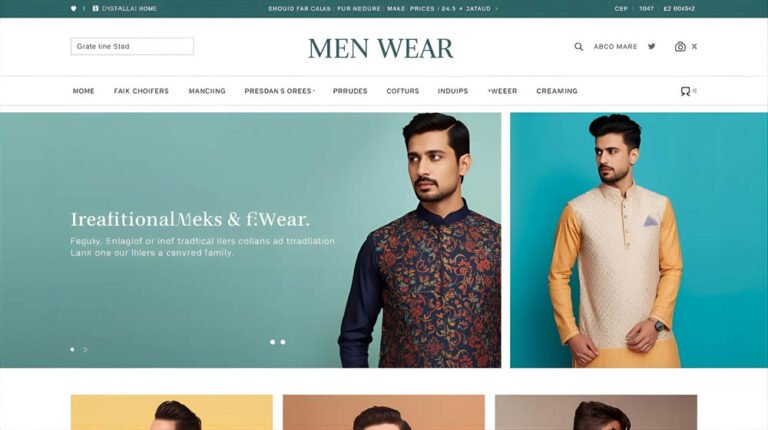
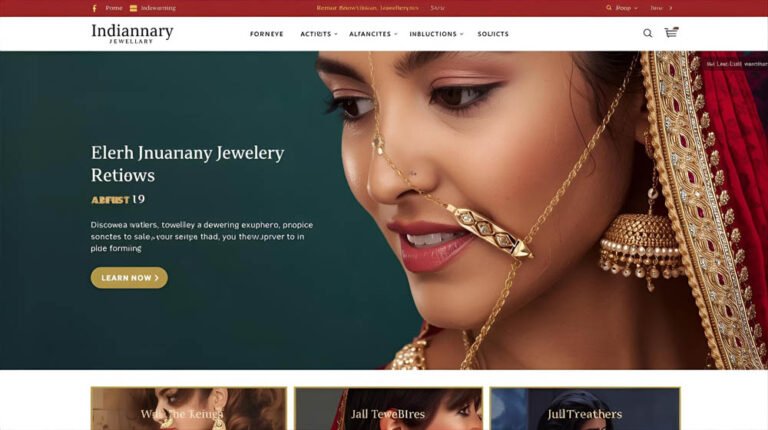


1. The Business Need: Moving Beyond “DM for Price”
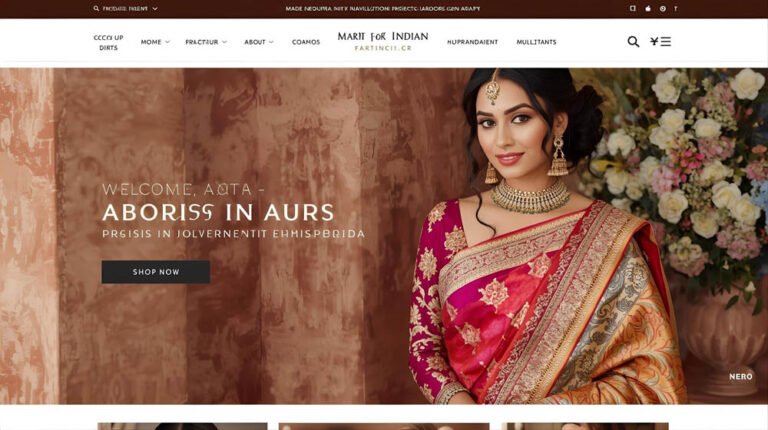
If you run a saree or ethnic wear boutique in Gariahat, Dakshinapan, or Burrabazar, you likely already sell online using Instagram and WhatsApp. You post a picture, a customer messages you, you negotiate the price, share a Google Pay number, wait for the screenshot, manually pack the item, and then stand in line at the local courier office.
This process works when you get 2 orders a day. But when you get 20? It becomes a chaotic, exhausting full-time job.
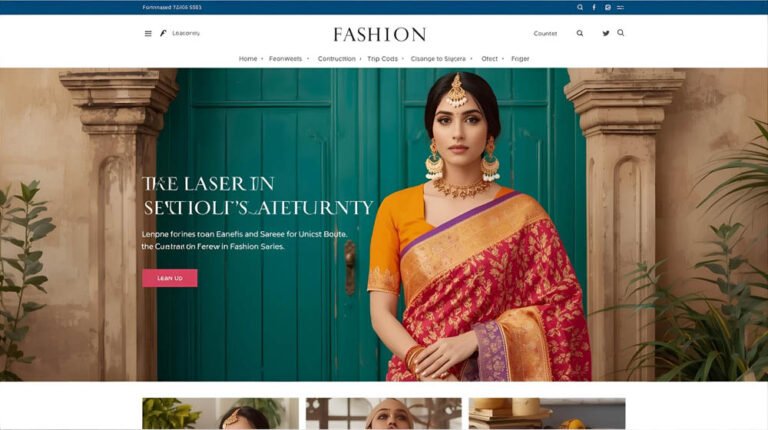
This is where a proper website changes your life. An online store works while you sleep. Customers can browse your inventory, pay securely, and generate a shipping label automatically—without you typing a single message.
2. The Classification: Why This is an “E-commerce Website”
At our agency, we classify a retail boutique as E-commerce Website Designing.
Why? Because the website’s primary job is to process financial transactions.
- It is NOT Basic: A basic site just shows photos and a phone number. An e-commerce site actively manages your stock, handles money, and calculates shipping costs.
- It is NOT Custom: You do not need to build a system from scratch. Millions of clothing stores exist online; we just need to use the best existing technology and tailor it to your brand.
3. The Best Platforms to Run Your Online Store
To build a reliable e-commerce site, we use established platforms that are secure and easy for you to manage. Here are the top two choices for Indian clothing brands:
A. Shopify (The Premium, “Headache-Free” Option)
- What it is: A fully managed, all-in-one e-commerce platform. You pay a monthly fee, and they handle the hosting, security, and speed.
- Why boutique owners love it: It is incredibly easy to use. The mobile app lets you hear a satisfying “cha-ching” sound every time an order is placed. Uploading new saree collections from your phone takes seconds.
- The downside: It charges a fixed monthly subscription (starting around ₹1,500 – ₹2,000/month) plus a small transaction fee on sales.
B. WooCommerce (The Flexible, Cost-Effective Option)
- What it is: A free, open-source plugin built on top of WordPress.
- Why boutique owners love it: There are no mandatory monthly subscription fees to the platform itself (you only pay for your annual web hosting). It gives you 100% control over the design.
- The downside: It requires a bit more technical maintenance. If a plugin breaks or the site slows down, you (or your web developer) have to fix it.
4. The “Kolkata Essentials”: Payments & Logistics
An e-commerce site is useless if it can’t take Indian payments or ship your goods easily. We integrate two vital systems into every boutique site we build:
- The Payment Gateway (Razorpay or PayU): We integrate leading payment processors so your customers can pay exactly how they want. This means your checkout will seamlessly accept UPI (Google Pay, PhonePe, Paytm), Credit/Debit cards, and Net Banking. The money is automatically routed to your current bank account within 2-3 days.
- The Shipping Partner (Shiprocket):We connect your store directly to logistics aggregators like Shiprocket. When an order is placed on your site, Shiprocket automatically fetches the data. You just click “Print Label,” pack the saree, and a delivery executive from BlueDart, Delhivery, or Ecom Express comes to your Kolkata shop to pick it up and deliver it anywhere in India or abroad.
5. 3 Must-Have Website Features for Selling Sarees
Selling textiles online requires specific design choices to build trust:
- High-Resolution Zoom: Customers can’t touch the fabric. Your website must have a magnifying feature so they can see the intricate thread work and zari detailing closely.
- Fabric & Care Transparency Tabs: A dedicated section on every product page that clearly states the fabric (e.g., Pure Bishnupuri Silk vs. Art Silk), the wash care instructions, and the dimensions (including blouse piece details).
- Video Integration: Photos can be deceptive. We ensure your product pages support short, auto-playing video clips of the saree being draped or moved, allowing buyers to see the fall and shine of the material.
6. Platform Comparison: Shopify vs. WooCommerce
| Feature | Shopify | WooCommerce |
| Best For | Business owners who want zero technical stress | Owners who want full control and lower monthly costs |
| Running Costs | Moderate (Monthly Fee + App Fees) | Lower (Annual Hosting Only) |
| Ease of Use | Extremely Easy (Great Mobile App) | Moderate (Requires some learning) |
| UPI Integration | Yes (Via Razorpay/PayU) | Yes (Via Razorpay/PayU) |
| Shipping Automation | Native Shiprocket App | Shiprocket Plugin available |
Conclusion: Automate Your Sales, Scale Your Brand
Upgrading to an e-commerce website doesn’t mean losing your personal touch; it means freeing up your time so you can focus on sourcing better fabrics and designing new collections, rather than replying to “Price please?” messages at midnight.
Whether we build it on Shopify or WooCommerce, the goal is the same: to turn your local Kolkata boutique into a 24/7 national brand.
Are you ready to stop manually packing orders?
Let’s schedule a “Store Automation Call.” We can look at your current WhatsApp/Instagram order volume and recommend the exact platform and payment gateway setup that fits your budget.