


1. The Business Need: The “Shelf Life” Race
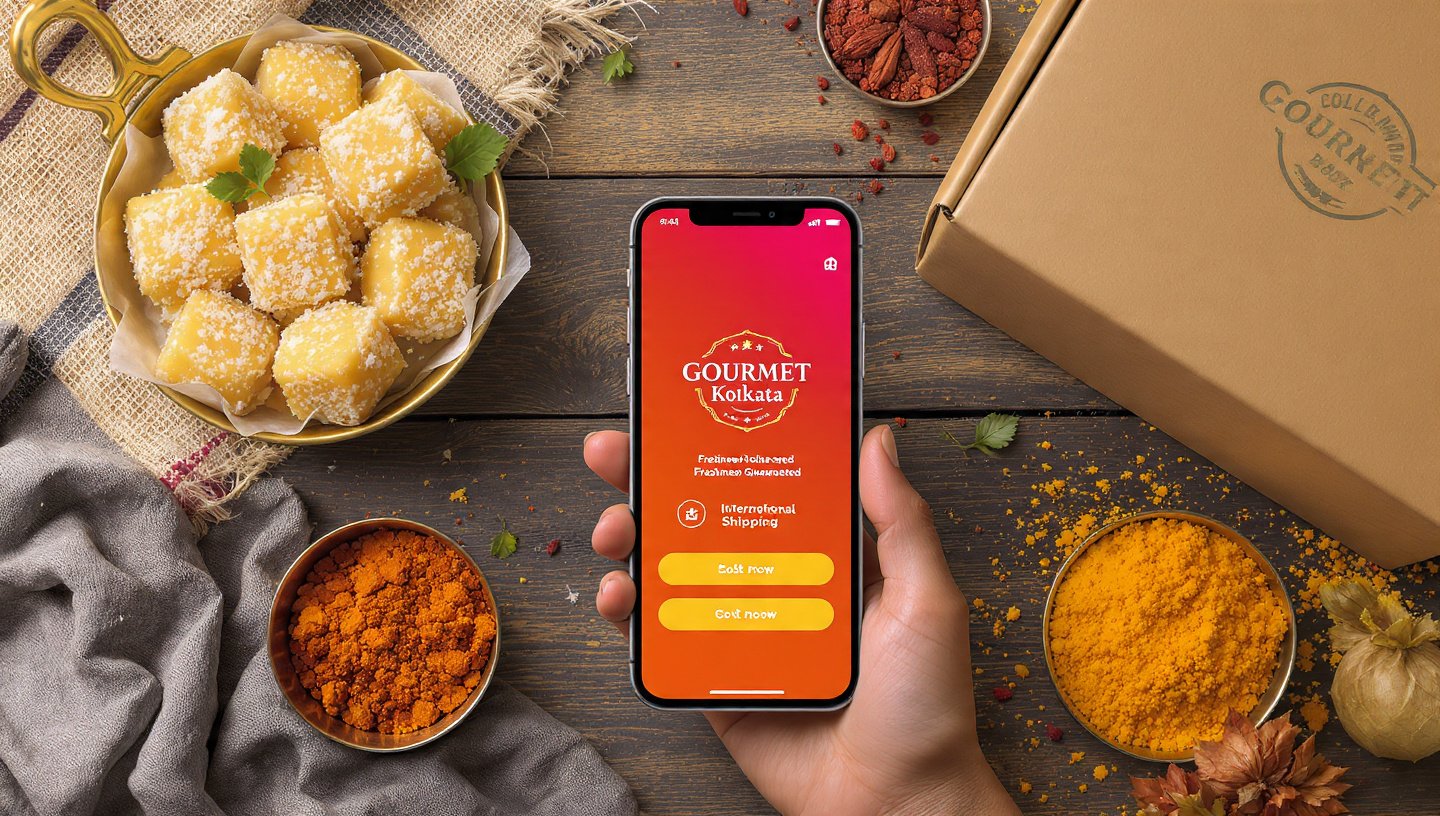
If you run a spice brand in Posta or a sweet shop in Bhowanipore, you’ve probably had people ask, “Can you send this to my son in the US?” or “Do you deliver to Delhi?” Selling food online in 2026 requires more than a “Buy” button. You need a system that understands shelf life. You can’t ship Nolen Gur Jalbhara via standard 5-day courier. You need a website that automatically picks the fastest “Express” route and calculates the cost of special vacuum packaging.
2. The Classification: Why This is “E-commerce Website Designing”
This is high-stakes E-commerce because the “product” can expire.
- It is NOT Basic: A basic site can’t handle real-time inventory for fresh batches or integrate with specialized food couriers.
- It is NOT Custom: We use existing platforms but add “Smart Logistics” layers. It’s all about the Backend Setup—ensuring the order reaches your kitchen and the courier partner at the exact same time.
3. The Best Platform: Shopify (The Foodie’s Choice)
For food brands, Shopify is currently the gold standard in India for a few reasons:
- Apps for Freshness: Shopify has specific apps that let you set “Order Cut-off Times.” For example, if someone orders fresh sweets after 2 PM, the site automatically tells them: “Order will be prepared and shipped tomorrow morning for maximum freshness.”
- Security & Trust: When buying food, people are extra cautious. Shopify’s checkout is world-class and builds instant trust with global buyers.
- Logistics Integration: It connects seamlessly with partners like Shiprocket or Blue Dart, who have specialized “Food-Grade” shipping lines.
4. Solving the “Perishable” Problem
To sell Kolkata’s perishables successfully, your website needs these three “Digital Guards”:
- Pin Code Validator: Before a customer even adds a item to their cart, the site asks for their Pin Code. If they are in a remote area where “Next Day Delivery” isn’t possible, the site will politely disable the “Fresh Sweets” category but keep “Dry Spices” available.
- Packaging Add-ons: We can add a mandatory or optional “Insulated Cold-Box” fee at checkout for items like Sandesh, ensuring the product stays at the right temperature during its 24-hour flight to another city.
- Real-Time Tracking Notifications: Since it’s food, the customer is anxious. We set up automated WhatsApp and Email updates: “Your Mishti has been packed,” “Your order is out for delivery,” and even “Please refrigerate immediately upon arrival.”
5. The “Spice” Advantage: Subscriptions
If you sell gourmet spices or Darjeeling tea, we add a Subscription Model.
- The Idea: A customer in Mumbai loves your Panch Phoron or First Flush Tea.
- The Tech: Instead of them ordering every month, the website offers a “Subscribe & Save 10%” option. Their card is charged automatically every 30 days, and you get a loyal, recurring customer.
6. Comparison: Fresh Sweets vs. Dry Spices
| Feature | Fresh Mishti Store | Gourmet Spice Store |
| Shipping Speed | Priority Express (24-48 Hours) | Standard (3-5 Days) |
| Packaging | Vacuum Sealed / Cold Packs | Airtight Pouches / Glass Jars |
| Global Shipping | Extremely Difficult (Customs/Spoilage) | Very Easy (High Demand Abroad) |
| Inventory | Daily Batches | Long-term Stock |
Conclusion: Don’t Let Distance Stop the Taste
Kolkata’s flavors are world-famous, but for too long, they’ve been trapped within city limits. With professional E-commerce Website Designing, your brand can transcend geography. Whether it’s a box of Kacha Golla reaching a home in Pune or a tin of Kalo Jeera heading to London, your website is the bridge that makes it happen.
Is your brand ready to go national (or global)?
Let’s do a “Freshness & Logistics Mapping.” I’ll show you how to categorize your products based on shelf life and set up a shipping strategy that ensures every customer gets that “Just-Made” Kolkata taste.