
1. The Business Need: The “Artisan’s Authenticity” Factor
In a world of mass-produced plastic, 2026 consumers are craving “Conscious Luxury.” They want items that are “imperfectly perfect.” A basic social media page can’t capture the depth of a hand-painted texture or the hours of labor behind a Patachitra trunk.
A professional website allows you to control the narrative. It’s where you explain that your paints are non-toxic and your wood is reclaimed, turning a simple product into a premium investment.
2. The Classification: Why This is a “Basic Website”
Artisan brands need Visual Clarity, not complex algorithms. It is Basic because:
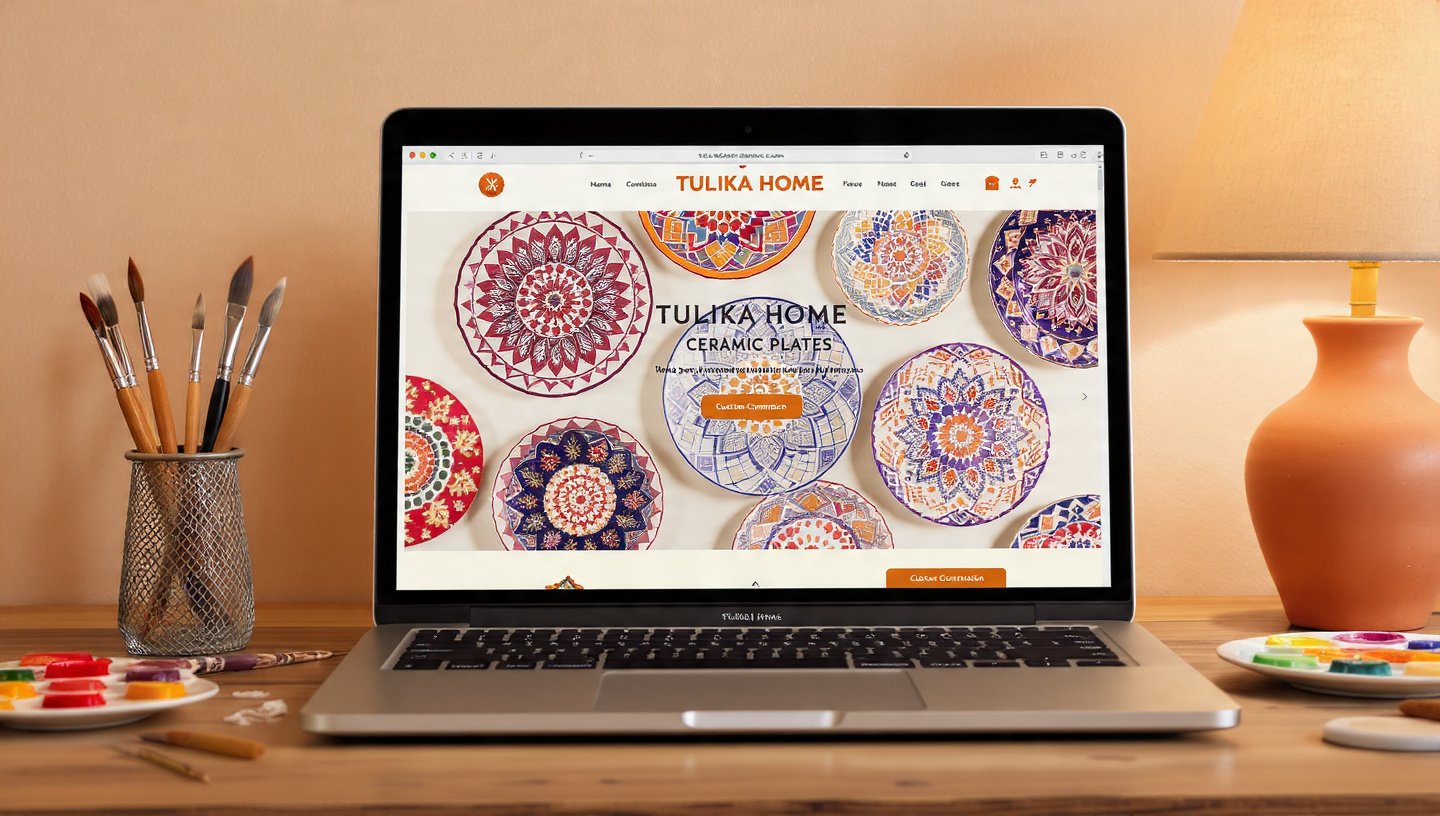
- Visual-First Layout: The design serves the art. We use minimalist templates (like Squarespace or Wix) that act as a “White Cube Gallery” for your products.
- Commission Logic: A simple, structured form that allows clients to say: “I love this style, but can you paint it on a larger tray?”
- Storytelling Blocks: Dedicated sections for “Meet the Artist” and “The Process,” which are easy to update with new studio photos.
3. The 2026 “Art-Commerce” Trends
- Dopamine Decor Focus: Use “Mood-Boosting” colors on your site. If your art uses citrus greens or vivid blues, let the website’s accent colors mirror that energy.
- Texture-Zoom: In 2026, buyers want to see the impasto (thickness of paint). We optimize your images so users can zoom in and see the actual ridges of the brushwork.
- The “In-Situ” View: Instead of just a white background, we show your decor in a Real Kolkata Home setting—perhaps on a teak wood table next to a window—to help buyers visualize the scale.
4. 4 Features for the “Slow-Commerce” Experience
- “Making-Of” Video Loops: 5-second silent videos of a hand painting a fine line. It’s hypnotic and proves the “Handmade” claim instantly.
- Limited Edition Counter: “Only 5 pieces of this ‘Monsoon in Maidan’ series will be painted.” Scarcity creates value for collectors.
- The “Customization Concierge”: A WhatsApp-linked button for bespoke orders. “Chat about your color palette”—this personal touch is why people choose boutiques over Amazon.
- Sustainability Badging: Clearly display your “Eco-Friendly” credentials—using lead-free paints or sustainable bamboo—which is a top priority for Indian homeowners in 2026.
5. Comparison: Marketplace (Etsy/Amazon) vs. Your Own Gallery
| Feature | Large Marketplaces | Your Artisanal Website |
| Fees | 15% to 30% commission | Low fixed monthly cost |
| Branding | Your art looks like everyone else’s | Full “Gallery” experience |
| Customer Connection | Anonymous | Build a list of true collectors |
| Customization | Hard to manage bespoke requests | Dedicated Commission Portal |
Conclusion: Painting Your Digital Future
The homes of Kolkata are evolving into spaces of personal storytelling. In 2026, your hand-painted decor is the “soul” of these rooms. By moving from a “seller” to a “brand” with a Basic Website, you ensure your art is treated with the respect it deserves. It’s time to stop competing on price and start winning on artistry.
Ready to showcase your brushwork to the world?
Let’s do an “Artisan Brand Audit.” I’ll show you how to curate your visual gallery and set up a commission system that turns your passion into a sustainable, global business.