
1. The Business Need: Moving from “Greenwashing” to “Green-Checking”
In 2026, the Green Claims Directive is in full force. Vague terms like “Eco-friendly” or “Natural” can now lead to heavy fines if not backed by data. For a Kolkata brand exporting to the EU or selling to Gen Z in Mumbai, your website must be the Source of Truth. A custom-built sustainable e-commerce site doesn’t just sell a shirt; it sells the Impact of that shirt. By quantifying the water saved or the plastic bottles recycled, you provide the “Ethical Reward” that 74% of 2026 consumers are willing to pay a premium for.
2. Why Sustainability Requires a “Custom” Architectural Build
Standard templates can’t handle the depth of data needed for 2026 transparency standards.
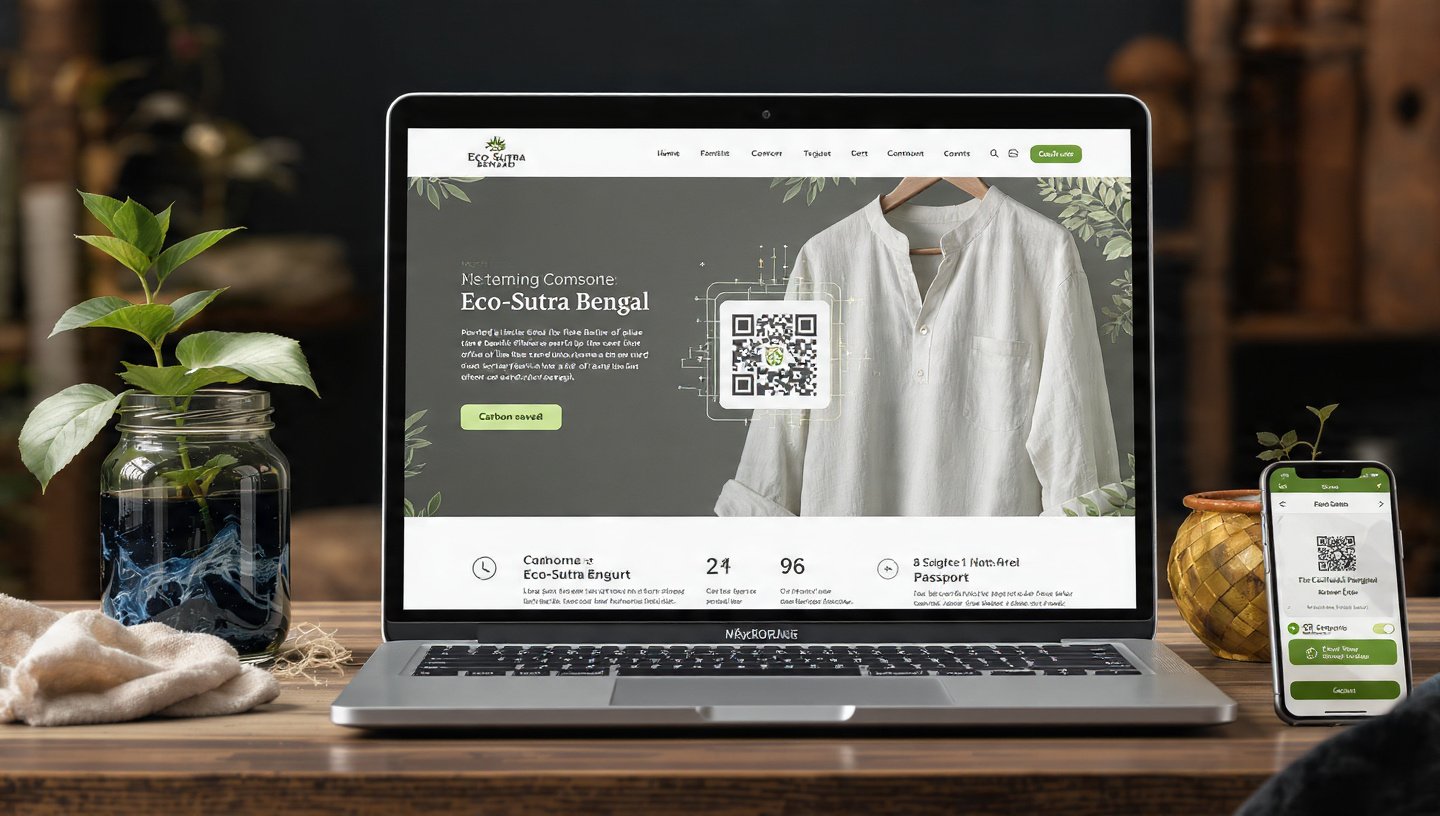
- Digital Product Passports (DPP): We build unique QR-code-driven pages for every SKU. A customer scans the label to see: Material Composition, Supplier Certifications (GOTS/OEKO-TEX), and End-of-Life Recycling Instructions.
- Interactive Supply Chain Mapping: We replace the “About Us” page with a live map. Users can click on “Spinning,” “Weaving,” or “Dyeing” to see the specific Kolkata or rural Bengal facilities where their garment was made.
- Impact Calculators (RefScale Style): We integrate logic that compares your garment’s footprint against a “Standard” equivalent (e.g., “This T-shirt used 90% less water than a conventional cotton tee”).
3. The 2026 “Eco-Tech” Feature Set
- The “Circular Economy” Portal: A custom module for Resale and Repair. 2026’s top sustainable sites allow customers to list their “Pre-loved” items from your brand back on your site or book a “Repair Session” to extend the garment’s life.
- Real-Time “Carbon-Offset” Checkout: Integrated with 2026 carbon-credit platforms, allowing users to see the shipping impact and choose to “Offset” it for a few extra rupees at checkout.
- Blockchain-Verified Artisans: For high-end sustainable fashion, we use blockchain to verify that fair wages were paid at every step of the supply chain, providing a “Fair-Trade” digital certificate with every purchase.
4. 4 Hooks to Dominate the Ethical Market
- “Seed-to-Stitch” Video Content: Replace standard banners with 30-second documentaries. In 2026, the Process is the Product.
- Sustainability “Badging”: Use clear, custom icons for Vegan, Plastic-Free, Biodegradable, or Zero-Waste on every product thumbnail to help conscious shoppers filter quickly.
- The “Impact Dashboard” for Members: A private area where regular customers can see their cumulative “Environmental Savings” (e.g., “You’ve saved 500 liters of water this year”).
- Zero-Waste Packaging Up-sell: A checkout option for “Minimalist Packaging” or “Seed-Paper Tags” that can be planted after use.
5. Comparison: Standard Fashion Site vs. 2026 Sustainable Hub
| Feature | The “Traditional” Site | Your 2026 Sustainable Hub |
| Product Info | Price & Size only | Full Digital Product Passport (DPP) |
| Trust Factor | Marketing slogans | Verified Third-Party Data & Lab-Sync |
| Lifecycle | “Buy & Forget” | Repair, Resale, and Recycling Portals |
| Transparency | Vague “Made in India” | Interactive Map of Specific Weaving Clusters |
Conclusion: The Future is Ethical
The fashion industry is undergoing its most significant shift in a century. In 2026, the Kolkata brands that thrive are those that embrace Radical Transparency. By choosing Custom E-commerce Designing to lead your sustainability story, you aren’t just selling clothes; you are protecting the planet and future-proofing your business.
Ready to lead the sustainable revolution?
Let’s do a “Transparency Readiness Audit.” I’ll show you how to set up your first Digital Product Passport and an impact tracker that turns your “Green Mission” into your biggest sales driver.