






1. The Business Need: Selling “Survival Confidence”
In 2026, sports gear is no longer just “apparel”; it’s Equipment. When a customer buys a ₹12,000 waterproof shell, they are buying protection against the elements. If the jacket fails during a monsoon trek in the Dooars, your brand’s reputation fails with it.
A well-designed outdoor site solves this by providing Contextual Proof. By replacing generic descriptions with Terrain-Adaptive Data (e.g., “Optimized for Tropical Humidity” or “Tested for -15°C Windchill”), you eliminate the guesswork. This “Technical Authority” turns casual shoppers into loyalists who trust your gear with their safety.
2. The “Explorer” Interface: Built for the Elements
Outdoor enthusiasts think in terms of “Environments.” Your UI should too.
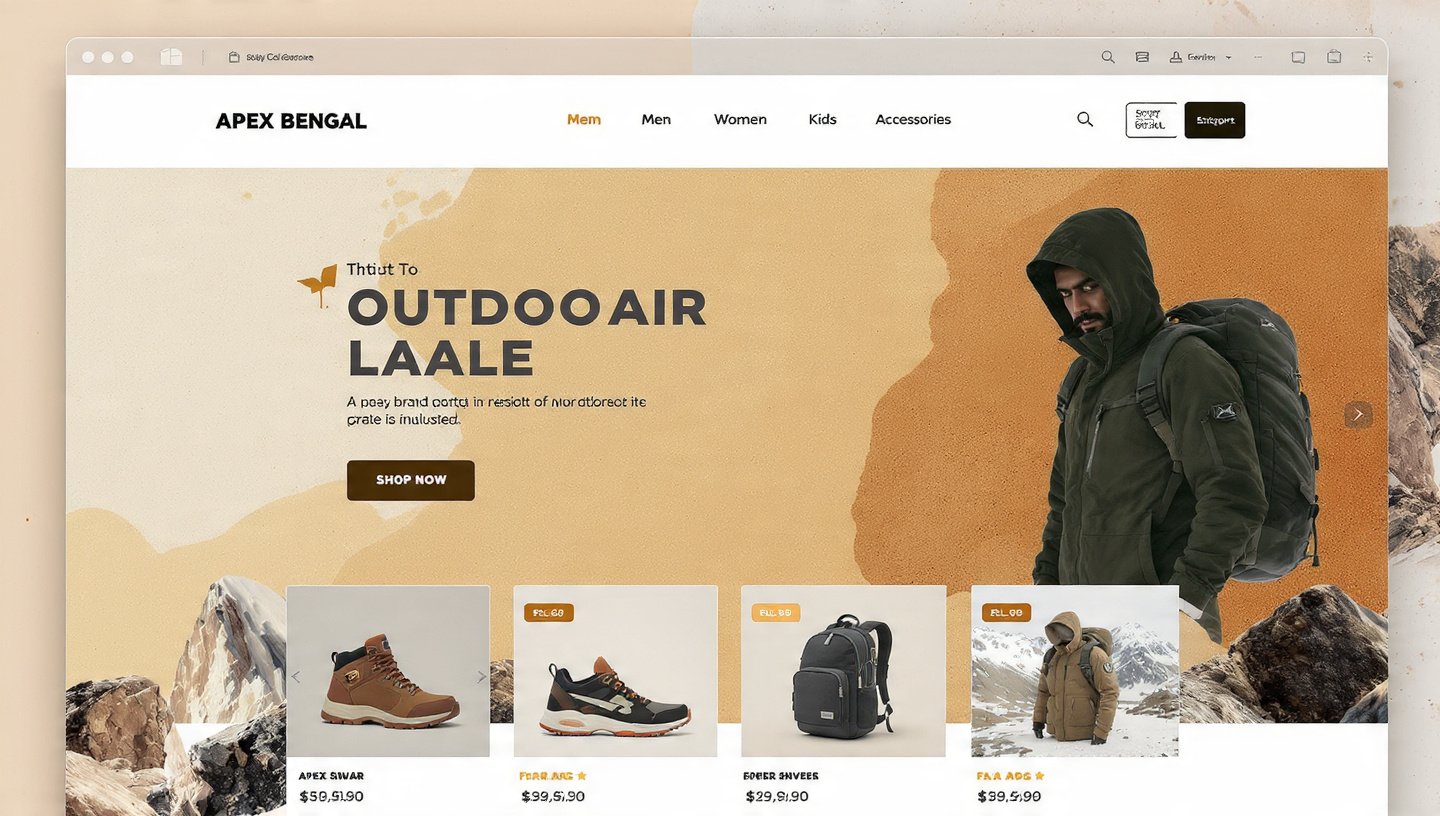
- Terrain-Matching Filters: Instead of just “Size” or “Color,” we implement Environmental Filters. Users select their destination (e.g., High-Altitude Trekking, Coastal Cycling, or Urban Commute) and the site instantly filters for the appropriate breathability and durability ratings.
- 3D Gear-Layering Guide: A 2026 essential. An interactive 3D mannequin where users can “layer” different items (Base Layer -> Mid-layer -> Outer Shell) to see how they fit together and calculate the total Thermal Rating of the outfit.
- “Athlete-Tested” Performance Badges: Every product page features a “Field Report” from a verified local athlete or mountaineer. They provide “Real-World Ratings” on grip, weight, and water-resistance—adding a layer of “Peer-Trust” that marketing copy can’t touch.
3. The 2026 “Adventure-Tech” Feature Set
- The “Trek-Planner” Integration: A tool where users can upload their trek itinerary, and the site’s AI suggests a Custom Gear List based on the predicted weather and altitude of that specific route in 2026.
- Interactive “Breathability” Sliders: A visual tool showing how a fabric reacts to moisture. Move the slider to see how “Moisture-Wicking” tech moves sweat away from the body in real-time animation.
- Blockchain “Impact” Tracking: For sustainable brands, a “Circular Score” showing the percentage of recycled ocean plastic or PFC-free coatings used in the specific unit.
4. 4 Hooks for the 2026 “Active” Market
- “Monsoon-Ready” Speed-Shipping: For Kolkata’s unpredictable rains, a “Rain-Alert” UI toggle that offers 4-hour delivery on waterproof ponchos and bag covers when the local forecast predicts heavy showers.
- The “Community Gear-Swap”: A built-in resale platform where users can trade in their “lightly used” expedition gear for store credit, tapping into the 2026 “Re-Use” movement.
- Visual “Weight-Calculator”: As users add gear to their cart, a “Pack Weight” meter updates, showing them the total weight they’ll be carrying on their back—critical for “Ultralight” hikers.
- Live “Basecamp” Support: A chat feature connecting customers directly to experienced trek-leaders who can answer technical questions about gear fitment and survival.
5. Comparison: Standard Sports Store vs. 2026 Performance Outpost
| Feature | The “General” Retailer | Your 2026 Performance Outpost |
| Search Logic | Product Name / Price | Terrain & Activity-Based Filtering |
| Product Education | Text Bullet Points | 3D Layering & Breathability Animation |
| Trust Signal | Generic Reviews | Athlete-Verified Field Reports |
| Value Add | Discounts | Itinerary-Based Gear Suggestions |
Conclusion: Equipping the Modern Adventurer
In 2026, the “Outdoors” is a lifestyle of resilience. In Kolkata, a gateway to the mountains and the sea, your sports brand must be as rugged and reliable as the gear you sell. By choosing Basic E-commerce Designing to lead with terrain-intelligence and performance-tracking, you are not just a store—you are an essential part of the adventure.
Ready to lead the expedition?
Let’s do a “Technical Commerce Audit.” I’ll show you how to integrate terrain-matching and 3D layering that turn your site into the ultimate basecamp for India’s explorers.