
1. The Business Need: The “Visualization Gap”
The biggest hurdle for any architect or designer is the “Visualization Gap”—the client’s inability to understand 2D drawings. In 2026, static PDF portfolios are obsolete. Clients expect Emotional Engagement. A custom website allows them to stand in the middle of their future living room, observe how sunlight hits the marble at 4 PM, and toggle between different floor textures instantly. This doesn’t just “show” your work; it validates your vision.
2. The Classification: Why This is “Custom Website Designing”
Architectural sites require high-performance rendering and non-standard interactions.
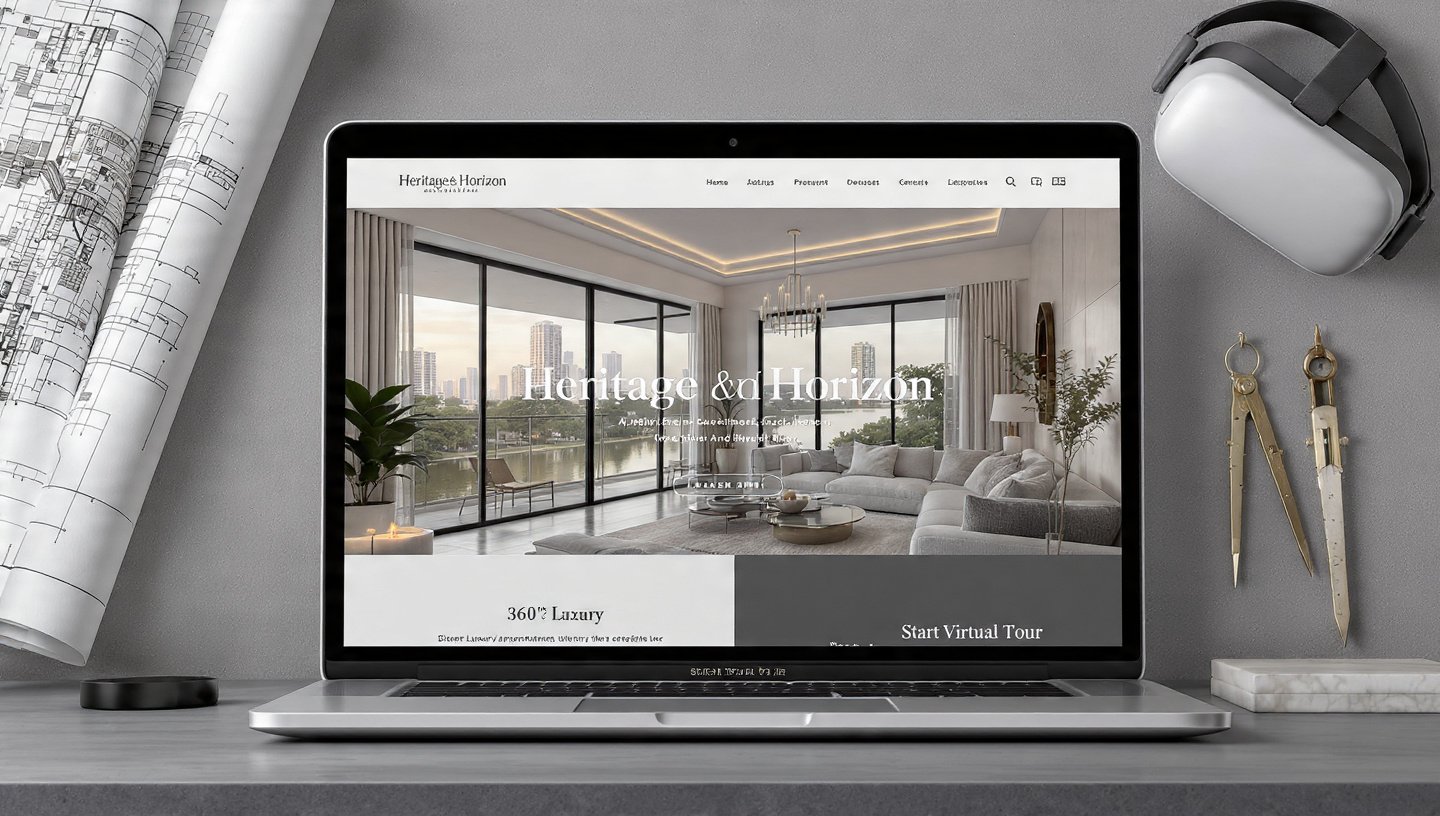
- 360° Panorama Integration: Not just a video, but a navigable environment where users can click “hotspots” to see technical details or alternate finishes.
- Dynamic Material Palettes: An interactive section where clients can “Mix and Match” materials—pairing Teak Wood with Exposed Brick—to see how they complement each other.
- BIM-Ready Portals: Secure areas where commercial clients can track project progress through integrated Building Information Modeling (BIM) data.
3. The 2026 “Design-Tech” Stack
- AI-Enhanced Renders: We optimize your high-fidelity renders so they load instantly on mobile without losing sharpness, using 2026’s latest compression algorithms.
- AR (Augmented Reality) Furniture Placement: A feature that lets users “place” your custom-designed furniture into their current space using their phone’s camera, directly from your site.
- The “Nature Distilled” Aesthetic: Following 2026 trends, we use muted, earthy palettes (clays, wood tones) and organic typography to reflect a commitment to sustainable, biophilic design.
4. 4 “Studio-Grade” Features for Lead Generation
- “Start Here” Client Toolkit: A downloadable, branded PDF or interactive guide that explains the permitting process in Kolkata and sets realistic timeline expectations.
- Before/After Sliders: A high-impact visual tool that allows users to slide between a “Dilapidated North Kolkata Mansion” and its “Modern Restored Masterpiece.”
- The “Material Story”: A section dedicated to your sourcing—highlighting local artisans or sustainable recycled materials, which is a key client priority in 2026.
- Virtual Reality (VR) “One-Click” Mode: A button that instantly formats the screen for a VR headset, allowing clients to have an immersive experience at home.
5. Comparison: Standard Portfolio vs. The Immersive Studio Site
| Feature | Standard “Photo Gallery” Site | Your 2026 Immersive Studio |
| Experience | Passive (Scrolling photos) | Active (Walking through the space) |
| Material Choice | Mentioned in text | Interactive “Palette Picker” Tool |
| Client Trust | Based on finished photos | Based on “Living” the design concept |
| Lead Quality | Generic inquiries | Qualified leads via “Planning Toolkits” |
Conclusion: Building the Future of Design
Architecture is the art of space. In 2026, your digital space should be as thoughtfully designed as your physical ones. By investing in Custom Website Designing, you aren’t just creating a portfolio; you’re creating a Proof of Concept. You’re showing your clients that you are at the cutting edge of technology, sustainability, and human-centric design.
Ready to bring your blueprints to life?
Let’s do a “Design Workflow Audit.” I’ll show you how to integrate your 3D models into an immersive web experience and set up a “Material Palette” tool that turns casual visitors into committed clients.