




























1. The 500ms Advantage: Anticipating the Intent
By February 2026, the term “User Interface” is being replaced by “Predictive Interface.” In the fast-paced business corridors of Sector V, Salt Lake, and the trading houses of Burrabazar, time isn’t just money; it’s the ultimate competitive edge.
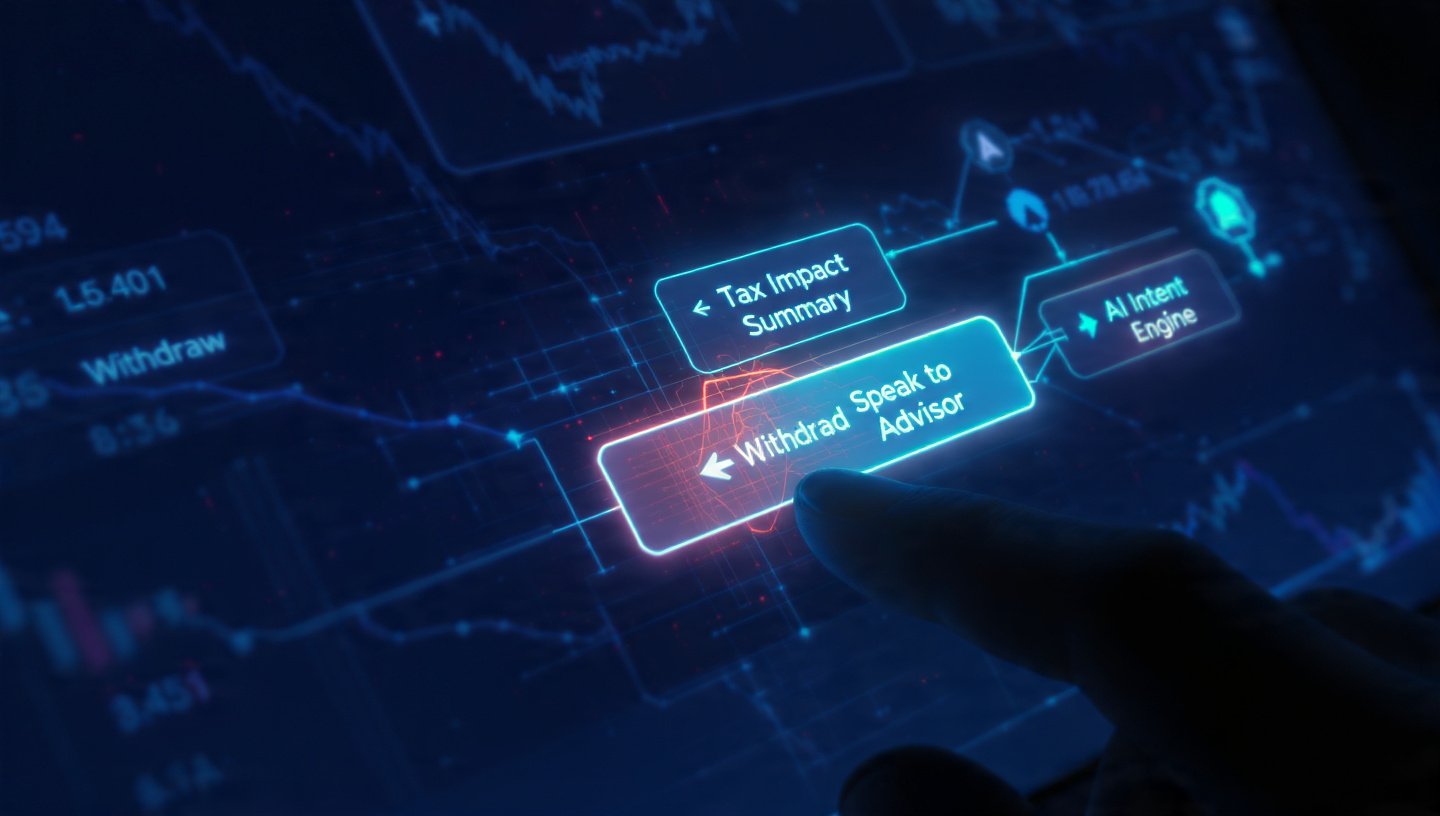
Standard websites are reactive—they wait for you to click a button before showing you information. Custom 2026 websites are proactive. They use “Intent Modeling” to analyze the way you move your mouse, the rhythm of your scrolling, and even your hovering patterns to predict what you are about to ask for. By the time your finger actually presses the mouse button, the data is already pre-loaded and the UI has rearranged itself to show the most relevant next step.
2. The Science of Micro-Gestures
How does a website “read your mind”? It comes down to Kinetic Behavioral Analysis. Our custom 2026 backends monitor subtle cues that a human eye would never notice:
- The “Hesitation” Hover: When a cursor circles an element without clicking, the AI detects cognitive load. It might instantly simplify the text or trigger a “Need help with this?” tooltip.
- Velocity & Trajectory: If the mouse moves rapidly toward the “Export” button, the system begins generating the PDF in the background before the click occurs, making the download feel instantaneous.
- The “Rage-Move” Detection: Rapid, jagged movements often signal frustration. The UI can respond by smoothing out transitions or surfacing a “Contact Support” shortcut.
3. Building the “Pre-Cognitive” Dashboard
In 2026, we apply these principles to high-stakes enterprise tools:
- Pre-loading Data Fragments: On a wealth management portal in Alipore, if the user hovers over their “Portfolio Growth” chart, the AI predicts they will want to see the “Sector-wise Breakdown” next and fetches that data from the API in the background.
- Dynamic Focal Points: Based on your past behavior, the dashboard “dims” less relevant widgets and slightly enlarges the ones you use most frequently, reducing visual clutter and decision fatigue.
- Ghost-Buttons: For expert users, the UI may surface “Ghost-Buttons”—subtle, low-opacity shortcuts that appear only when the AI is 90% sure of your next action, keeping the main interface clean for beginners.
4. The “Zero-Latency” Illusion
In 2026, “Speed” is perceived, not just measured. By using Predictive Rendering, we create the illusion of a website that has zero latency.
- Skeleton-States on Steroids: Instead of generic loading bars, the site renders the specific shape of the data it predicts you will request.
- Edge-Triggered Logic: We move the “Predictive Engine” to the Edge Server (located right here in Kolkata), ensuring that the UI updates in under 10ms—faster than the human brain can process.
5. Comparison: Reactive UX vs. Predictive UI (2026)
| Feature | Reactive UX (Legacy) | Predictive UI (2026) |
| Action Trigger | Physical Click / Tap | Inferred Intent / Micro-movements |
| Data Fetching | Post-click (User waits) | Pre-click (Background fetching) |
| Layout | Fixed Grid | Context-Aware / Priority-Shifted |
| Support | On-demand (User asks) | Proactive (AI offers help on hesitation) |
| Performance | Network Speed Dependent | Perceived Speed (Zero-latency illusion) |
6. Use Case: The “Bypass” Logistics Command Center
A major logistics firm on the EM Bypass needed a way to manage thousands of real-time shipments:
- The Problem: Dispatchers were overwhelmed by the amount of data on the screen, leading to slow response times.
- The Custom Build: We implemented a Predictive UI that monitored which “Shipment Alerts” the dispatchers were most likely to handle first based on urgency and previous habits.
- The Result: The dashboard now “surfaces” the critical alerts by moving them to the center of the screen as the dispatcher’s mouse moves toward the alert panel. Response times improved by 35%.
7. FAQ: Trusting the Machine
- Q: “Is this constant tracking creepy?”
- A: We prioritize Privacy-by-Design. No personal data or identities are tracked—only the ‘physics’ of the cursor movement. In 2026, users value the ‘Magic’ of a fast site over the ‘Noise’ of a slow, generic one.
- Q: “What if the AI predicts wrongly?”
- A: The UI changes are subtle. If the AI predicts you want ‘Export’ but you actually wanted ‘Settings,’ the ‘Settings’ button is still right where it always was. The prediction adds a ‘Fast Lane’ without closing the ‘Main Road’.
- Q: “Does this require special hardware?”
- A: No. It runs entirely in the browser using WebAssembly for high-speed calculation, making it accessible on any modern device in Kolkata.
Conclusion: Designing for the Speed of Thought
In 2026, the most successful custom websites in Kolkata don’t just “Host Content”—they “Understand Context.” By moving from reactive layouts to predictive, intent-based interfaces, you are offering your users something far more valuable than information: you are offering them Flow. You are removing the friction between their thought and their action.
At our Alipore studio, we build the websites that are always one step ahead.
Is your website still waiting for your users to catch up?
Let’s do a “Predictive UX Opportunity Audit.” We’ll analyze your current user flows and show you exactly where “Intent Modeling” can shave seconds off your transactions and turn a standard dashboard into a competitive weapon.