








1. The Business Need: The “Visibility” Mandate
By 2026, “Where is my cargo?” is a question your team should never have to answer manually. In a post-pandemic, high-volatility world, your B2B clients prioritize Resilience. A custom website acts as your Digital Liaison. It moves your business from “Manual Firefighting” to “Proactive Orchestration.” When your portal automatically flags a delay at the Petrapole border before the client notices, you aren’t just a transporter—you’re a Strategic Partner.
2. The Classification: Why This is “Custom Website Designing”
Logistics platforms are “Data Heavyweights.” They require deep integration with external ecosystems.
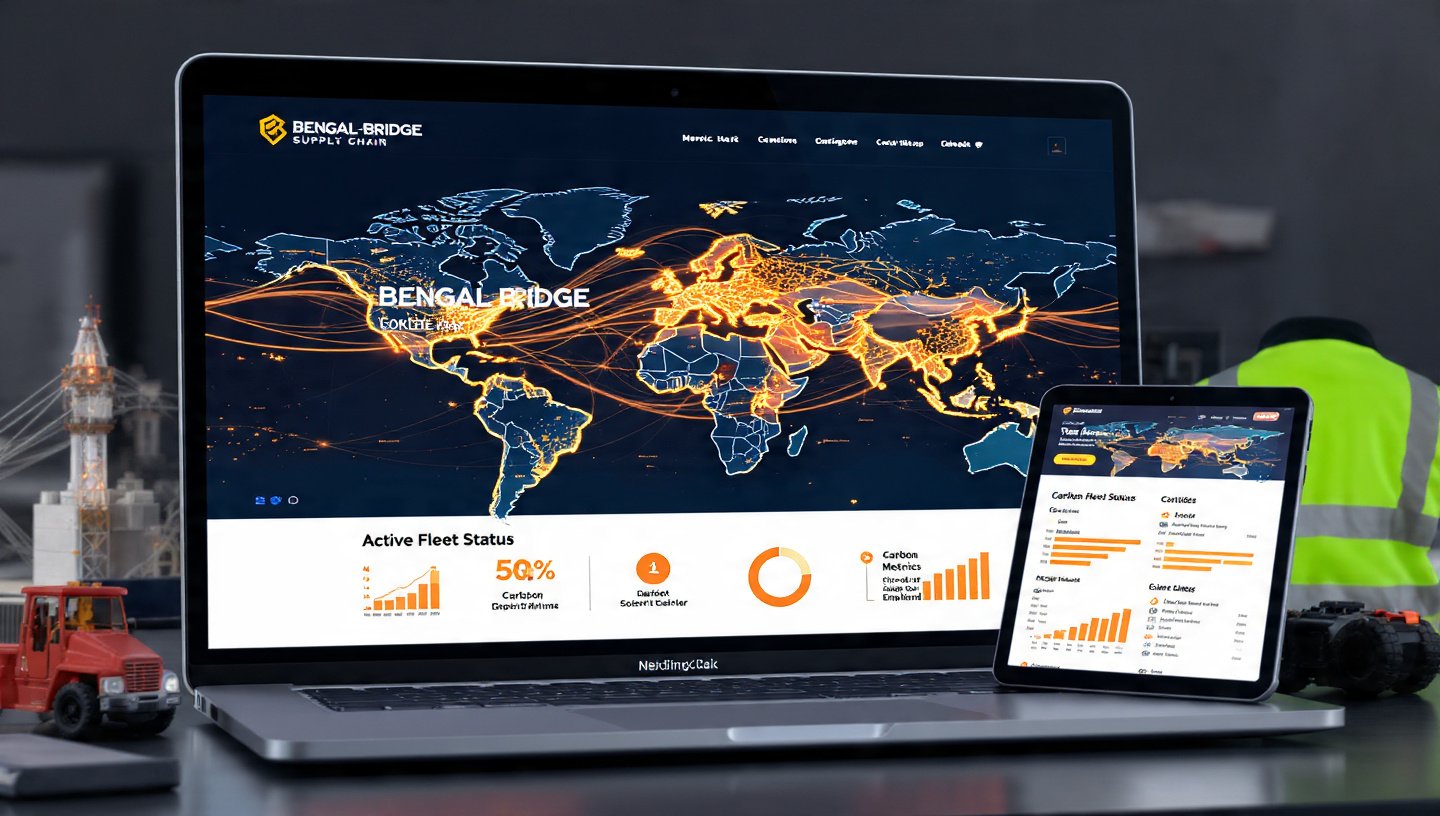
- IoT & Telematics Integration: We don’t just show a “status.” We connect to GPS and sensor data to show Live Map Positions, temperature (for cold chains), and even “Shock Alerts” for fragile goods.
- B2B Client Dashboards: Secure, multi-user portals where different departments (Finance, Ops, Procurement) can see their specific KPIs—from Inbound Freight Costs to On-Time-In-Full (OTIF) percentages.
- API-First Architecture: Custom-built to “talk” to your existing ERP (like SAP or Oracle) and government portals for seamless E-Way Bill and GST syncing.
3. The 2026 “Supply Chain” Tech Stack
- Agentic AI Dispatchers: Instead of static reports, an AI “Copilot” analyzes weather and traffic patterns to suggest Route Optimization directly on the client’s dashboard.
- Blockchain Document Vaults: In 2026, trust is digital. We integrate blockchain-backed “Electronic Bill of Lading” (eBL) systems, making document transfers instant and tamper-proof.
- Predictive Milestone Alerts: AI that forecasts delays based on historical port congestion, sending an automated “Risk Alert” to the client with suggested workarounds.
4. 4 “High-Value” Features for B2B Growth
- Self-Service RFQ Engine: Allow clients to enter load details and get Instant Freight Quotes based on real-time capacity, significantly shortening the sales cycle.
- The “Sustainability” Dashboard: For the first time in 2026, Kolkata firms are being asked for ESG reports. Provide a tool that tracks Carbon Emissions per Shipment, a major differentiator for global contracts.
- Automated Vendor Portals: If you use subcontractors, provide a dedicated gate where they can upload “Proof of Delivery” (POD) and invoices, centralizing your accounts payable.
- Multi-Modal Visibility: A single view that tracks a shipment as it moves from Sea (Kolkata Port) to Rail (Freight Corridor) to Road (Last Mile).
5. Comparison: Manual Freight Broker vs. 2026 Digital Forwarder
| Feature | The “Traditional” Broker | Your 2026 Digital Firm |
| Tracking | “Call me, I’ll check” | 24/7 Live IoT Map Visibility |
| Invoicing | Emails with PDF attachments | Direct ERP-Linked Document Portal |
| Reporting | Monthly manual Excel sheets | Real-Time Data-Driven Dashboards |
| Capacity | Limited by phone networks | Scalable Digital Freight Network |
Conclusion: Shipping the Future
Logistics in the East is entering its most digital era yet. In 2026, your physical assets (trucks and warehouses) are only as good as the digital interface that manages them. By choosing Custom Website Designing, you build a “Digital Control Tower” that gives your clients the control they crave and gives you the efficiency you need to scale.
Ready to digitize your supply chain?
Let’s do a “Logistics Workflow Audit.” I’ll show you how to turn your manual tracking into a live client portal and build an automated document system that cuts your administrative overhead by 30%.