
1. The Re-commerce Explosion
By February 2026, the global second-hand market is projected to reach $60 Billion, nearly doubling its 2023 value. In Kolkata, this isn’t just a trend; it’s a cultural shift. From the heritage-rich wardrobes of Ballygunge to the tech-savvy residents of New Town, consumers are prioritizing “pre-loved” luxury and electronics over fast fashion.
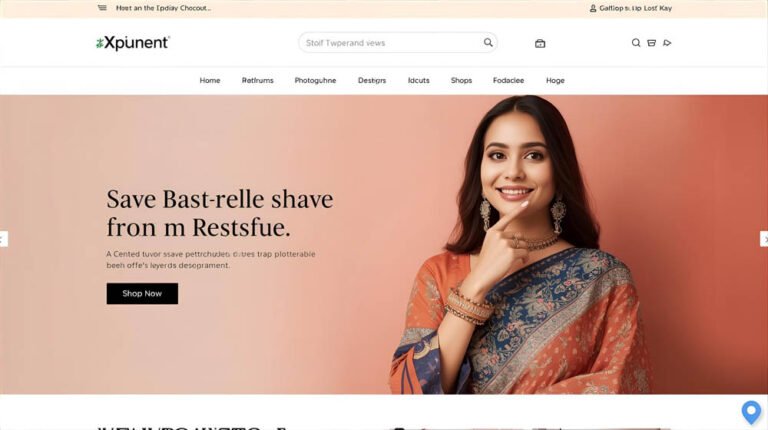
The challenge for a 2026 brand is no longer just selling a new product—it’s about owning the entire lifecycle. If your brand doesn’t provide a way for your customers to resell their items, they will go to a third-party platform. We are now building “Second-Life” tabs directly into primary e-commerce stores, keeping your customers within your ecosystem.
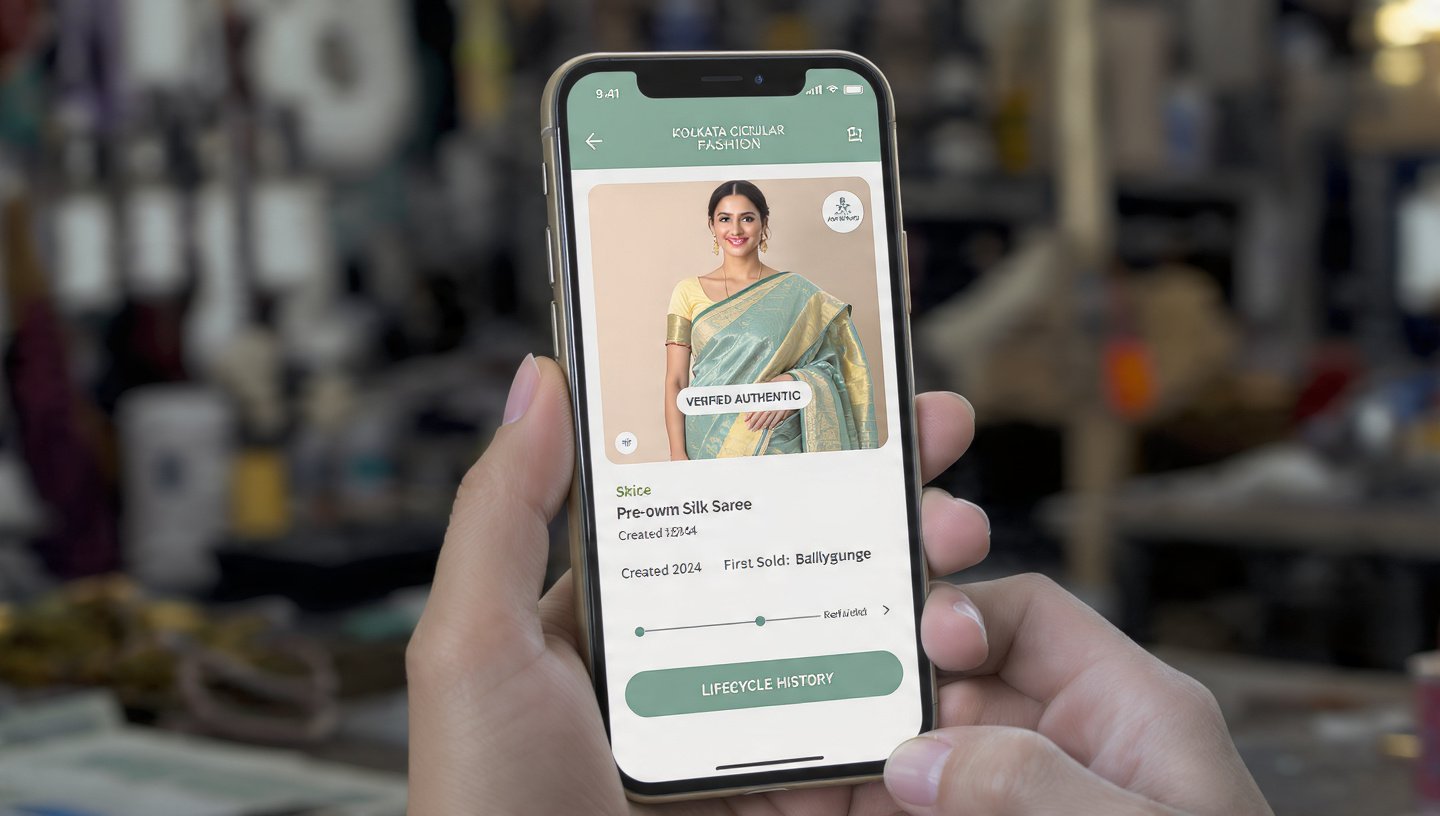
2. Digital Product Passports (DPP): The Trust Engine
In 2026, a “sustainable” claim is meaningless without data. We are implementing Digital Product Passports (DPP) as a standard feature for custom e-commerce builds.
- The QR-to-Web Bridge: Each high-value item (like a boutique handbag or a designer lehenga) comes with a unique, serialized QR code.
- The Ledger: When scanned, it reveals the Provenance—who made it, what materials were used, and its repair history.
- Resale Readiness: When a user wants to sell their item back to your marketplace, the DPP automatically populates the listing with official brand photos and specs, ensuring 100% Accuracy and zero effort for the seller.
3. Designing the “Refurbished” UX
Selling a used item requires a different UI than selling a new one. In 2026, transparency is the ultimate conversion tool.
- Grading Systems: We replace “Used” with a sophisticated A/B/C Grading System (e.g., Pristine, Excellent, Loved).
- Macro-Damage Photography: Our 2026 builds include “Zoom-to-Imperfection” features. If a pre-owned dining table from a Tangra furniture house has a minor scratch, the UI highlights it with a macro-view, building radical trust.
- Impact Badges: Every product page shows the Environmental Saving (e.g., “By choosing this pre-owned piece, you saved 15,000 liters of water and 12kg of $CO_2$”).
4. The Circular Backend: Refurbishment Workflows
A circular marketplace isn’t just a website; it’s a logistics engine. We build custom backends that manage:
- The “Buy-Back” Portal: A simple interface where customers can upload photos for an instant AI-valuation of their item.
- Refurbishment Tracking: For sectors like electronics or luxury furniture, the system tracks the item as it moves through “Cleaning,” “Repair,” and “Re-Certification” in your Kolkata-based workshop.
- Automated Payouts: Using the Fintech Loop principles, funds are released to the seller’s wallet the moment the refurbishment center confirms the item’s condition.
5. Comparison: Linear vs. Circular E-commerce
| Feature | Linear Store (2024) | Circular Marketplace (2026) |
| Sales Model | One-time Sale | Continuous Lifecycle Revenue |
| Customer Data | Ends at purchase | Tracks multi-generational ownership |
| Logistics | Outbound only | Reverse Logistics (Returns/Buy-backs) |
| Content | Static Product Info | Dynamic Digital Product Passports |
| Value Prop | Newness/Status | Heritage/Sustainability/Value |
6. Use Case: The “New Town Zero-Shop” Model
In Kolkata, initiatives like the NKDA “Zero Shop” in New Town are already proving the viability of this model. In 2026, we are digitizing this urban-rural synergy:
- SHG Integration: We build portals that allow Self-Help Groups (SHGs) to list upcycled handicrafts and garments directly onto premium marketplaces.
- Donation to Resale: Our systems can manage “Donation Counters” where residents donate items, and the app tracks their cleaning and resale at nominal prices, creating a transparent Waste-to-Wealth loop.
7. FAQ: Circular Marketplace Strategy
- Q: “Will selling second-hand items cannibalize my new product sales?”
- A: Data shows it actually increases brand loyalty. It makes your brand accessible to aspirational buyers who will eventually upgrade to your new collections.
- Q: “How do we handle the logistics of picking up used items?”
- A: We integrate with ‘Smart Logistics’ providers in Kolkata that specialize in ‘Reverse Pickups,’ ensuring the item is inspected at the doorstep before being shipped to your hub.
- Q: “Is this only for fashion?”
- A: No. Category expansion is huge in 2026. Electronics, home decor, books, and even industrial equipment are moving into the ‘Second-Life’ space.
Conclusion: Be the Platform, Not Just the Shop
In 2026, the brands that win are the ones that provide a home for their products throughout their entire life. By building a “Second-Life” Marketplace, you turn a one-time transaction into a decades-long relationship. You aren’t just selling a product; you are curating a legacy of sustainability.
At our Alipore studio, we build the digital infrastructure for the circular economy. We help you turn “used” into “valuable.”
Does your brand have a “Second Life”? Let’s do a “Circular Feasibility Study.” We’ll analyze your product category and show you how a integrated resale and refurbishment portal can open up a massive new revenue stream while hitting your 2026 ESG targets.