
1. From “Linear” to “Loop”: The 2026 Retail Mandate
By February 2026, the “Take-Make-Waste” model is officially obsolete in the Indian retail landscape. Driven by the Union Budget 2026 focus on circularity and the nationwide “Right to Repair” framework, Kolkata’s e-commerce leaders are pivoting.
“Basic” e-commerce design used to stop at the “Thank You” page. In 2026, custom design begins there. We are now building Circular Ecosystems where the website manages the entire lifecycle of a product—from its first sale to its third refurbishment and eventual recycling.
2. The “Re-Commerce” Module: Resale & Trade-In UX
The most profitable addition to a 2026 e-commerce site is the Integrated Resale Marketplace.
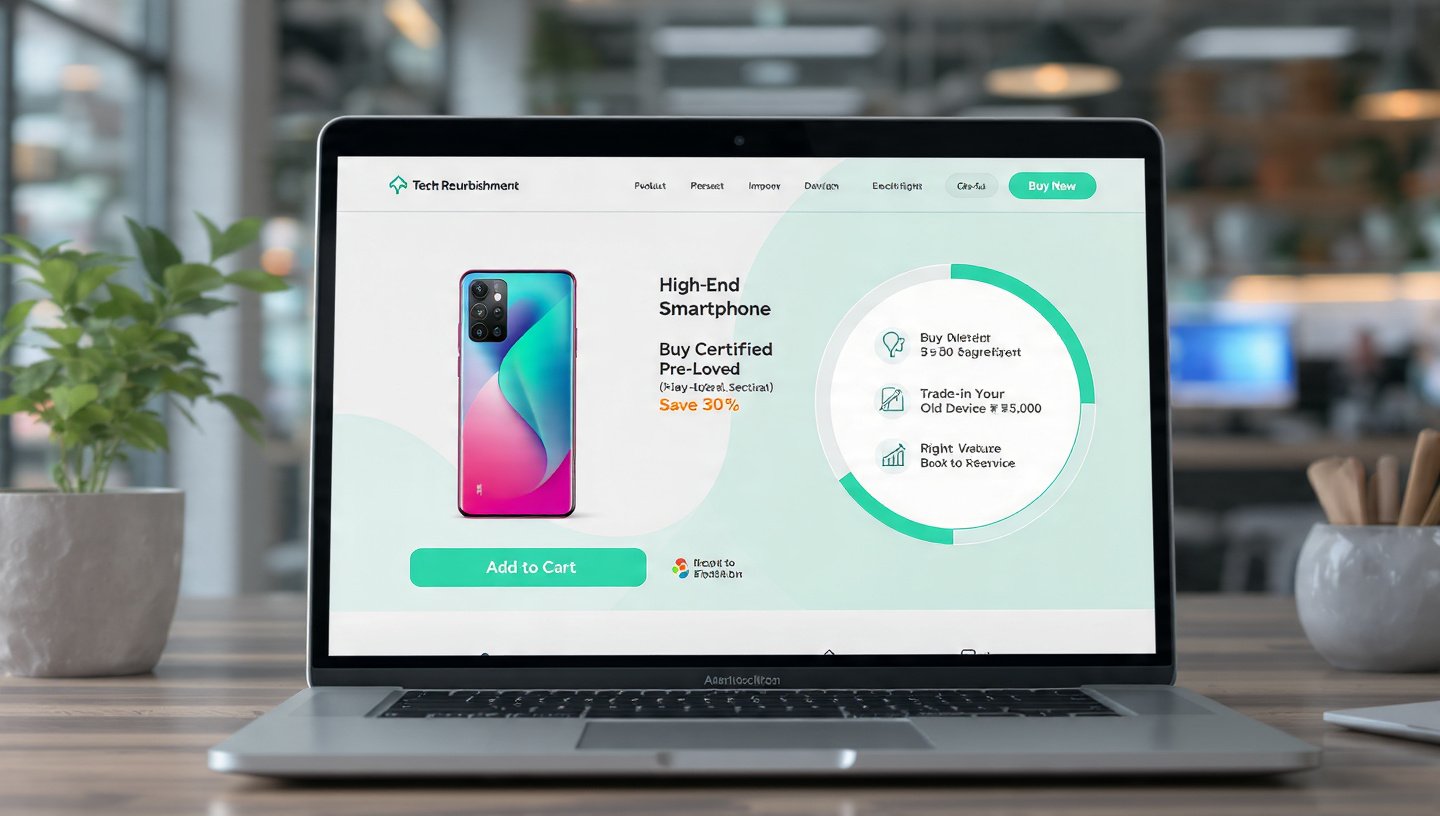
- Instant Valuation Engines: For electronics or luxury fashion (like Ballygunge-based designer labels), we build “Trade-in” calculators. A user selects their old model, describes its condition, and receives an instant “Wallet Credit” offer.
- The “Pre-Loved” Side-by-Side: On the main product page, we display “Certified Refurbished” units right next to “New” ones. This transparency builds trust and captures the “Aspirational-yet-Thrifty” segment of the New Town and Salt Lake demographics.
- Verified Re-listing: One-click resale for previous customers. A user can go to their order history and click “Resell This Item.” The website automatically generates the listing using the original high-res photos and specs, ensuring a premium look for the second-hand market.
3. “Right to Repair” Integration: The Service Dashboard
Under India’s 2026 consumer protection updates, providing repair access is a competitive advantage.
- The Repairability Index: We include a “Repairability Score” (1-10) on every product page, informing users how easy it is to find parts or fix the item.
- Automated Service Booking: A custom “Service & Repair” tab allows users to book a pick-up for a broken device or garment. The website tracks the repair status in real-time, just like a food delivery app.
- Spare Parts E-Shop: For “Prosumer” brands, we design sub-stores specifically for genuine spare parts, complete with video tutorials on DIY mending, which significantly reduces the pressure on central service centers.
4. Reverse Logistics: The Backend of Sustainability
Designing for the circular economy requires a total overhaul of the “Return” process.
- AI-Driven Sorting: When a “Buy-Back” item is returned, our custom backend uses AI to categorize it: Grade A (Direct Resale), Grade B (Needs Refurbishment), or Grade C (Recycle for Parts).
- Circular Loyalty Points: Instead of cash, many Kolkata brands are using “Green Credits.” These credits are worth 1.2x more than cash if used to buy a “Certified Pre-Loved” item, keeping the capital within the brand’s ecosystem.
5. Comparison: Traditional E-commerce vs. Circular Re-Commerce
| Feature | Traditional Store (2024) | Circular Store (2026) |
| End of Life | Customer discards item | Brand buys back / recycles |
| Product Options | New Only | New + Certified Refurbished |
| Revenue Stream | One-time sale | Initial Sale + Service + Resale % |
| Customer LTV | Low (Transactional) | High (Cyclical Relationship) |
| Compliance | Basic Consumer Rights | Right to Repair & EPR Compliant |
6. Use Case: The “Gariahat” Tech Exchange Hub
A multi-brand electronics retailer with stores in Gariahat and Central Kolkata wanted to compete with major marketplaces:
- The Tech: We built a custom “Exchange Portal” where users could trade in any brand’s old laptop for a new one.
- The UX: The site used a “Phygital” model—get an estimate online, drop off at the store, and get your new device instantly.
- The Result: A 28% boost in new sales and a secondary revenue stream from selling the refurbished Grade-A stock on a dedicated “Deals” section of their site.
7. FAQ: Building Circular E-commerce
- Q: “Does selling second-hand items hurt my ‘New’ product sales?”
- A: Data shows it actually increases brand loyalty. It gives entry-level buyers a ‘foot in the door’ and gives high-end buyers the confidence that their purchase has a high residual value.
- Q: “How do we handle the legalities of ‘Certified Refurbished’?”
- A: In 2026, we integrate ‘Digital Warranty’ certificates. Every refurbished item comes with a 6-month blockchain-backed warranty, reducing the buyer’s risk.
- Q: “Is this only for electronics?”
- A: No. In Kolkata, we are seeing a massive surge in ‘Circular Fashion’ (saree buy-backs) and ‘Furniture Subscriptions’ where the brand takes the item back after 2 years.
Conclusion: Closing the Loop for Good
In 2026, e-commerce is no longer a “one-way street.” By designing circular commerce features directly into your website, you are solving two problems at once: you are meeting the new “Green” regulations and you are creating multiple revenue streams from a single product. The future of retail in Kolkata isn’t just about selling more; it’s about selling better.
At our Alipore studio, we build the systems that keep your products—and your customers—coming back.
Is your inventory stuck in a linear trap?
Let’s do a “Circular Business Model Mapping.” We’ll look at your product catalog and show you how to integrate buy-back and resale modules that turn “waste” into your most profitable inventory.