

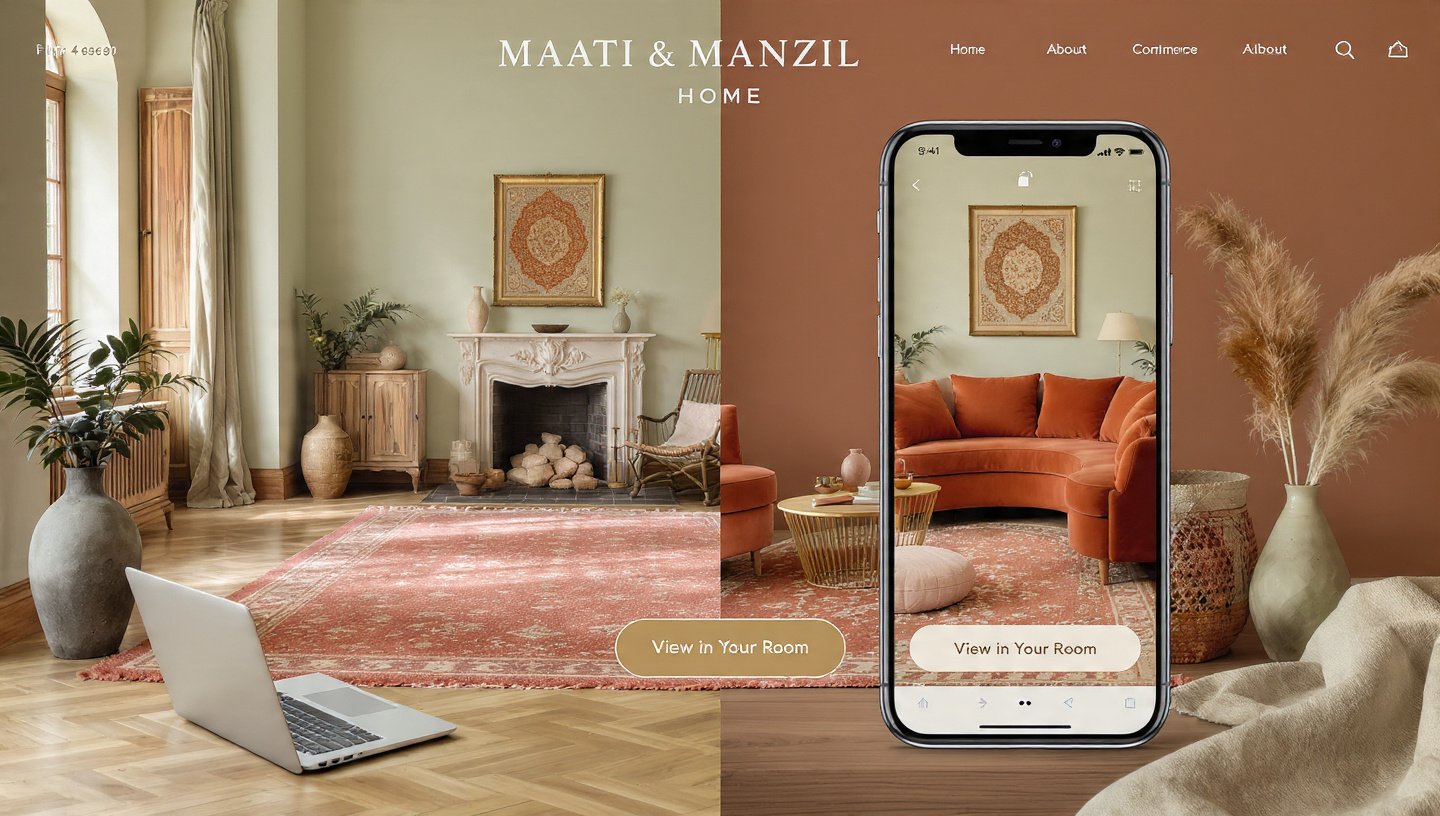
1. The Business Need: Eliminating “Buyer’s Remorse”
In 2026, the “Return Rate” for online furniture is a profit-killer. Most returns happen because the item was “too big for the room” or the “color looked different.”
A well-designed home decor site in 2026 acts as a Virtual Interior Designer. By integrating AR Room-Placement, you allow the customer to see the 3D model of a bookshelf or a bed in their actual room using just their mobile browser. This tech-driven “Visual Confirmation” is proven to increase conversion rates by 40% and reduce returns by over 60%, turning high-value logistics into a streamlined growth engine.
2. The “Tactile-Digital” Interface: Proving Quality
Home decor is a sensory experience. In 2026, we use specialized rendering to show Materiality.
- Fabric-Drape Physics: For curtains and throws, we use PBD (Position-Based Dynamics) simulations. Users can “flick” a virtual curtain on-screen to see how it reacts—proving the weight of the linen or the fluidity of the silk.
- The “Atmospheric” Toggle: A 2026 UI feature that allows users to change the “Light Temperature” on the product page (e.g., Morning Sun vs. Warm Evening Lamp) to see how a rug or wall-hanging’s color shifts in different home environments.
- Bento-Grid “Shop the Room”: Instead of isolated products, we present “Curated Nooks.” A single editorial image of a cozy reading corner allows users to add the chair, the lamp, and the cushion to their cart with one click.
3. The 2026 “Slow-Decor” Feature Set
- The “Artisanal Origin” Map: A 2026-spec transparency tool. Click on a hand-woven basket or a brass vase to see a GPS-mapped story of the specific Kolkata or Bengal cluster (like the weavers of Phulia or the brass-smiths of Bishnupur) where it was made.
- Modular “Furniture-Builder”: A 3D configurator for sofas and shelving units where users can “click-and-lock” different modules to fit their specific Kolkata apartment dimensions.
- Sustainability Scorecard: Clearly display the “Circular Life” of the product—Is it made of reclaimed teak? Is it biodegradable? In 2026, “Eco-Chic” is the primary driver for Gen Z homeowners.
4. 4 Hooks to Capture the 2026 “Home-Proud” Consumer
- “White-Glove” Delivery Tracking: For large furniture, the site provides a live map of the “Installation Team,” including photos of the professionals coming to your home—essential for building safety-trust in the Indian market.
- The “Moodboard” Creator: A tool where users can drag-and-drop items from your catalog into a digital canvas to see if their “Vibe” (e.g., Modern Cottage vs. Japandi) is consistent before buying.
- “Smart-Home” Compatibility Tags: In 2026, 90% of decor is “Smart.” Tags like “Compatible with Alexa/Google Home” for lamps and motorized curtains are non-negotiable.
- The “Pre-Loved” Marketplace: A section where customers can trade in their old furniture from your brand for store credit, tapping into the 2026 “Re-commerce” boom.
5. Comparison: Standard Furniture Store vs. 2026 Immersive Sanctuary
| Feature | The “Grid” Catalog | Your 2026 Immersive Sanctuary |
| Space Planning | Static Dimensions | Web-Native AR Room Placement |
| Material Feel | “Zoom” Photos | Fabric-Drape & Texture Physics |
| Personalization | Color Dropdown | Modular 3D Configuration |
| Fulfillment | Standard Shipping | White-Glove Assembly & Installation |
Conclusion: Building More Than Just a Store
Home is where the heart is, but in 2026, the home is also a high-tech reflection of identity. In Kolkata, a city that blends the ancient with the futuristic, your home decor brand must bridge that gap. By choosing Basic E-commerce Designing with a focus on AR and immersive storytelling, you aren’t just selling “things”; you are helping your customers manifest their dream life.
Ready to transform living spaces?
Let’s do a “Visual Commerce Roadmap.” I’ll show you how to integrate AR room placement and fabric physics that turn your decor brand into the talk of Kolkata’s design elite.