
1. The Business Need: The “Trust Deficit” Challenge
Donors in 2026 are skeptical. They don’t just want to “give money”; they want to see where every rupee goes. If your NGO only has a Facebook page or a static “About Us” site, you are missing out on the growing segment of “Impact Donors.”
A professional website acts as your Digital Certificate of Authenticity. It tells a donor: “We are real, we are registered, and we are accountable.”
2. The Classification: Why This is a “Basic Website”
NGO sites are classified under Basic Website Designing because they prioritize Clarity over Complexity.
- Streamlined Navigation: Users should find the “Donate” and “Impact Reports” pages within 2 clicks.
- Informational Depth: It’s about hosting PDFs (Annual Reports), galleries (Project Photos), and certifications (12A/80G).
- Low Maintenance: Your team should be able to upload a new “Success Story” in 5 minutes without technical help.
3. The Tech Stack: Security First
For NGOs, we recommend WordPress + Donorbox.
- Why Donorbox? It’s a specialized donation tool that integrates perfectly into your site. It handles recurring donations (monthly giving), which is the lifeblood of any NGO.
- Payment Gateways: We integrate Razorpay or PayU, which have dedicated “NGO Schemes” with lower transaction fees and built-in support for 80G receipt automation.
4. 4 Must-Have Features for a 2026 NGO Website
- Automated 80G Receipts: As soon as someone donates via UPI or Card, the website should instantly email them a valid tax-exemption receipt. No manual paperwork for your staff.
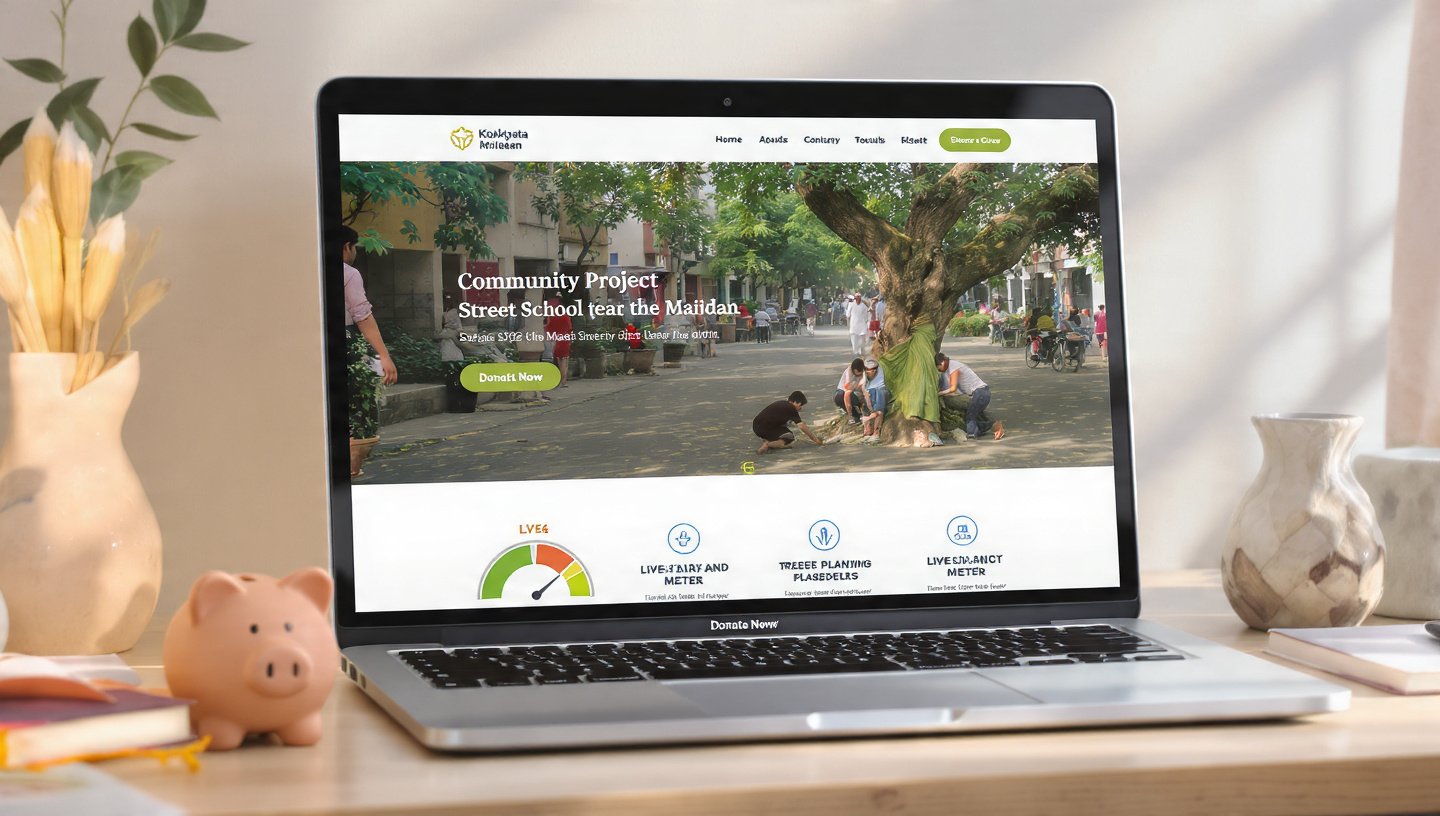
- The “Impact Meter”: A dynamic widget on the homepage. “₹500 = 10 Meals” or “₹2000 = 1 Year of Books.” This makes the donation feel tangible.
- Transparency Hub: A dedicated page for your latest Audit Reports, 12A/80G certificates, and FCRA (if applicable) status. This is what converts “one-time” donors into “lifetime” supporters.
- Volunteer “Call to Action”: Not everyone can give money. A simple form for people to sign up for weekend drives or “Skill-based Volunteering” (e.g., teaching or social media help).
5. Comparison: Manual Fundraising vs. Digital Fundraising
| Feature | Traditional NGO | Digital-First NGO (2026) |
| Trust Signal | Word of mouth | Official Website & Audit Reports |
| Donation Process | Bank transfer / Cheque | Instant UPI / Global Cards |
| Tax Benefits | Manual receipt (takes weeks) | Instant PDF Receipt via Email |
| Recurring Giving | Hard to track/request | Auto-Debit ‘Monthly Giving’ Plans |
Conclusion: Let Your Impact Be Seen
Kolkata has always been a city with a “Big Heart.” By investing in a professional Basic Website, your NGO can move beyond local circles and tap into the global Bengali diaspora and international philanthropists. Transparency isn’t just a legal requirement—it’s your most powerful marketing tool.
Is your NGO ready to grow its impact?
Let’s do a “Transparency Audit.” I’ll show you how to structure your site to build massive donor trust and set up a donation engine that works while you’re out in the field doing the real work.