
1. The Digital Carbon Crisis
By February 2026, the internet’s carbon footprint has surpassed that of the global aviation industry. A single website page view now averages 0.36 grams of $CO_2$. For a growing Kolkata business with 50,000 monthly views, that’s over 200 kg of $CO_2$ per year—the equivalent of driving a car from Kolkata to Delhi.
In the “Sustainability Loop” of 2026, we don’t just design for screens; we design for the planet. “Basic” website designing has evolved into Lean Design—where beauty is found in efficiency, not excess.
2. The “Nature Distilled” Aesthetic
The visual trend of 2026 is moving away from sterile, blue-light minimalism toward “Nature Distilled.”
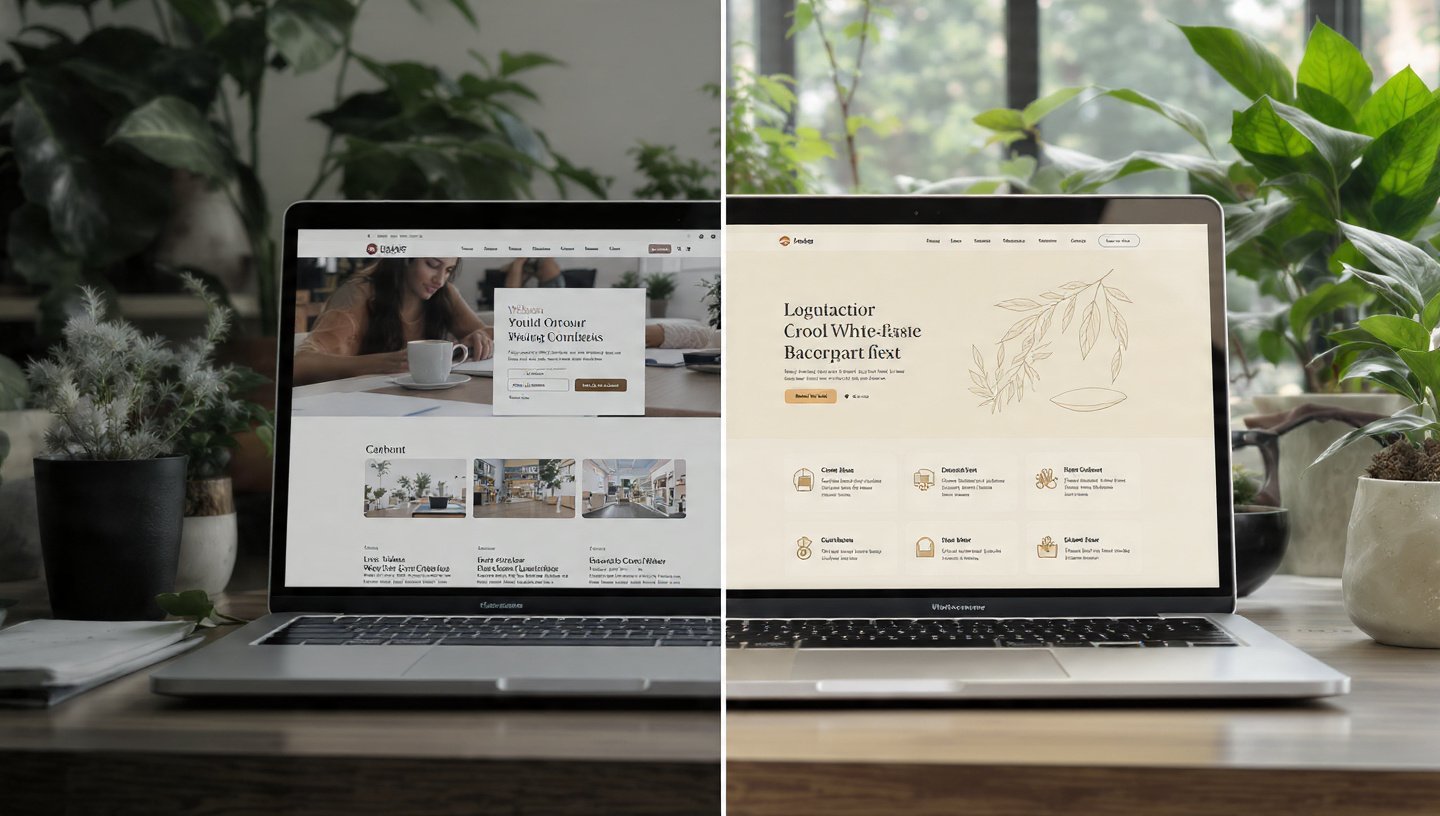
- The Palette: We use the 2026 Color of the Year, Pantone 11-4201 Cloud Dancer (a warm, muted cream), paired with earthy tones like clay, wood, and soil.
- The Psychology: These colors are easier on the eyes and, more importantly, require less energy to render on OLED screens compared to harsh, bright whites.
- Organic Elements: We replace heavy, generic stock photos with lightweight Hand-Drawn SVG Illustrations. These “Vector” graphics are mathematically defined, meaning they load instantly and take up 90% less server space than high-res JPEGs.
3. Sustainable Architecture: Under the Hood
A “Green” website is like a well-insulated building. It retains its value by using fewer resources.
- Lazy Loading & Media Compression: We ensure that images only load when they enter the user’s viewport. By using modern formats like WebP and AVIF, we achieve 50% better compression without losing quality.
- Code Minification: We “strip the fat” from your website’s code. By removing unnecessary plugins and minifying JavaScript/CSS, we reduce the “work” the user’s processor has to do, saving battery life and electricity.
- The “One-Click” Journey: Sustainability is also about Time. A site that helps a user find what they need in 2 clicks instead of 10 is a greener site. Less time spent searching means less energy consumed by servers and devices.
4. Green Hosting: Powering Your Site with the Sun
In 2026, where you host your data is a moral and business choice. We partner with Verified Green Hosts (monitored by The Green Web Foundation) that:
- Run on 100% Renewable Energy (Solar, Wind, or Hydro).
- Maintain a high PUE (Power Usage Effectiveness) rating.
- Offer Carbon Tracking Dashboards so you can report your digital sustainability to your stakeholders as part of your ESG (Environmental, Social, and Governance) goals.
5. Comparison: Legacy Web Design vs. Sustainable 2026 Design
| Feature | Legacy Design (2024) | Sustainable Design (2026) |
| Visuals | High-Res Auto-play Video | Static Hero / Kinetic SVG |
| Typography | Multiple Heavy Web-Fonts | System Fonts / Variable WOFF2 |
| Colors | High-Brightness White/Blue | Nature Distilled / OLED-Friendly |
| Hosting | Fossil-Fuel Data Centers | 100% Renewable Energy |
| Emissions | ~1.5g $CO_2$ per view | < 0.2g $CO_2$ per view |
6. Why “Green” is Good for Business (ROI)
Eco-friendly design isn’t just about altruism; it’s a competitive advantage in the 2026 Kolkata market.
- Speed is Sustainability: A lighter website is a faster website. Faster sites have lower bounce rates and higher SEO rankings in Google’s “Sustainability-First” algorithms.
- Brand Loyalty: 72% of Kolkata’s Gen Z and Millennial consumers prefer brands that demonstrate environmental responsibility.
- Future-Proofing: With potential “Digital Carbon Taxes” being discussed in 2026, being lean now prevents costly redesigns later.
7. FAQ: Sustainable Web Design
- Q: “Will a sustainable site look ‘boring’ without videos and big photos?”
- A: Not at all. High-end ‘Nature Distilled’ design feels more premium and curated. It’s the difference between a cluttered discount store and a quiet, luxury boutique.
- Q: “Is green hosting more expensive?”
- A: In 2026, the cost is nearly identical to traditional hosting. In many cases, it’s cheaper because optimized sites use less bandwidth.
- Q: “How do I prove to my customers that my site is green?”
- A: We include a dynamic ‘Live Carbon Badge’ in your footer. It pulls real-time data to show your visitors the exact $CO_2$ savings of your site.
Conclusion: Design for the Next Century
In a city as vibrant and environmentally conscious as Kolkata, your digital presence should reflect your values. A “Basic” website in 2026 is no longer just about information; it’s about impact. By choosing a low-carbon, Nature Distilled aesthetic, you aren’t just building a website—you are contributing to a cooler, greener future.
At our Alipore studio, we believe the best designs are the ones that leave the smallest footprint.
How heavy is your website?
Let’s do a “Digital Carbon Audit.” We’ll run your current site through a 2026 sustainability scanner and show you exactly how much $CO_2$ you can save by switching to a Nature Distilled, eco-friendly architecture.