



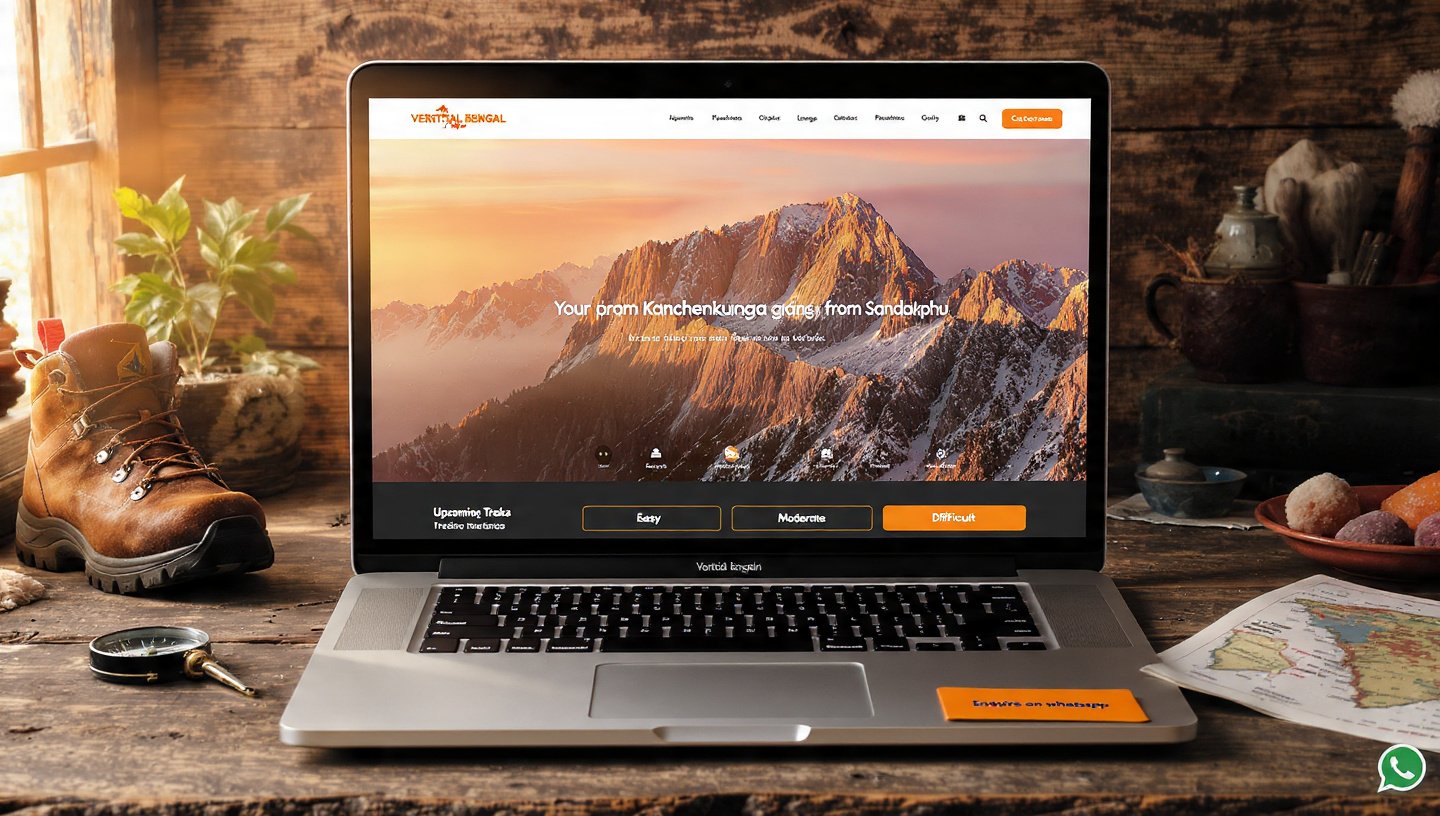
1. The Business Need: The “Adventure with Safety” Mandate
With the 2026 focus on sustainable trails, travelers are looking for agencies that prove they are responsible. They don’t just want a “cheap package”; they want to know about your Safety Standards, Eco-Impact, and Local Guide expertise. A professional website moves you away from being a “tour operator” to becoming a Certified Adventure Partner. It provides the space to detail your “Zero-Waste” policies and high-altitude safety protocols—things a social media post can’t fully explain.
2. The Classification: Why This is a “Basic Website”
Trekking sites fall under Basic Website Designing because they are Information-Heavy and Action-Oriented.
- Itinerary Templates: Most pages follow a standard flow: Overview -> Day-wise Plan -> Inclusions -> Gear List.
- Conversion Focus: The primary goal is getting the “Inquiry.” A simple form or WhatsApp bridge is often more effective than a complex e-commerce checkout.
- Dynamic Updates: You need to be able to change “Batch Dates” or “Seats Remaining” in minutes as bookings come in.
3. Top “Trek-Tech” Trends for 2026
- Sustainable Badging: In 2026, every agency website should feature “Carbon Data” or “Sustainability Badges.” Showing that your Sandakphu trek is “Plastic-Free” is a major selling point.
- AI Trip Planners: We integrate simple AI widgets where a user types: “I want a 3-day easy trek near Kolkata in March,” and the site instantly suggests Ajodhya Hills or Biharinath.
- Video-First Itineraries: Short-form vertical videos (Reels style) embedded directly into the “Day 1, Day 2” sections. Let them see the steep climb or the bonfire before they book.
4. 4 Must-Have Features for 2026 Agencies
- “Gear Checklist” Interactive Tool: A checklist on the site that users can tick off as they pack. “Rucksack? Check. Headlamp? Check.” This adds immense value and keeps them coming back to your site.
- Difficulty & Fitness Meter: Be honest. Rate your treks! A “Moderate” rating for a trek from Manebhanjan helps set expectations and reduces on-trail issues.
- The “Local Hero” Section: Highlight your local guides from the villages. In 2026, “Human-led” experiences are the ultimate luxury.
- Weather & Trail Alerts: A small live widget showing current conditions in Darjeeling or North Sikkim. It proves you are active and “on the ground.”
5. Comparison: Facebook Group vs. Professional Agency Site
| Feature | Facebook/WhatsApp Groups | Your Professional Trekking Site |
| Trust Factor | Low (Hard to verify) | High (RERA/Govt/Review Proof) |
| Itinerary Access | Scattered in chats | Clean, Downloadable PDFs |
| Searchability | Impossible to find later | Rank for “Sandakphu Trek 2026” |
| Sustainability | Not mentioned | Certified Eco-Friendly Badges |
Conclusion: The Mountains are Calling, and They’re Online
Kolkata has always been the base camp for Himalayan dreams. In 2026, with the government’s new focus on the trekking industry, there has never been a better time to professionalize. A Basic Website is your base camp—a place where the journey begins for your clients and where your reputation as a safe, sustainable guide is built.
Ready to lead the next expedition?
Let’s do a “Trail Discovery Audit.” I’ll show you how to organize your itineraries and set up an inquiry system that captures the new wave of adventure seekers in West Bengal.