

1. The Digital “Dada” of the Neighborhood
By February 2026, the local shops of Lake Market, Gariahat, and Hatibagan are no longer just physical landmarks; they are digital powerhouses. For decades, these small businesses thrived on personal relationships and spoken word. However, as the world moved to complex apps and English-only menus, many local “Kaku-Dada” (uncles and brothers) felt left behind.
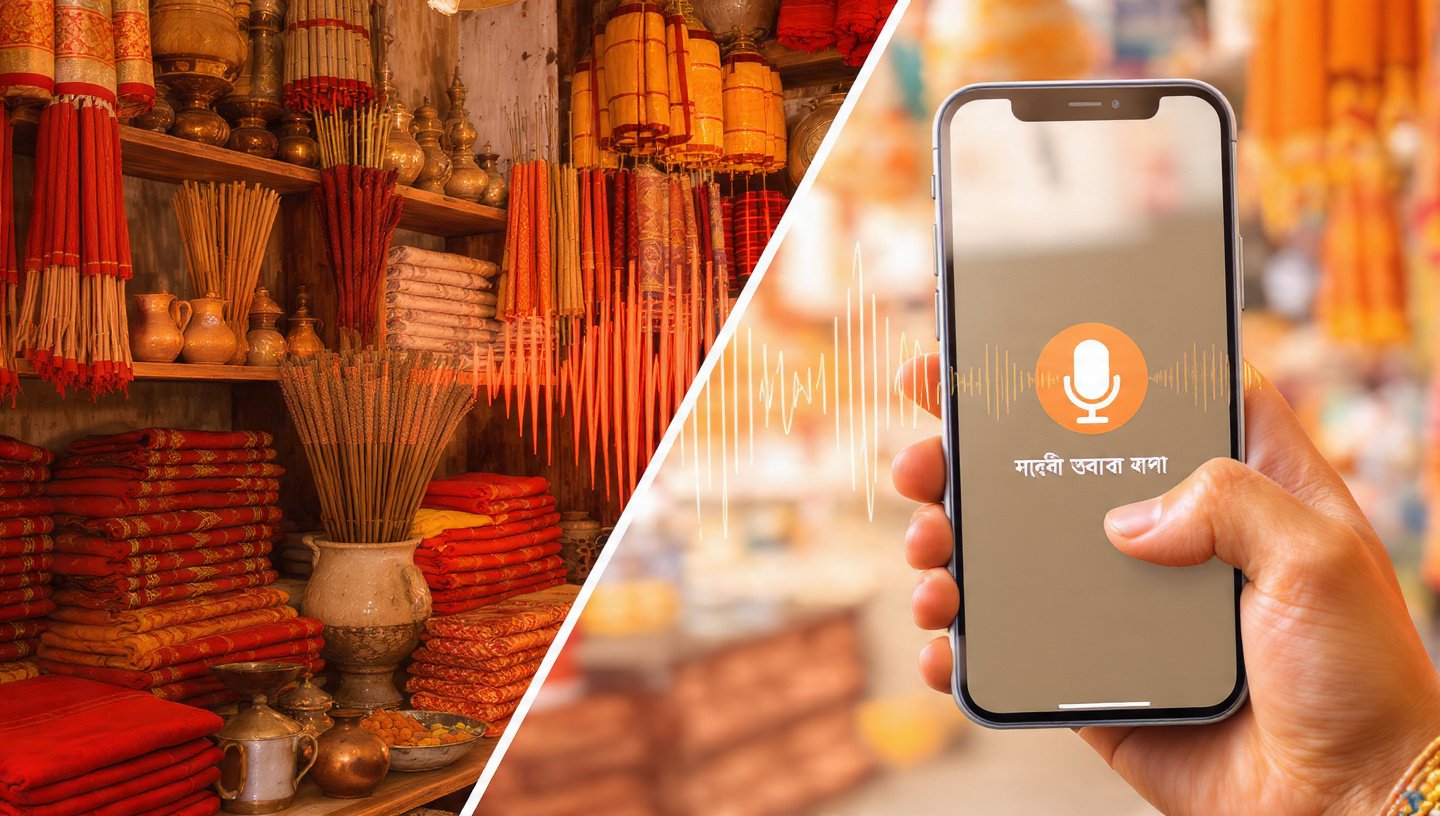
In 2026, Basic Website Designing has returned to its roots: Conversation. We are building “Voice-First” sites for MSMEs where the entire shopping journey—from “Do you have fresh Hilsa?” to “Send it to my home”—happens through a 2-minute Bengali voice conversation.
2. The “No-Type” Checkout: How it Works for the Local Merchant
For a small shop owner, a website with 500 pages and complex filters is a burden. Our 2026 “Voice-First” builds simplify the stack into three core conversational nodes:
- Voice Search (The Query): The customer lands on the site and taps a mic. Instead of typing, they say, “Kalakar Street er moto bhalo gawa ghee ache?” (Do you have good cow ghee like Kalakar Street?).
- Conversational AI (The Response): The AI—trained on the shop’s specific inventory—responds in a natural, local accent: “Haan ache, 500gm aar 1kg pack hobe. Kon ta debo?” (Yes, we have 500gm and 1kg packs. Which one should I give?).
- The “Hello! UPI” Finish: The user says, “1kg pack ta pathiye dao” (Send the 1kg pack). The site automatically triggers a Hello! UPI (voice-enabled UPI) prompt, allowing the user to authorize the payment with a simple voice-phrase.
3. Designing for the “Regional Intent”
Standard SEO is about keywords. Voice SEO (V-SEO) for 2026 Kolkata is about Intent.
- Long-Tail Question Optimization: We don’t optimize for “Aloo.” We optimize for “Aloo ki bhabe kilo bikri hocche?” (How much is the potato per kilo?).
- Schema for Local Stores: We implement Speakable Schema so that when someone asks their phone, “Where is the nearest shop for puja items?”, your Lake Market store is the first (and often only) answer read aloud.
- Dialect Tuning: We use the Bhashini API to ensure the website understands “Ghoti” vs “Bangal” speech patterns, ensuring no customer feels misunderstood.
4. Comparison: Traditional Catalog Site vs. Voice-First Local Site
| Feature | Catalog Site (Legacy) | Voice-First Site (2026) |
| User Input | Typing / Clicking | Speaking (Bengali/English/Hindi) |
| Language | Primarily English | Vernacular-First (Indic Language Core) |
| Tech Barrier | High (Requires smartphone literacy) | Low (Anyone who can talk can shop) |
| Checkout | Multi-step form | One-sentence Voice-UPI authorization |
| Maintenance | Manual inventory updates | AI-Voice synced with WhatsApp Inventory |
5. Technical Pillars: Keeping it “Basic” yet Powerful
To keep these sites affordable for MSMEs, we use a “Lean Architecture”:
- WhatsApp Business Integration: The “backend” for the shop owner is just their WhatsApp. When a voice order is placed on the site, it arrives as a text message on the owner’s phone.
- Low-Latency Audio: Since internet speeds in narrow lanes of North Kolkata can vary, the site uses Compressed Audio Streams to ensure the AI “talks back” instantly, even on a 3G-equivalent connection.
- Progressive Web App (PWA): The site functions like an app but requires no download, saving precious phone memory for the customer.
6. Use Case: The “Lake Market” Flower Stall
A 40-year-old flower stall near Deshapriya Park wanted to go digital:
- The Problem: The owner couldn’t manage a complex website while weaving garlands.
- The Solution: We built a “One-Button” voice site. Customers say what they need for their morning puja.
- The Result: The owner now receives all orders as clear voice notes on his phone. His morning sales increased by 45% because customers could order while driving to work, without ever touching their screens.
7. FAQ: Starting Small with Voice
- Q: “Is my Bengali voice engine accurate?”
- A: In 2026, the error rate for Bengali speech-to-text has dropped below 3%, thanks to the massive datasets provided by the Digital India Bhashini initiative.
- Q: “Does the shop owner need a laptop?”
- A: No. The entire system is managed via a single smartphone. If they can send a voice note on WhatsApp, they can run this website.
- Q: “What about payment security?”
- A: We use the NPCI Hello! UPI framework, which uses voice-biometrics to ensure that only the account holder can authorize the payment.
Conclusion: The Voice of the Neighborhood
The future of e-commerce in Kolkata isn’t just about giant warehouses; it’s about the revival of the neighborhood “Para” shop. By designing voice-first basic websites, we are giving the local merchants of Lake Market the tools to speak directly to the digital generation. It’s a return to the most human form of commerce—a simple, honest conversation.
At our Alipore studio, we build sites that listen as well as they look.
Is your local business ready to start the conversation?
Let’s do a “Hyper-Local Voice Audit.” We’ll show you how to turn your current customer queries into a “Voice-First” website that makes ordering from you as easy as asking a friend for a favor.