

1. The Death of the “Next-Day” Standard
In 2024, getting a package “tomorrow” was great. In 2026, if a shopper in Behala sees a delivery estimate longer than 30 minutes for their daily essentials, they close the tab.
- The Kolkata Shift: Our city’s unique geography—dense residential clusters like Lake Town mixed with complex old-city lanes—makes “Standard Shipping” a nightmare.
- The 2026 Winner: The brand that moves the warehouse to the neighborhood.
2. The Secret Sauce: Micro-Fulfillment & Dark Stores
You can’t deliver in 15 minutes from a giant warehouse in Howrah.
- The “Dark Store” Model: In 2026, smart Kolkata brands are renting small, non-customer-facing spaces in high-density areas like Kasba, Dum Dum, and Tollygunge.
- Vertical Storage: Since space is at a premium, these stores use vertical robotic picking systems to pack an order in under 120 seconds.
3. AI-Driven Route Optimization: Navigating the “Gully”
Kolkata’s traffic is legendary, and its “gullies” (lanes) are a maze.
- The Tech: 2026 logistics software uses real-time AI to predict traffic surges near Esplanade or Ruby and automatically reroutes delivery partners through the fastest side-streets.
- Hyper-Local Intelligence: The system learns that a certain shortcut in North Kolkata is only accessible by bike, not van, and assigns the order accordingly.
4. The “Impulse” Categories of 2026
Quick commerce isn’t just for milk anymore. In 2026, these categories are exploding:
- “Emergency” Fashion: A tie for a meeting in Sector V, or a matching dupatta for a wedding guest in Park Street.
- Instant Electronics: Chargers, earbuds, and even smartphones are being delivered via Q-commerce within 20 minutes.
- Fresh Gifting: Flowers and artisanal sweets from local favorites like Balaram Mullick, delivered while they are still fresh.
5. Comparison: Traditional E-commerce vs. 2026 Quick Commerce
| Feature | Traditional E-commerce | 2026 Quick Commerce |
| Delivery Radius | National / State-wide. | 2–3 Kilometers. |
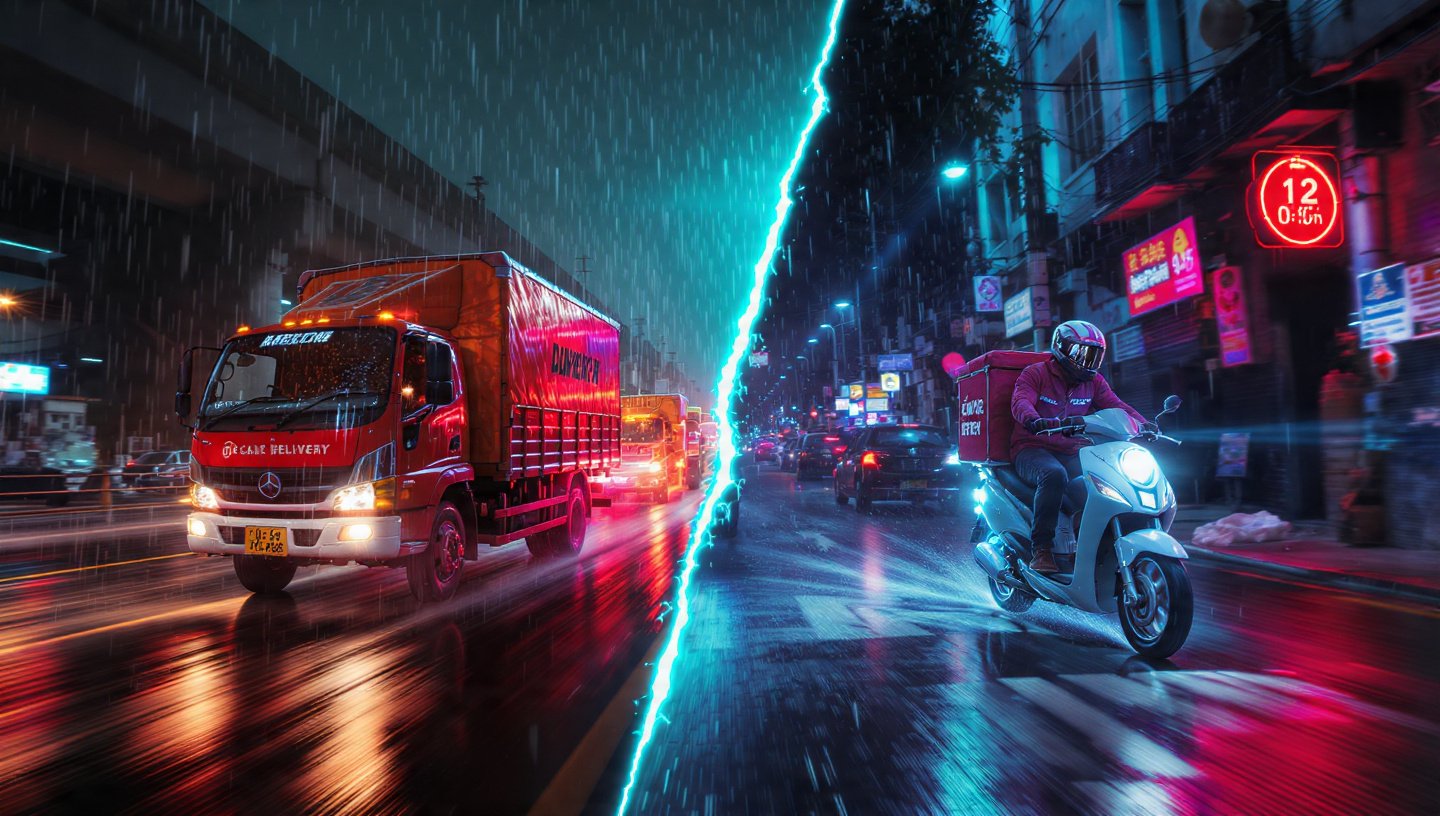
| Logistics | Trucks & Vans. | Electric Bikes & Scooters. |
| Inventory | Centralized Mega-Warehouse. | Network of Micro-Dark Stores. |
| Packaging | Heavy Cardboard & Plastic. | Lightweight, Sustainable Pouches. |
| Customer Need | Planned Purchase. | Immediate/Impulse Need. |
6. The Green Mandate: Electric Last-Mile
By 2026, the Kolkata municipal government has strict “Green Zones.”
- The EV Advantage: If your delivery fleet isn’t electric, you’re paying higher “congestion taxes.” Switching to an EV-only fleet in areas like New Town isn’t just eco-friendly; it’s the only way to keep your delivery margins profitable.
7. FAQ: Quick Commerce for Local Brands
- Q: Can a small boutique compete with Zepto or Blinkit?
- A: Yes, by using “Last-Mile Orchestration” platforms. You don’t need your own fleet; you plug into crowdsourced delivery networks that already have riders in your area.
- Q: Does this work for high-ticket items?
- A: Surprisingly, yes. High-trust brands in Kolkata are using “Secure Instant Delivery” for luxury watches and jewelry, providing a premium “white-glove” experience in minutes.
- Q: What is the biggest failure point?
- A: Inventory Sync. If your app says “In Stock” but the Dark Store is empty, you lose a customer forever. Real-time API-first inventory is non-negotiable.
Conclusion: Be Where Your Customer Is
In 2026, the most successful brands in Kolkata aren’t the ones with the biggest billboards; they are the ones with the most efficient bikes. By mastering the 15-minute radius, you aren’t just selling a product—you’re selling Time.
At our Alipore studio, we specialize in Hyperlocal Tech Stacks. We don’t just build websites; we build the real-time bridges between your inventory and your customer’s doorstep.
Is your delivery speed holding your growth back?
Let’s do a “Hyperlocal Feasibility Map.” We’ll analyze your customer clusters in Kolkata and show you the exact 3 locations where a “Micro-Hub” would unlock 300% more revenue.