


1. The Business Need: Beyond the “High Court Nameplate”
While many of Kolkata’s top advocates rely on reputation, the “New Generation” of clients—corporate startups in Salt Lake Sector V or families in Ballygunge—starts their search on a smartphone.
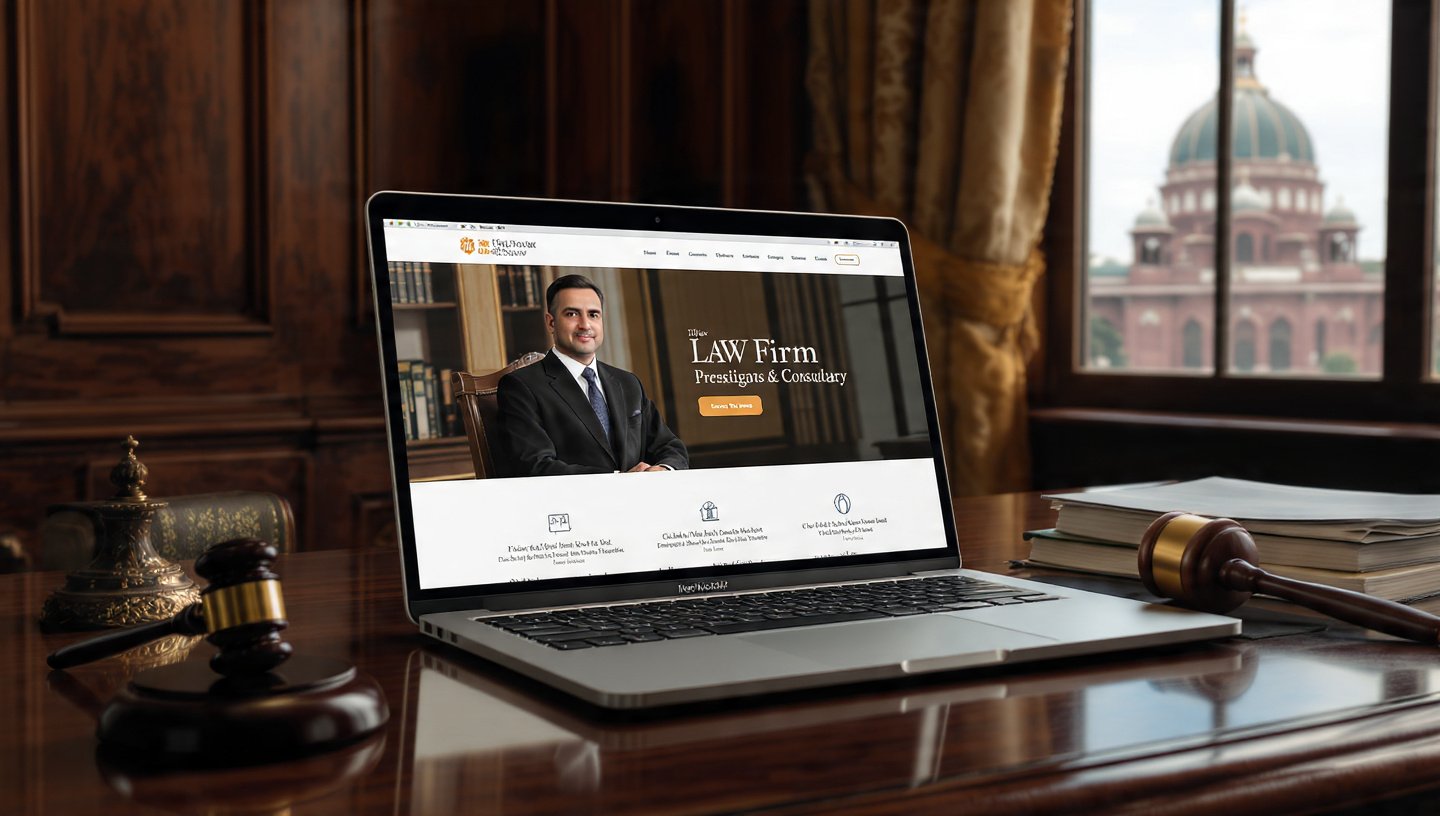
When someone searches for a “Divorce Lawyer in South Kolkata” or a “Property Dispute Advocate near High Court,” they are looking for Credibility. A professional website acts as your “Digital Chambers,” where you can explain your expertise without breaking the Bar Council’s rules on solicitation.
2. The Classification: Why This is a “Basic Website”
We classify a Law Firm site as Basic Website Designing.
Why? Because it is purely informational.
- No Shopping Carts: You aren’t selling products; you are showcasing expertise.
- Low Complexity: You don’t need a custom-coded engine. You need a fast, secure, and very clean layout that works on mobile.
- Compliance First: The design must stay within the BCI’s guidelines, which generally allow for the display of Name, Address, Qualifications, and Practice Areas.
3. The Best Platform: WordPress + Booking Tools
For lawyers, we almost exclusively use WordPress.
- Why WordPress? It allows us to use “Schema Markup”—a bit of hidden code that tells Google: “This is a Licensed Advocate in Kolkata.” This is what makes you show up in the “Local Map Pack” when someone is in your neighborhood.
- Booking Integration: We add a tool like Calendly or SimplyBook.me. Instead of a “Buy” button, clients see a “Book a Consultation” calendar. They pick a slot, and it automatically appears in your Google Calendar. No back-and-forth phone calls.
4. The 3 Essential “Non-Negotiable” Pages
- The Professional Profile (The Face): In the legal world, people hire people. Your bio should list your Bar Council enrollment, years of practice, and educational background from institutions like NUJS or Calcutta University.
- Practice Areas (The Specifics): Instead of one long list, we create small sections for different areas: Motor Accident Claims, Alimony & Divorce, Trade License Issues, etc. This helps Google send the right clients to your door.
- The “Contact & Directions” Page: Since most clients will visit your physical chamber in Old Post Office Street or Hazra, we embed a live Google Map and clickable “Call Now” buttons for mobile users.
5. BCI Compliance: The Golden Rule
Unlike a cloud kitchen or a saree shop, a lawyer’s website must be Informative, not Promotional.
- We avoid: “Best Lawyer in Kolkata” or “100% Win Rate” (this is prohibited).
- We focus on: “Practice Area Focus” and “Providing Legal Insights.” By writing a simple blog about “How to register a Will in West Bengal,” you prove your knowledge without “advertising” for clients.
6. Comparison: Law Firm vs. General Business Site
| Feature | Standard Business Site | Boutique Law Firm Site |
| Tone | Persuasive / Enthusiastic | Formal / Authoritative / Neutral |
| Primary CTA | “Buy Now” | “Schedule a Consultation” |
| Google Search | Keyword-heavy | Expertise-heavy (E-E-A-T) |
| Compliance | None | Bar Council of India (BCI) Rules |
Conclusion: Professionalism in the Digital Age
Your chambers may be historic, but your digital presence shouldn’t be. A well-designed Basic Website ensures that when a high-value client looks you up, they see a professional who is as comfortable with modern technology as they are with the law.
It’s about making it easy for the people who need your help to find you and respect you.
Is your professional profile ready for the web?
Let’s do a “Professional Presence Audit.” We’ll see how you currently appear in local searches and show you how a clean, BCI-compliant website can streamline your appointments and build your authority.