

1. 2026: The Year the “Static Page” Became Obsolete
For decades, a website was a digital brochure. You put information up, and you hoped the right person found the “Contact Us” page. In 2026, that passive approach is a recipe for invisibility. With the rise of AI Overviews and Agentic Search, your website must do more than just be there—it must think.
In Kolkata, where the 2026 digital market is more crowded than a Gariahat crossing before Pujo, “Basic Website Designing” has evolved into AI-Native Engineering. Your website shouldn’t wait for a visitor to ask a question; it should use Predictive UX to answer it before they finish scrolling.
2. What is Predictive UX? (The 2026 Lead Magnet)
Predictive UX is the science of using real-time behavioral data to adapt a website’s interface to a specific user.
- Intent Detection: If a visitor from New Town lands on your “Luxury Renovations” page and lingers on “Minimalist Wardrobes,” the website doesn’t just sit there. The “Basic” 2026 design will automatically shift the hero banner to show a minimalist wardrobe project we did in Alipore.
- The Result: This level of personalization leads to a 10–25% lift in conversion rates. You aren’t selling to a “user”; you are selling to that specific individual’s current mood and intent.
3. Agentic Lead Generation: Beyond the Chatbot
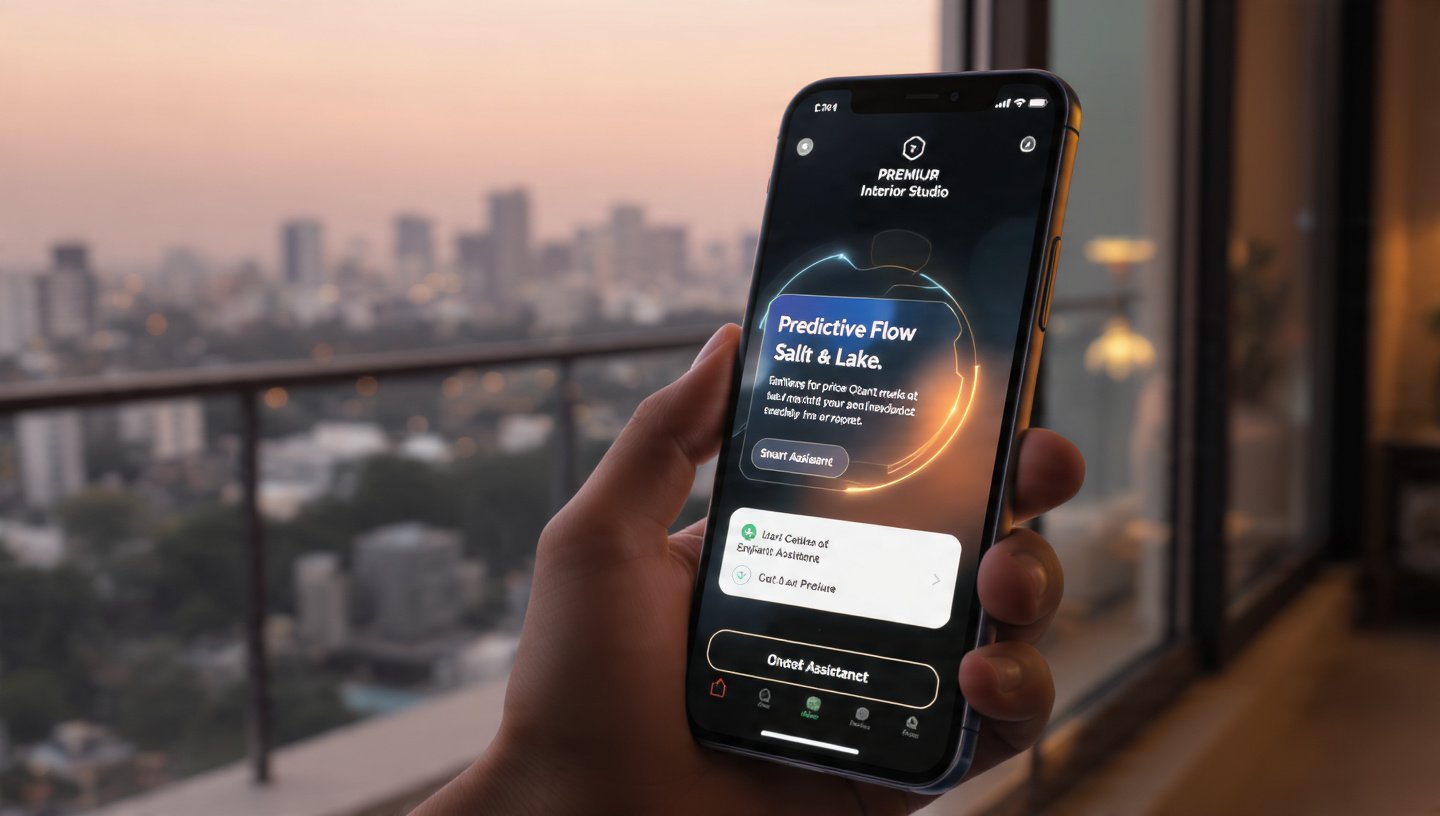
We’ve all seen the annoying 2023-style chatbots that just repeat FAQs. In 2026, we integrate Autonomous Agents. * Multi-Step Problem Solving: Instead of a form, a visitor talks to your “Digital Concierge.” If they say, “I need a 2BHK painted in Jadavpur by next Tuesday,” the agent doesn’t just take their email. It checks your real-time team calendar, calculates a rough estimate based on local Jadavpur square-foot rates, and offers a specific time slot for a site visit.
- Frictionless Capture: By the time the “conversation” is over, you don’t just have a lead; you have a qualified appointment.
4. The “AI-First” Architecture: Designing for Two Audiences
In 2026, your website has two primary visitors:
- Human Users: Who want beauty, speed, and instant answers.
- AI Crawlers: Like Google’s Gemini and OpenAI’s agents, which “read” your site to decide if you should be the top recommendation in a voice search.
Our 2026 basic designs include Semantic Schema Markup. This is a hidden layer of code that acts as a “cheat sheet” for AI. When someone asks their phone, “Who is the best interior designer near Park Street for small cafes?”, the AI finds your site because we’ve structurally “told” it exactly what you do, where you do it, and what your past clients say.
5. Comparison: Legacy Web Design vs. AI-Native 2026 Design
| Feature | Legacy Website (2024) | AI-Native Website (2026) |
| User Interaction | Passive (Click & Scroll) | Active (Conversational/Agentic) |
| Content | Static (Same for everyone) | Dynamic (Personalized per visit) |
| Lead Capture | Manual Forms | Predictive “Micro-Moments” |
| SEO Focus | Keywords & Backlinks | Topic Authority & AI Entity Sync |
| Adaptability | Hard-coded layouts | Generative UI (Self-optimizing) |
6. Emotionally Intelligent Design (EQ-UX)
One of the biggest shifts in 2026 is Sentiment-Aware Interfaces. If a user is “rage-clicking” (clicking rapidly in frustration) or hesitating on a pricing section, the AI detects the friction. In a split second, it can:
- Simplify the UI: Hide unnecessary elements to reduce cognitive load.
- Trigger a “Help” Prompt: Have the assistant say, “Calculating costs can be tricky—would you like me to walk you through our three tiers?”
This isn’t just “cool tech”—it’s digital empathy. In the Kolkata business world, where relationships and trust (the “bhalobasha” factor) matter, a website that “understands” the user’s struggle wins every time.
7. FAQ: AI and Small Business Websites
- Q: “Is an AI-powered website too expensive for a small business?”
- A: In 2026, no. AI modules have become modular and affordable. We can integrate ‘Agentic’ features into a basic site for a fraction of what a custom app used to cost.
- Q: “Will AI make my website look like everyone else’s?”
- A: Actually, the opposite. AI allows for ‘Organic Layouts’ that shift and change, making your site feel more ‘human’ and unique compared to the boxy templates of the past.
- Q: “Does this mean I don’t need to write blog posts anymore?”
- A: You still need content, but the focus has shifted to ‘Topic Authority.’ AI uses your content to learn your expertise. The more ‘Human-First’ and detailed your local Kolkata insights are, the better the AI can sell you.
Conclusion: The Future is Conversational
The “Basic Website” of 2026 is a living, breathing part of your sales team. It’s an assistant that never sleeps, a designer that adapts in real-time, and a strategist that knows what your customer wants before they even say it. If you are still building “static” pages, you are building for a world that no longer exists.
At our Alipore studio, we build Intelligent Gateways. We bridge the gap between your expertise and the AI-driven world of 2026.
Is your website a “Silent Brochure” or a “Smart Seller”?
Let’s do an “AI Readiness Audit.” We’ll look at your current site and show you three specific “Predictive UX” spots where you are losing leads—and how an AI-Native redesign can start closing them for you on autopilot.